

The short answer to the question of what sustainable packaging is: packaging that is designed, produced, used, and managed after use in a way that minimizes environmental impact across its life cycle while adequately protecting and transporting a product. In other words, the topic is not only about "using recyclable material"; it is where the minimum material needed to protect the product, the right size, separable components, the possibility of reuse, and efficient logistics all come together in a single decision. The most common confusion we see when working with premium and growth-stage brands starts right here: a heavier or flashier box is automatically assumed to be more sustainable. Yet the decision begins—before the question "which material is more eco-friendly?"—with the question "which packaging creates the least total impact for this product, channel, and usage scenario?"
This guide addresses the definition of sustainable packaging, its working mechanisms, material options, and actionable decision criteria for your brand all together. Since it is the central content of our sustainability cluster, we also direct you to individual material and product guides wherever you need them.
Table of Contents
Why sustainable packaging is not only "recycling"
You cannot measure a packaging's sustainability by a single feature; because impact accumulates at every stage, from the extraction of raw material to post-use processing. Raw material, material processing, design and production, packaging, transport and sale, consumer use, and finally reuse, recycling, recovery, or disposal; all of these are part of the same decision.
This holistic view requires you to also question choices that appear eco-friendly on their own. Unnecessary thickness increases material consumption and transport impact. Different materials that cannot be separated from one another make recycling difficult even if the consumer has good intentions. A box far too large for the product reduces storage and shipping efficiency even if it provides protection. Most importantly, a material bearing a "recyclable" label will in practice not be recycled if it is not collected or processed in your region.
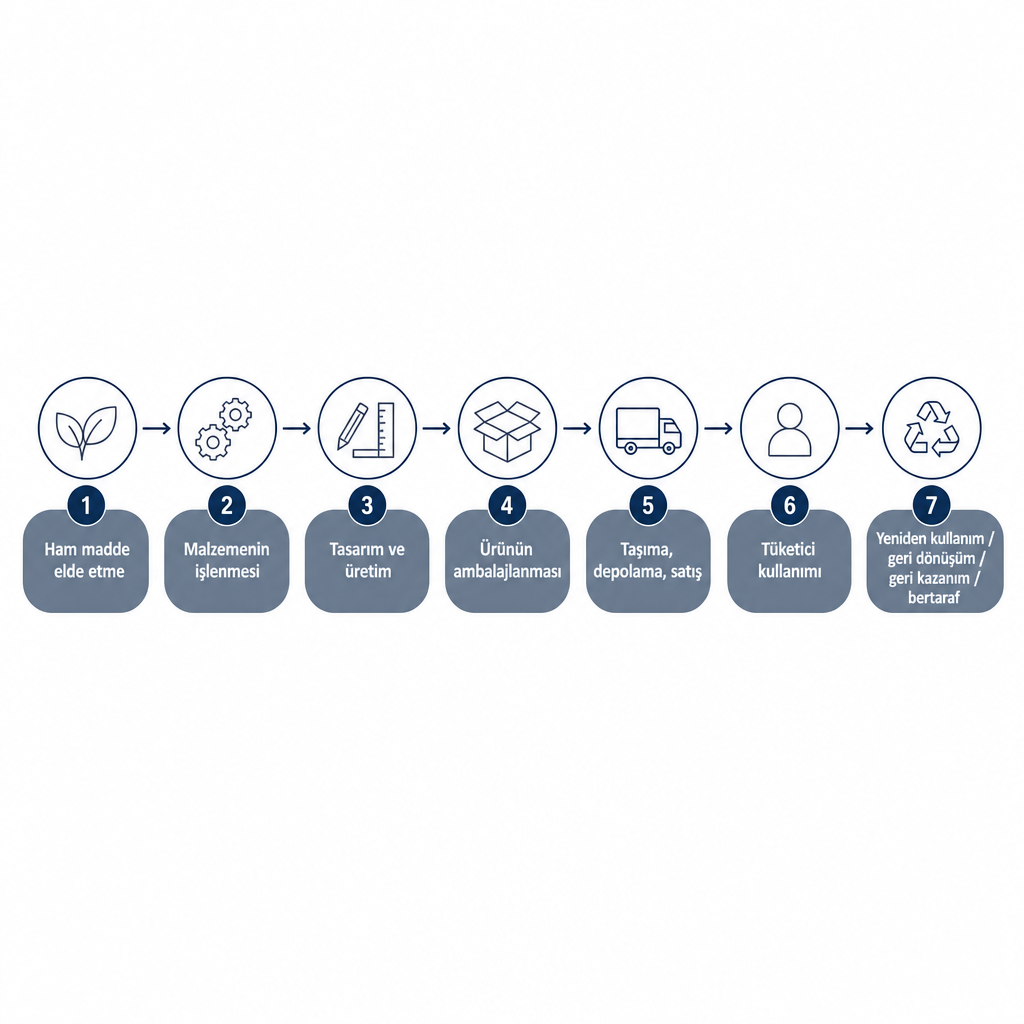
The European Union's packaging regulation adopts the same approach: it addresses packaging not only at the waste stage but across its entire life cycle, from design to waste processing, and regulates eco-design, waste prevention, reuse, recycled content, and high-quality recycling together. Therefore, sustainability is not an item added to the end of a packaging brief, but a balance issue established from the outset.
Core mechanisms of sustainable packaging
Sustainable packaging is the result of several complementary mechanisms. Understanding them individually helps you see where your brand can gain the most.
Reducing the amount of material
The first goal is not to make the packaging unnecessarily large or heavy. Packaging should aim for the minimum material level needed for product safety and brand experience. In practice, this means a custom size suited to the product's dimensions, reducing unnecessary voids, preventing excess inner filling, determining the lid-base-support structure according to need, and not choosing more grammage than necessary. Especially for e-commerce brands, box size determines not only the amount of material but also shipping volume and storage efficiency; this is why the size decision alone is one of the highest-leverage levers.
Considering recyclability at the design stage
Recycling is not an issue to be solved after the product goes to market. The packaging's structure, surface coating, adhesive, label, and components should be evaluated during design. Answering the following questions at the brief stage prevents costly revisions later: How many different materials does the packaging consist of? Can these materials be separated by the consumer? Do the label and adhesive negatively affect recycling? Do printing and surface applications complicate the process? Can correct material information be provided on the packaging?
If you'd like to see in more detail how the dieline, cut lines, folding zones, and safe areas relate to design decisions, you can check out our guide on box graphics and the fundamentals of packaging design.
Making reuse possible
One way to reduce single-use waste is for the packaging to be reusable; however, this does not merely mean the material is durable. For a packaging to truly qualify as suitable for reuse, it must have a physical structure that withstands multiple uses, be safe during use, be cleanable or re-preparable, offer a scenario practical for the consumer, and not immediately turn into waste after the first use. For premium cosmetics, jewelry, candle, or gift products, a reusable cardboard box increases the likelihood of the consumer keeping the box; still, it would not be correct to call it "reusable" without evaluating protection, the open-close experience, surface durability, and storage conditions together.
Optimizing transport and logistics
Sustainability is determined not only at the production facility but also while the product is transported. Smaller and lighter packaging helps ship more products with the same transport capacity. For this, no unnecessary gap should be left between product and packaging, box size should be determined according to the shipping channel, inner protective material should be chosen according to the risk of breakage or crushing, storage advantages should be considered in foldable packaging, and deformation risk in shipment should be tested. For e-commerce brands, this decision brings sustainability and customer experience together in the same box: less volume, proper protection, and a branded unboxing moment can be designed together.
What are sustainable packaging materials
There is no universal option that can be called a "sustainable material" on its own. The right material is determined according to the product's weight, fragility, usage channel, printing need, and the waste management system of the market you are in. Let us address the main options with their distinguishing points.
Paper and cardboard packaging is commonly preferred in markets where recycling infrastructure exists. Folding cartons, paper bags, labels, tissue paper, and shipping box solutions address different needs. The critical decisions here are grammage, required transport and stacking strength, the need for a moisture or grease barrier, the type of coating and lamination, the print-ink choice, and special contact requirements such as food or cosmetics. For the thresholds and limits on the kraft side, you can review the content explaining the properties and use of kraft paper.
Rigid boxes provide high perceived value and strong protection for premium products. However, their sustainability must be evaluated together with the structure of the board used, the outer covering, magnets or metal components, the inner separator, and additional parts. In the right scenario, a rigid box can be used for a long time, protect the product to a high degree, create a branded gift and unboxing experience, and increase the possibility of reuse. On the other hand, excess components added purely for aesthetic purposes that make separation difficult raise the total impact.
Corrugated cardboard balances protection against weight in shipping and e-commerce packaging. The flute type, number of layers, box size, and printing method should be chosen according to the product's need. Especially in e-commerce, the box is expected to withstand crushing during shipping, suit the product's dimensions, reduce the need for unnecessary filling, be easily stacked in the warehouse, and support the unboxing experience.
Using recycled content helps reduce the need for primary raw material; however, the claim must be verifiable. You can request from the supplier the recycled content ratio, the material's source, product or material certifications, print and coating components, and batch-based conformity documents. Expressions such as "recycled," "nature-friendly," or "sustainable" should not be used without technical explanation and verifiable data.
How to choose sustainable packaging for your brand
The right decision emerges not from a single material choice, but from evaluating several decision areas together. The table below summarizes how the packaging decision changes depending on which question you ask.
| Decision area | Question to ask | Effect on the packaging decision |
|---|---|---|
| Product protection | Is the product fragile, heavy, liquid, or temperature-sensitive? | Material thickness, inner support, and box structure are determined. |
| Sales channel | Is the product offered in-store, by shipping, or as a gift? | Box strength, storage, and unboxing experience change. |
| Size | What are the product's actual external dimensions? | Unnecessary volume and filling are reduced. |
| Service life | Is the packaging for single use or repeated use? | Structure, material, and surface durability are chosen. |
| Material separation | Can the components be separated by the consumer? | Recycling probability and waste management are affected. |
| Printing and surface | Are coating, lamination, foil, or varnish required? | Visual quality is balanced with recycling compatibility. |
| Logistics | What is the packaging's volumetric weight and stacking efficiency? | Transport-related cost and impact can be reduced. |
| Supply | Can material information and quality documents be provided? | The verifiability of environmental claims increases. |
| Regulation | Is the product food, cosmetics, electronics, or a children's product? | Contact, safety, and marking requirements may change. |
When you answer these decision areas in turn, the search for the "most eco-friendly material" gives way to the goal of "the least total impact for this product." For brands working mainly in e-commerce, the size and logistics rows most often make the biggest difference; for premium gift products, service life and material separation come to the fore.
Common mistakes in choosing sustainable packaging
The most costly mistakes usually arise from well-intentioned but under-evaluated decisions. Looking only at the name of the material is foremost among these: expressions such as "kraft," "natural," "biodegradable," or "recyclable" are not sufficient on their own; the entire packaging and the post-use scenario must be evaluated. Choosing a box far too large for the product, although it may look more premium, means more material, filling, and transport volume; custom-size design preserves the brand experience while reducing unnecessary volume.
Adding excess components that complicate recycling is also common: magnets, metal accessories, plastic windows, and different coatings that cannot be separated from one another reduce the design's recycling performance. These components should only be used if truly necessary and should not be added for decorative purposes. Not doing sample and durability testing means assuming the on-screen design will deliver the same result in production and transport; a physical sample is needed to check size, lid fit, color, print, product placement, and protection performance. Finally, not documenting the sustainability claim damages consumer trust: environmental advantages should be supported by material information, production data, certification, recycled content ratio, or a carbon footprint study.
Sustainable packaging design with Kosapack
We address the sustainable packaging decision not merely as a material choice, but within the integrity of product, design, production, and logistics. For your brand, we can plan solutions such as rigid boxes, folding cartons, corrugated boxes, paper bags, labels, tissue paper, thank-you cards, mailer envelopes, fabric bags, and box separators together within the same brief.
We run the process through the stages of consultancy, structural and graphic design, prototyping, production coordination, quality control, and consolidated logistics. Thus the sustainability goal becomes not an additional decision independent of aesthetics or product protection, but one of the fundamental parts of the packaging brief. Sharing your product dimensions, sales channel, expected quantities, target service life, printing needs, and sustainability expectation before the quote enables us to evaluate the right material and structure alternatives faster. If you are an e-commerce-focused brand, you can also use our mailer box guide for e-commerce as a starting point for designing size and protection decisions together.
What to know in terms of regulations in Turkey and the EU
In Turkey, the Regulation on the Control of Packaging Waste aims to prevent the generation of packaging waste; to reduce unavoidable waste through reuse, recycling, and recovery; and it covers all packaging placed on the market. The regulation stipulates that packaging be designed to be reusable, recyclable, or recoverable; and also that it not be greater in volume and weight than what is needed to provide the necessary level of safety and protection.
In addition, the regulation governs the separate collection of packaging waste at source, the establishment of recycling and recovery systems, notification obligations for those who place packaging on the market, rules regarding packaging marking, and the reduction of hazardous substances. Regarding marking, the use of relevant symbols and material abbreviations is involved; the details of implementation should be evaluated according to the product and the role of the actor. If your product is a food, cosmetic, electronic, or children's product, since contact, safety, and notification requirements may differ, the decision must be verified on a product-by-product basis.
For brands shipping products to the EU, the EU packaging and packaging waste regulation is also important. The regulation introduces more comprehensive rules on the recyclability, reuse, waste prevention, and life cycle performance of packaging. If you have an export plan, evaluating these rules at the start of the design brief helps you avoid costly revisions later.
Frequently Asked Questions
What is sustainable packaging?
It is packaging that aims to reduce material consumption, waste generation, and environmental impact across the life cycle while protecting the product. Recycling, reuse, correct sizing, and logistics efficiency are evaluated together.
Which is the most sustainable packaging material?
A single material is not the most sustainable option for every product. The decision should be made according to product structure, protection need, sales channel, service life, and regional recycling infrastructure.
Is a rigid box sustainable?
A rigid box can be a sustainable option when it is designed at the right size, unnecessary components are avoided, and there is a recycling or reuse scenario after use.
Is paper packaging always more eco-friendly than plastic?
Not always. The production method, grammage, coating, transport impact, and recycling infrastructure of the paper matter. A coating or composite structure containing plastic can make the recycling of paper packaging difficult.
Is sustainable packaging expensive?
The initial production cost varies according to material, quantity, size, print, and structure choices. However, the right size and material choice can balance the total cost by reducing filling, shipping, storage, and product damage costs. For cost items, you can look at the custom box production prices cost guide.
What should you ask the supplier before choosing sustainable packaging?
You should ask about the type of material, the recycled content ratio, coatings and adhesives, certifications, the physical sample process, the quality control approach, and the post-use scenario of the packaging.