
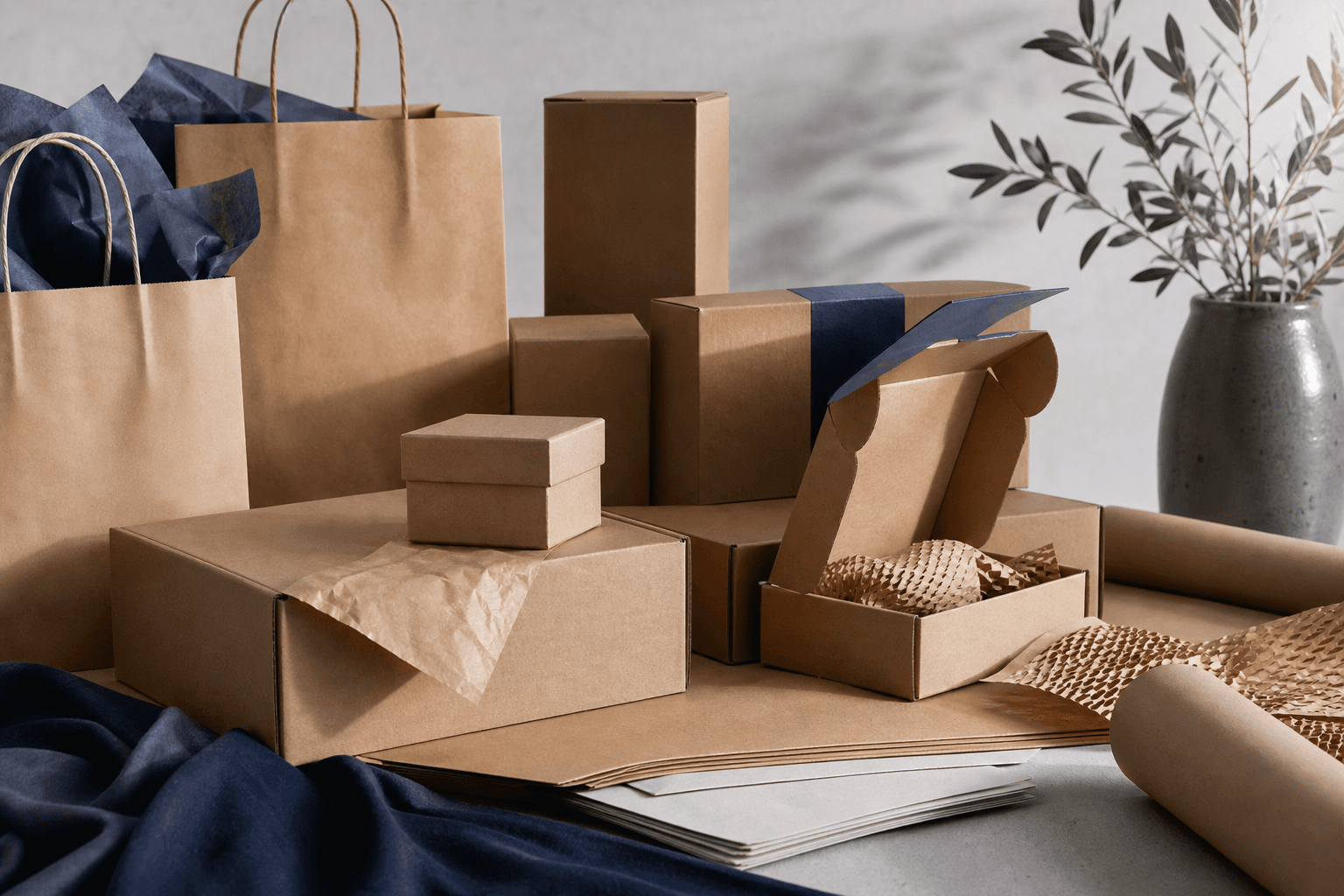
Bir kozmetik ya da gıda markası için ambalaj kaynaklarken tedarikçinizden "kraft karton stok" cümlesini duyduğunuzda başınızı sallıyorsunuz, ama içinizde üç soru cevapsız kalıyor: Bu kraft yeterince premium hissedecek mi, kargo sırasında nemde ayakta kalacak mı, ve iki ayrı tedarikçinin "kraft" dediği şey aynı görünecek mi? Kraft kağıt nedir sorusunun cevabı, çoğu marka yöneticisinin sandığından çok daha katmanlı — ve bu katmanlar ürününüzün rafa, kargoya ya da unboxing videosuna çıkma biçimini doğrudan belirler.
Sektörel ölçekte bakıldığında bu malzeme niş değil, omurga. Avrupa Çevre Ajansı verilerine göre kağıt ve karton, AB'deki tüm ambalaj atıklarının ağırlık olarak yaklaşık üçte birini oluşturuyor — plastik ve metalin önünde. Buna rağmen marka brief'lerinin büyük bölümü kraft'ı lif uzunluğu, gramaj toleransı veya bariyer ihtiyacı belirtmeden sipariş veriyor. Bu rehber sizi malzeme bilimi → varyant seçimi → gerçek dünya performansı → şartname dili → sürdürülebilirlik iddiaları → yaygın hatalar sırasıyla taşıyacak.
İçindekiler
- Kraft Kağıt Nedir ve Onu Sıradan Kağıttan Ayıran Nedir?
- Kraft Kağıt Türleri — Ağartılmamış, Ağartılmış, Birinci Hamur ve Geri Dönüşümlü Arasındaki Gerçek Fark
- Kraft Kağıdın Gerçek Performansı — Nem, Sıcaklık, Yağ ve Darbe Senaryoları
- Gramaj, Yüzey ve Renk — Kraft Kağıdı Doğru Şartnameleme
- Kraft Kağıdın Marka Kategorilerine Göre Stratejik Kullanımı
- Sürdürülebilirlik İddiaları ve Sertifikalar — "Eko Kraft" Gerçekte Ne Anlama Geliyor
- Markaların Kraft Kağıt Seçiminde Yaptığı 7 Pahalı Hata
Kraft Kağıt Nedir ve Onu Sıradan Kağıttan Ayıran Nedir?
Kraft kağıt nedir sorusunun teknik cevabı kısa: odun talaşının sülfat (kraft) pişirme yöntemi ile sodyum hidroksit ve sodyum sülfür çözeltisinde işlenip, lignin'in selüloz lifinden ayrıştırılmasıyla üretilen, uzun lifli, yüksek mukavemetli ambalaj kağıdıdır. Ama bu tanım, kraft'ı diğer kağıtlardan ayıran asıl mühendislik kararını gizler — pişirme sürecinin lifi koruyup korumadığı.
Sülfat (kraft) prosesi ile mekanik veya sülfit prosesleri arasındaki temel fark burada başlar. Kraft pişirmede lignin kimyasal olarak çözülür ama selüloz lifleri büyük ölçüde korunur. Mekanik hamur ise odun talaşını fiziksel olarak öğüterek üretir; lifler kırılır, ortalama lif uzunluğu düşer. Sonuç: kraft kağıdın mukavemeti eklenen kimyasal katkılardan değil, korunmuş lif yapısından gelir. NC State Üniversitesi'nden Pulp and Paper Science alanının önde gelen isimlerinden Dr. Martin Hubbe'nin lif-bağ çalışmalarında vurguladığı gibi, uzun softwood (yumuşak ağaç) lifleri birbirine daha iyi dolanır; bu da hem tensile (çekme) hem de tear (yırtılma) direncini doğrudan artırır.
Bu yüzden mukavemet kritik kraft kullanımları ağırlıklı olarak çam ve ladin gibi uzun lifli softwood hamurlarına dayanır. Türk sektör tedarikçilerinin ürün belgelerinde de bu karışım açıkça görülür: yüzey kalitesi veya maliyet için hardwood (sert ağaç) hamuru harmanlanır, ama ağır taşıma kapasitesi gereken yapılarda softwood baskındır.
Renk konusu da burada netleşir. Kraft prosesi lignin'i tamamen ortadan kaldırmaz — kalan kahverengi tonu, kalan lignin'in oksidasyonundan gelir. Bu nedenle ağartılmamış kraft'ın ISO parlaklığı %20–30 aralığındadır; tam ağartılmış kraft (white top kraft liner ya da SBS) ise TAPPI parlaklık ölçüm standartlarına göre %80–90 ISO parlaklığa çıkar. Bir markanın "doğal kahverengi" yerine "ofis kağıdı beyazı" kraft tercih etmesi, lif yapısını değiştirmez ama ek kimyasal proses yükü taşır.
Mukavemet farkı sayılarda da somuttur. Nordic Pulp & Paper Research Journal verilerine göre 70–90 g/m² aralığındaki sack kraft kağıtları 6–9 kN/m tensile mukavemete ulaşırken, benzer gramajdaki geri dönüşümlü ambalaj kağıtları 3–5 kN/m bandında kalır. Bu fark, virgin (birinci hamur) kraft'ın neden ağır içerikli e-ticaret kolilerinde ve sack kraft torbalarda tercih edildiğini açıklar — daha ince kraft ile aynı koruma sağlanır, yani daha az hammadde, daha düşük navlun, daha düşük karbon ayak izi.
Markanız için pratik anlam: kraft sadece bir kağıt değil, mukavemet/ağırlık oranı yüksek bir mühendislik substratıdır. Bu yüzden ambalaj malzemeleri ekosistemindeki yerini anlamak, kraft'ı diğer kart ve plastik alternatifleriyle karşılaştırırken kritik bir başlangıç noktasıdır.
Son bir not dokunsal algı üzerine: aynı 120 gsm kraft, yüzey işlemine göre "el işi/artizan" da hissedebilir, "endüstriyel/kaba" da. Bu farkı yöneten değişkenleri — kalenderleme, embossing, kaplama — dördüncü bölümde gramaj ve yüzey şartnamesinde ele alacağız.
Kraft kağıdın mukavemeti eklenen kimyasallardan değil, pişirme sürecinin lif uzunluğunu koruma biçiminden gelir — yani sıradan geri dönüşüm hamurundan görünüşte değil, gerçekten daha güçlüdür.
Kraft Kağıt Türleri — Ağartılmamış, Ağartılmış, Birinci Hamur ve Geri Dönüşümlü Arasındaki Gerçek Fark
"Kraft kağıt" şemsiye bir terimdir; satın alma kararı dört eksen üzerinde verilir — ağartma durumu, hamur kaynağı, gramaj ve kaplama. Bu bölüm ilk iki ekseni karşılaştırır, çünkü brand brief'lerinin neredeyse tamamında bu iki alan eksiktir.
| Kriter | Ağartılmamış Kraft | Ağartılmış Kraft | Virgin Kraft | Geri Dönüşümlü Kraft |
|---|---|---|---|---|
| Görsel ton | Doğal kahverengi, %20–30 ISO | Beyaz/krem, %80–90 ISO | Üniform kahverengi | Koyu, lekeli, heterojen |
| Tensile (70–90 gsm) | 6–9 kN/m | 5–8 kN/m | 6–9 kN/m | 3–5 kN/m |
| Burst farkı | Referans | Hafif düşük | %20–40 daha yüksek | Referansın %60–75'i |
| Baskı netliği | Mat, ton kayması yüksek | Whiteboard'a yakın | Yüksek | Düşük-orta |
| Tipik kullanım | Artizan gıda, eko kozmetik | Lüks kozmetik, takı | Ağır e-ticaret, sack | Maliyet odaklı koli |
Ağartılmamış kraft, lignin oksidasyonundan kaynaklanan doğal kahverengi tonunu korur. Bleaching adımı atlandığı için ek klor veya peroksit kimyasalı yüklemez. Ağartılmış kraft ise lifin bir kısmının kırılması pahasına saf beyaz yüzey sağlar; CMYK ve pantone baskı bu yüzeyde whiteboard'a yakın doğrulukta oturur. Virgin (birinci hamur) kraft, taze softwood hamurundan üretilir — burst ve tensile değerleri en yüksek; bu yüzden e-ticaret outer liner'larında baskındır. Geri dönüşümlü kraft ise geri kazanılmış kraft lifinden üretilir; her döngüde lif kısalır, mukavemet düşer, ama atık-saptırma avantajı somuttur.
Bu varyantları marka personalarıyla eşleştirmek karar verme sürecini hızlandırır. "Artizan Doğal" markası (kahve kavurucusu, butik çikolata, doğal kozmetik) için ağartılmamış kraft 120–150 gsm doğru yerdir — Journal of Cleaner Production ve Packaging Technology and Science'da yayımlanan tüketici algı çalışmaları, kahverengi kraft'ın "doğal" ve "çevre dostu" algısını beyaz substratlara göre belirgin biçimde güçlendirdiğini gösteriyor. "Lüks Minimalist" markası (premium cilt bakımı, parfüm) için ağartılmış kraft tercih edilir; ama bu seçimin ek klor-free bleaching enerji yükü taşıdığı şeffaf belirtilmelidir.
"Ağır E-ticaret" markası (elektronik, ev gereçleri) için virgin kraft outer liner mantıklıdır — burst direnci %20–40 daha yüksek olduğu için kargo hasarı oranını ölçülebilir biçimde düşürür. "Döngüsel Ekonomi Odaklı" markası (sürdürülebilirlik öncelikli DTC) ise geri dönüşümlü kraft + telafi edici daha yüksek gramaj kombinasyonunu seçer; mukavemet kaybı kabul edilir, ama materyal tasarrufu ve düşük fosil CO₂/kg avantajı korunur.
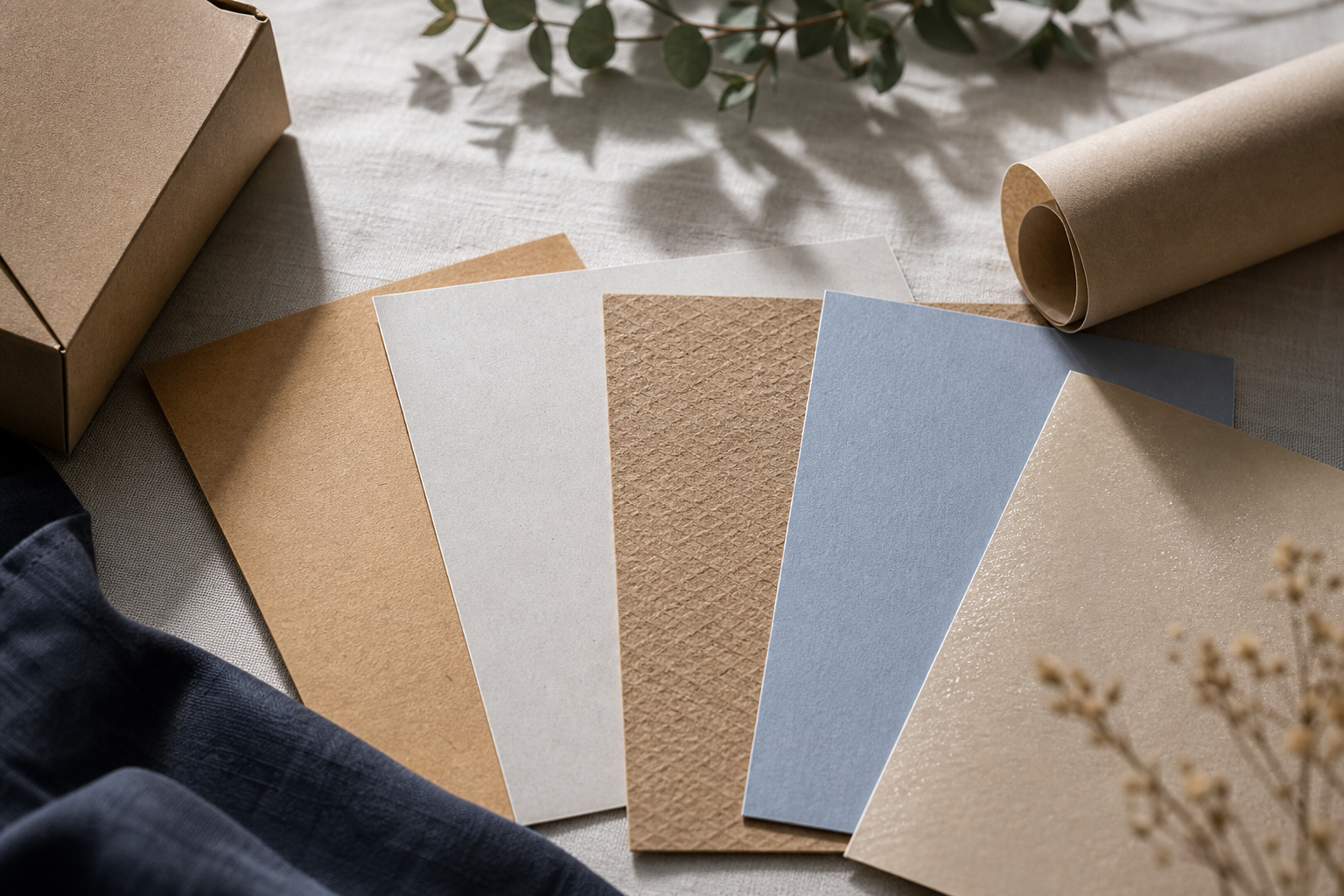
"Ağartılmamış kraft" iki tedarikçide aynı isimle gelir ama aynı görünmez — parlaklık, ton ve yüzey farkı son üründe gözle görülür biçimde ortaya çıkar.
Kraft Kağıdın Gerçek Performansı — Nem, Sıcaklık, Yağ ve Darbe Senaryoları
Tedarikçi katalogları kraft'ı çoğunlukla "dayanıklı ve suya dayanıklı" olarak pazarlar — bir Türk vendor kraft'ı doğrudan "suya dayanıklı" olarak tanımlıyor (Unipak Ambalaj, vendor kaynağı). Lab davranışı ve saha tecrübesi bunu desteklemiyor: kaplamasız kraft nemi hızlıca emer, sertliğini kaybeder ve yüksek nem altında deforme olur. Performansı senaryo bazında ele almak şart.
Nem ve Bağıl Nem (RH)
- Kaplamasız kraft'ın Cobb60 değeri tipik olarak 25–40 g/m² aralığında ölçülür (ISO 535 Cobb yöntemi — 60 saniyede emilen su miktarı, g/m²).
- PE veya dispersion kaplı kraft <10 g/m² Cobb60'a kadar inebilir.
- Pratik Cobb eşikleri:
- Genel folding karton için 25–40 g/m² kabul edilebilir.
- Nemli iklimde kuru gıda dış kolisi için <25 g/m² hedeflenir.
- Yağlı gıda veya kozmetik için <15 g/m² zorunludur — bu bant kaplama gerektirir.
- Yüksek RH'de kraft lifleri şişer; rilet (crease) yumuşar, kutu dik durmaz, raf ömrü düşer.
Sıcaklık Kararlılığı
- Sıcak dolum uygulamaları (kahve, çay) için kraft genelde uygundur; ama dondurucu koşullarda lifler kırılganlaşır ve rilet çatlama riski artar.
- Reel'den çıkış nem içeriği TAPPI mill datasheet standartlarına göre %6–8 hedeflenir; bu banttan sapma curl (kıvrılma) ve fold cracking'e yol açar.
- Ekstrem sıcaklık değişimi gören lojistik zincirinde kraft, kaplama ya da iç bariyer ile desteklenmeli.
Yağ ve Gres Direnci
- Ağartılmamış kraft doğal olarak gözeneklidir — yağ transferine açıktır.
- Bariyer seçenekleri: PE kaplama, kil (clay) kaplama, wax, fluorochemical-free dispersion. Her birinin geri dönüşüm akışına etkisi farklıdır; sürdürülebilirlik bölümünde bu trade-off ayrıntılandırılır.
- Yağlı içerik için bariyersiz kraft seçmek, raf ömrü kısa olan markalarda dahi şikayet oranını ölçülebilir biçimde artırır.
Delinme ve Kompresyon Mukavemeti
- Kraft liner kullanan e-ticaret kutuları için BCT (Box Compression Test) hedefleri genelde 5–15 kN aralığındadır; virgin kraft liner yerine geri dönüşümlü testliner kullanılırsa aynı BCT için daha yüksek gramaj gerekir.
- Tear (yırtılma) direnci ölçümü için referans standart TAPPI T 414, tensile ölçümü için ISO 1924'tür.
- Kargo zinciri uzun olan markalar BCT testini sözleşmeye bağlamadan tedarikçi onayı vermemelidir.

Gramaj, Yüzey ve Renk — Kraft Kağıdı Doğru Şartnameleme
Aynı "kraft 120 gsm" iki tedarikçide farklı davranır. Çünkü gramaj toleransı (ISO 536 uygulamasında genelde ±3–5%), yüzey işlemi ve hamur kaynağı şartnamede sabitlenmemiştir. Brief'inizin tedarikçi tarafında nasıl yorumlandığını kontrol etmek istiyorsanız, gramaj bandını ve uygulamayı eşleştirmekle başlayın.
| Gramaj Bandı | Kalınlık Hissi | Tipik Uygulama | Katlama Davranışı | Maliyet Etkisi |
|---|---|---|---|---|
| 40–80 g/m² | İnce, mendil benzeri | Sarım, iç dolgu, tissue | Kolay katlama, yırtılma riski | En düşük |
| 70–90 g/m² | Esnek, çantamsı | Alışveriş çantası, poşet | Doğal katlama, kulp taşır | Düşük |
| 100–135 g/m² | Sağlam ama esnek | Etiket, hafif folding karton | Net rilet, temiz kırım | Orta |
| 150–200 g/m² | Rijit kart hissi | Premium folding, sleeve | Creasing şart | Orta-yüksek |
| 200–400+ g/m² | Kalın kart / liner | Korrugé liner, mailer | Çok katmanlı yapı | Yüksek |
Bu bantlar Türk sektör tedarikçilerinin (Packanya, A Kağıt, DEYAP) ürün belgelerinde raporlanan yaygın aralıklarla örtüşür ve mill ürün yelpazeleriyle dolaylı olarak doğrulanır.
Şartname kararının üç kritik ekseni var. Birincisi yüzey ve tekstür: düz (smooth) vs. linen embossed vs. ribbed kraft. Mat mürekkep + mat kraft = premium görünüm; parlak vernik + mat kraft = görsel tutarsızlık, çünkü parlaklık lif tepelerine değil çukurlara oturur ve yamalı görünür. İkincisi renk varyantları: doğal kahverengi varsayılan; pastel veya doygun renklere boyalı kraft maliyeti yaklaşık %15–30 artırır (tedarikçi indikatif verisi). Full-coverage baskı açık tonlarda altta yatan kahverenginin renk algısını kaydırır — Packaging Technology and Science printability çalışmaları bu kayma için somut delta'lar veriyor.
Üçüncüsü şartname dili. Tedarikçiye gönderdiğiniz brief'te şu beş alan sabitlenmeli: Gramaj (gsm + tolerans %), Ağartma durumu (unbleached / bleached / white top), Yüzey (smooth / textured / embossed), Bariyer kaplama (var/yok + tip), Sertifika gereksinimi (FSC / PEFC). Bu beş alan eksikse, gelen iki teklif birbiriyle teknik olarak kıyaslanamaz.
Son bir not ölçüm birimi üzerine: ISO 536'ya göre gramaj ölçüm yöntemi tek standarttır; ancak Kuzey Amerika tedarikçileri TAPPI T 410 ile lb/1000 ft² birimini kullanır. Uluslararası satın almada bu dönüşümü brief'te netleştirin — aksi halde tedarikçi sizin 120 gsm beklentinizi 80 gsm yakın bir basis weight ile karşılayabilir.
Kraft Kağıdın Marka Kategorilerine Göre Stratejik Kullanımı
Bu bölüm, önceki bölümlerdeki teknik kararları dikey sektör senaryolarına bağlar. Kraft'ın hangi marka kategorisinde nasıl konumlandığını beş ürün ailesinde gezelim.
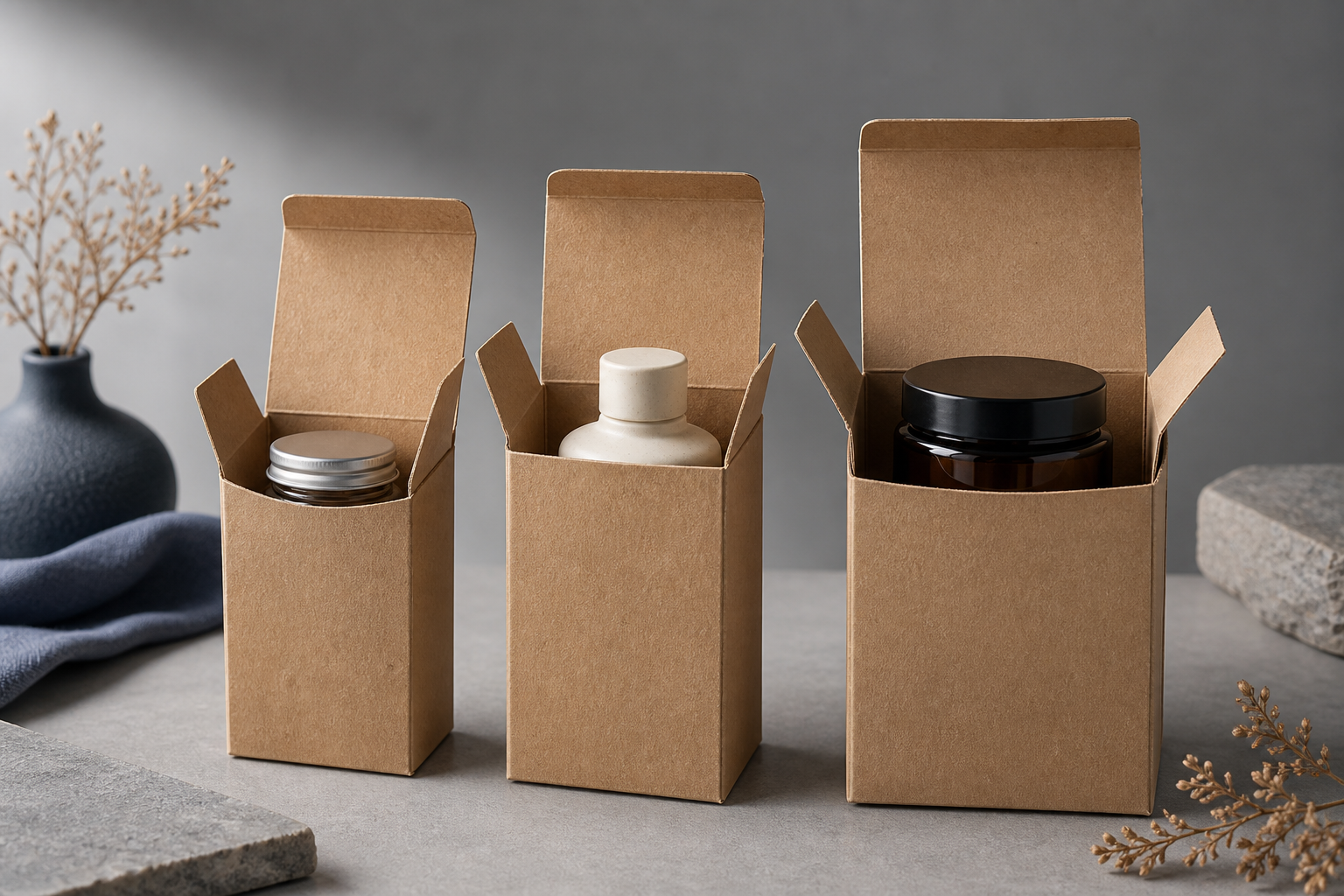
Folding karton (premium gıda, kozmetik, takviye): Eko konumlanma için ağartılmamış kraft 120–160 gsm doğal seçimdir. Lüks beyaz kart hissi gerektiren markalar için ağartılmış kraft + spot UV doğal kombinasyon. Soğuk zincirde nem bariyeri eklenmesi şart — Cobb60 <25 g/m² hedefi olmadan raf ömrü kayar.
Korrugé kutu (e-ticaret unboxing ve sevkiyat): İlk-kez unboxing lüksü ve premium ağır içerik için virgin kraft outer liner; burst direnci %20–40 daha yüksek. Sürdürülebilirlik öncelikli markalar için yüksek geri dönüşümlü içerikli korrugé — CEPI ve European Paper Recycling Council verilerine göre Avrupa korrugé ortalama %88–90 geri dönüşümlü içeriğe ulaşır. BCT 5–15 kN hedefine göre liner kombinasyonu belirlenir.
Kağıt çanta (perakende, hediye, GWP): Artizan/butik konum için ağartılmamış 80–100 gsm + bükülmüş kulp doğru estetik. Kurumsal/minimalist konum için ağartılmış beyaz kraft + flat tape kulp. Her iki durumda da kulp çekme mukavemeti şart koşulmalı — bu test brief'lerin %80'inde unutuluyor.
Etiket ve sticker: Kraft yüzeyli etiket (kraft-faced label) folding karton, korrugé ve mailer ile tutarlı bir brand world yaratır. Termal transfer baskı kraft üzerinde sınırlamalar getirir; düz mat baskı veya letterpress daha güvenli seçimdir.
Tissue paper, mailer zarf, teşekkür kartı: 40–80 gsm kraft tissue iç dolgu olarak çalışır; 200+ gsm kraft mailer zarf hafif ürünler için ekonomiktir; kraft teşekkür kartı mat mürekkep + hafif tekstür ile dokunsal süreklilik sağlar.
Kraft'ın yanıt olmadığı durumları da net konuşmak gerekiyor. Hijyen ürünleri (yüksek nem, ısı koşulları) için kraft tek başına yetersizdir. Sıvı veya yağlı içerik bariyer olmadan kraft'a güvenemez. 5 kg+ ağır içerik için tek kat korrugé kraft yapısal olarak risklidir; çift duvar gerekir. Şeffaflık gereken vitrinli ambalajlarda kraft penceresiz çalışmaz.
Bu noktada şartname–prototip–üretim zinciri kritikleşir. Kraft seçimi yanlış yapıldığında düzeltme maliyeti yeniden basım demek; bu yüzden marka tarafında çalışan ekipler genelde şu katmanları sözleşmeye bağlıyor: önerilen kraft varyantıyla birebir prototyping (7–15 iş günü içinde fiziksel numune), kraft üzerinde renk-doğru proofing (kahverengi substratın CMYK kayması önceden görünür hale gelir), fabrika doğrulama (kraft tedarik zinciri FSC/PEFC iddialarını gerçekten taşıyor mu) ve kraft varyant detayı sabitlenmiş 24 saatlik teklif. Kosapack gibi end-to-end orchestrator'ların bu süreci sağlaması, üretim sonrası sürprizleri tedarikçi-tarafına itmek için tasarlanmış bir yapıdır.
Kraft'ın gerçek değeri "kahverengi ve doğal" olmasında değil — markanın doğru varyantı, doğru gramajı ve doğru bariyeri tek bir şartnamede kilitleyebilmesindedir.
Sürdürülebilirlik İddiaları ve Sertifikalar — "Eko Kraft" Gerçekte Ne Anlama Geliyor
Kraft + kahverengi = sürdürülebilir denklemi marka iletişiminde sık kullanılır. Aalto Üniversitesi'nden Dr. Kirsi Niinimäki bunun bir basitleştirme olduğunu vurguluyor: gerçek çevresel etki orman yönetimi, mill enerji karması ve yaşam sonu süreçlerine bağlıdır — substrat rengine değil. The Sins of Greenwashing eş yazarı sürdürülebilirlik uzmanı Scot Case ise PE bariyer açıklanmadan yapılan "%100 geri dönüştürülebilir" iddialarını TerraChoice/UL Environment raporlarında klasik greenwashing örneği olarak tanımlıyor. Brand iletişiminizi bu iki çerçeveye karşı test etmeden kraft'ı "eko" diye konumlandırmak ileride risk doğurur.
Geri dönüştürülebilirlik ve yaşam sonu
- Selüloz lifleri 5–7 geri dönüşüm döngüsü dayanır; sonrasında lif çok kısalır ve peçete veya izolasyon ürünlerine yönlendirilir (European Paper Recycling Council ve TAPPI konsensüsü).
- PE, alüminyum veya kompleks dispersion kaplı kraft, kompozit kabul edilir; standart kağıt MRF (materyal geri kazanım tesisi) akışında değil, residual olarak işlenebilir.
- Pratik kural: kraft'ın geri dönüşümü kraft görünmesinden değil, kaplamanın akış kompatibilitesinden gelir.
Karbon ayak izi
- Kraft pişirme enerji yoğun bir prosestir, ama mill'ler genelde biyokütle veya geri kazanılmış ısı kullanır; bu yüzden mill kaynağı karbon yoğunluğunu büyük ölçüde belirler.
- Ağartılmamış kraft, ek bleaching kimyasalı taşımadığı için fosil CO₂/kg açısından ağartılmış kraft'tan tipik olarak daha düşüktür (Pulp and Paper Canada, TAPPI bleaching monografları).
- LCA çalışmaları virgin kraft'ın ton başına enerji ve emisyonunun, yüksek geri dönüşümlü içerikli liner'lardan mill enerji karması ve nakliye mesafesine bağlı olarak yüksek olabileceğini gösteriyor (Journal of Industrial Ecology, Journal of Cleaner Production).
Orman ve sertifika standartları
- FSC (Forest Stewardship Council) ve PEFC sorumlu orman yönetimini ve chain-of-custody'yi doğrular — kraft pişirme prosesini değil.
- Yaygın yanılgı: "FSC sertifikalı kraft kullanıyoruz" iddiası ancak tüm tedarik zinciri (mill → converter → printer → orchestrator) chain-of-custody altındaysa ürünün FSC logosunu taşımasına izin verir. Tek bir halka eksikse iddia geçersizdir.
- Tedarikçi brief'inde FSC/PEFC isteyecekseniz, chain-of-custody numarasını da isteyin; isim yetmez.
Geri dönüşümlü vs. virgin kraft — döngüsel konumlanma
- Geri dönüşümlü kraft: gerçek atık-saptırma avantajı, daha düşük fosil CO₂/kg, ama mukavemet düşüklüğü için telafi gramajı.
- Virgin kraft: yenilenebilir kaynak, yüksek mukavemet, ama enerji yoğun proses.
- Marka iletişimi öneri: ya birini ya da diğerini abartılı pazarlamak yerine, somut metrikle destekleyin — FSC sertifika numarası, geri dönüşümlü içerik %, Cobb60 değeri, ton başına CO₂e verisi. Numara olmayan iddia zayıftır; greenwashing eleştirisine açıktır.

Markaların Kraft Kağıt Seçiminde Yaptığı 7 Pahalı Hata ve Tedarikçiye Sormanız Gereken Sorular
Bu liste, tedarik ve prototyping süreçlerinde brand manager brief'lerinde tekrar tekrar gördüğümüz hatalardır. Her madde, imzalanmamış teklif aşamasında tedarikçiye sorulacak doğru soru ile biter. Bu kontrol listesini fiyat onayı vermeden önce kullanın — sonradan düzeltmek üretim maliyetinin katlarına mal olur.
1. Gramajı yanlış birimle istemek.
gsm (g/m²), kalibre (mm) ve basis weight (lb/1000 ft²) farklı şeylerdir. ISO 536 ile gsm uluslararası standarttır; TAPPI T 410 ile Kuzey Amerika'da lb/1000 ft² kullanılır. Aynı sayı iki birimde tamamen farklı kalınlık ifade eder.
Tedarikçiye sor: "Teklif edilen kraft hangi gsm bandında ve gramaj toleransı ±yüzde kaç?"
2. "Doğal kraft" varsayımı yapmak.
İki tedarikçinin "ağartılmamış 120 gsm kraft" numunesi yan yana koyulduğunda görsel olarak farklı çıkabilir. ISO parlaklık değeri, hamur kaynağı (softwood/hardwood oranı) ve yüzey işlemi farkı son üründe gözle görülür.
Tedarikçiye sor: "Bu kraft için ISO parlaklık değeri ve softwood/hardwood hamur kaynağı oranı nedir?"
3. Nem hassas ürüne bariyer atlamak.
Kaplamasız kraft + yüksek RH = kırışma, rilet yumuşaması, ürün hasarı, raf çekilmesi. Cobb60 25–40 g/m² aralığı kaplamasız tipiktir; nemli iklimde <25 hedeflemelisiniz, yağlı içerikte <15.
Tedarikçiye sor: "Bu kraft için Cobb60 değeri kaç g/m²? Hangi bariyer kaplama seçeneklerini sunuyorsunuz ve her birinin geri dönüşüm akışına etkisi nedir?"
4. Mürekkep–yüzey uyumsuzluğunu görmezden gelmek.
Mat mürekkep kraft üzerinde sönük; parlak vernik kraft üzerinde lekeli ve yamalı görünür. Tasarım onayı dijital proof üzerinden verildiğinde kraft'ın substrat renk kayması hesaba katılmaz.
Tedarikçiye sor: "Önerdiğiniz kraft üzerinde renk-doğru fiziksel baskı proof'u alabilir miyim, ve bu proof üretim partisiyle aynı reel'den mi gelecek?"
5. FSC iddiasını chain-of-custody'siz yapmak.
"FSC kraft kullanıyoruz" iddiası tek başına ambalajınızın FSC sertifikalı olduğu anlamına gelmez. Mill, converter, printer ve orchestrator dahil tüm halkaların chain-of-custody altında olması gerekir.
Tedarikçiye sor: "Mill'den son ürüne kadar chain-of-custody numaralarını paylaşabilir misiniz ve son ürün üzerinde FSC logosu basma hakkımız var mı?"
6. "Geri dönüşümlü kraft" ile "geri dönüşümlü kartondan yapılmış" karıştırmak.
Geri dönüşümlü kraft, geri kazanılmış kraft lifinden üretilmiş virgin process kraft'tır — temiz lif, kontrollü kalite. Geri dönüşümlü karton stoku ise karışık atık akışından gelir; değişken kalite, daha yüksek lekelenme.
Tedarikçiye sor: "Geri dönüşümlü içerik yüzdesi kaç ve hangi lif kaynağından (post-consumer vs. pre-consumer)?"
7. Numuneyi tasarım kilidi sonrasına bırakmak.
Kraft rengi, hissi ve baskı davranışı ekranda öngörülemez. Üretim onayından önce fiziksel numune almak, yeniden basım maliyetinin çok altındadır. Endüstri standardı süre 7–15 iş günü; bu süreyi sıkıştıran tedarikçi genelde mock-up gönderir, gerçek üretim koşullarını yansıtmaz.
Tedarikçiye sor: "Üretim onayı öncesi tam şartnameli (gramaj, ağartma, yüzey, bariyer, sertifika) fiziksel numune ne kadar sürede teslim edilebilir ve numune üretim partisiyle aynı mill reel'inden mi gelecek?"

Kraft brief'inizde gramaj, ağartma, yüzey, bariyer ve sertifika alanları sabit değilse — iki farklı tedarikçinin size gönderdiği "aynı kraft" birbiriyle alakasız iki malzeme olabilir.