
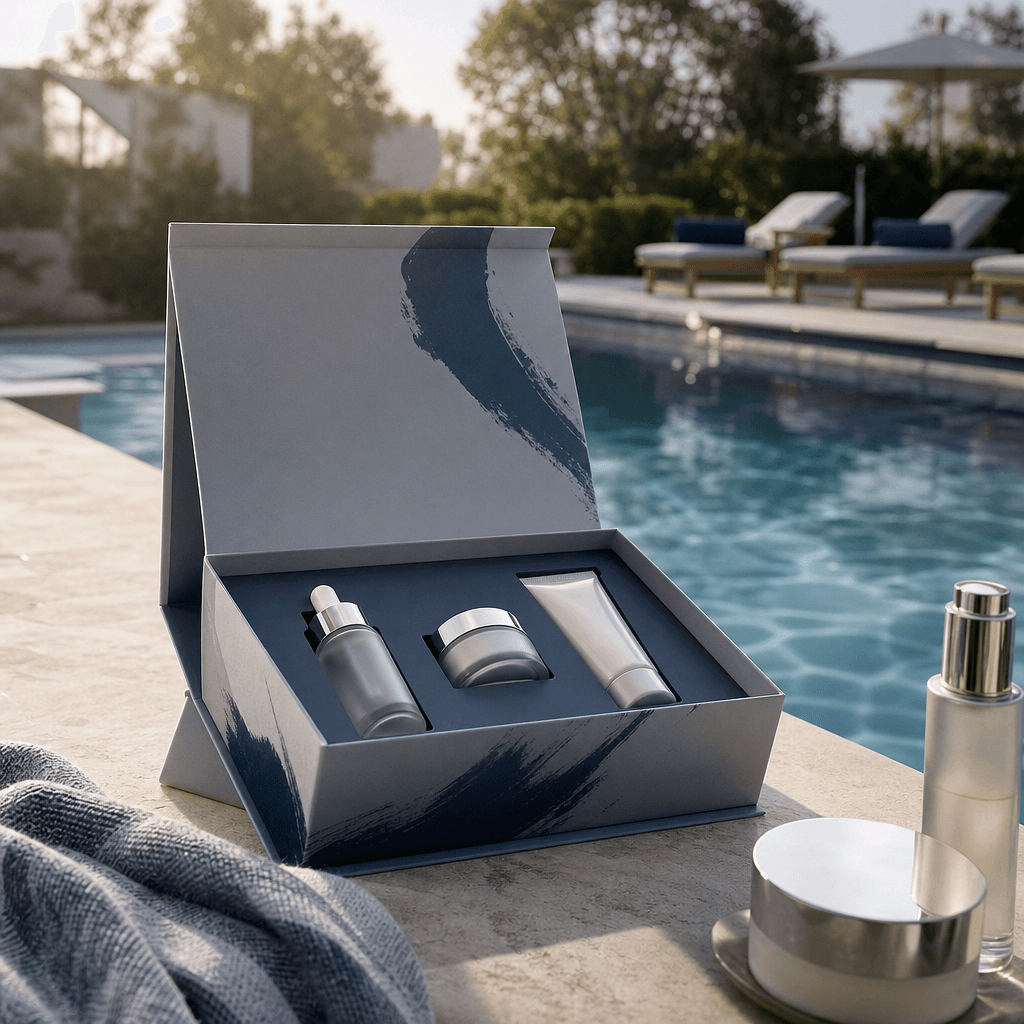
Cosmetic box design is not simply a package that protects your product; it is the first impression your brand makes on the shelf and at the moment of unboxing. For premium and growth-stage brands, this guide offers a clear roadmap for planning cardboard and rigid cosmetic boxes within a brand-focused framework and for making the right decision together with us. Our goal is not an aesthetic list of preferences; it is to build a logic that brings together your brand's positioning, the product's physical needs, and the sales channel in a single packaging decision.
Contents
What is cosmetic box design, and what does it mean for your brand?
Cosmetic box design is the process of bringing together the product's form, contents, price level, and target audience with the brand identity in a single three-dimensional object. A well-designed box makes the benefit the product promises, its texture, style, and price perception legible through the packaging. Whether the consumer is standing in front of the shelf or opening the shipping box, the logo, color palette, typography, and legal information on the box surface work together to help them recognize, trust, and remember the brand.
This process should always begin with a clear design brief. Brand identity, target audience, usage scenario, and aesthetic expectations are laid out at this stage. The clearer the brief, the fewer the subsequent decisions that need to be reversed. That is why it is a more accurate starting point to approach cosmetic box design not through the question "which visual is prettier?" but rather "how does this packaging position my brand, and what emotion and expectation does it trigger?"
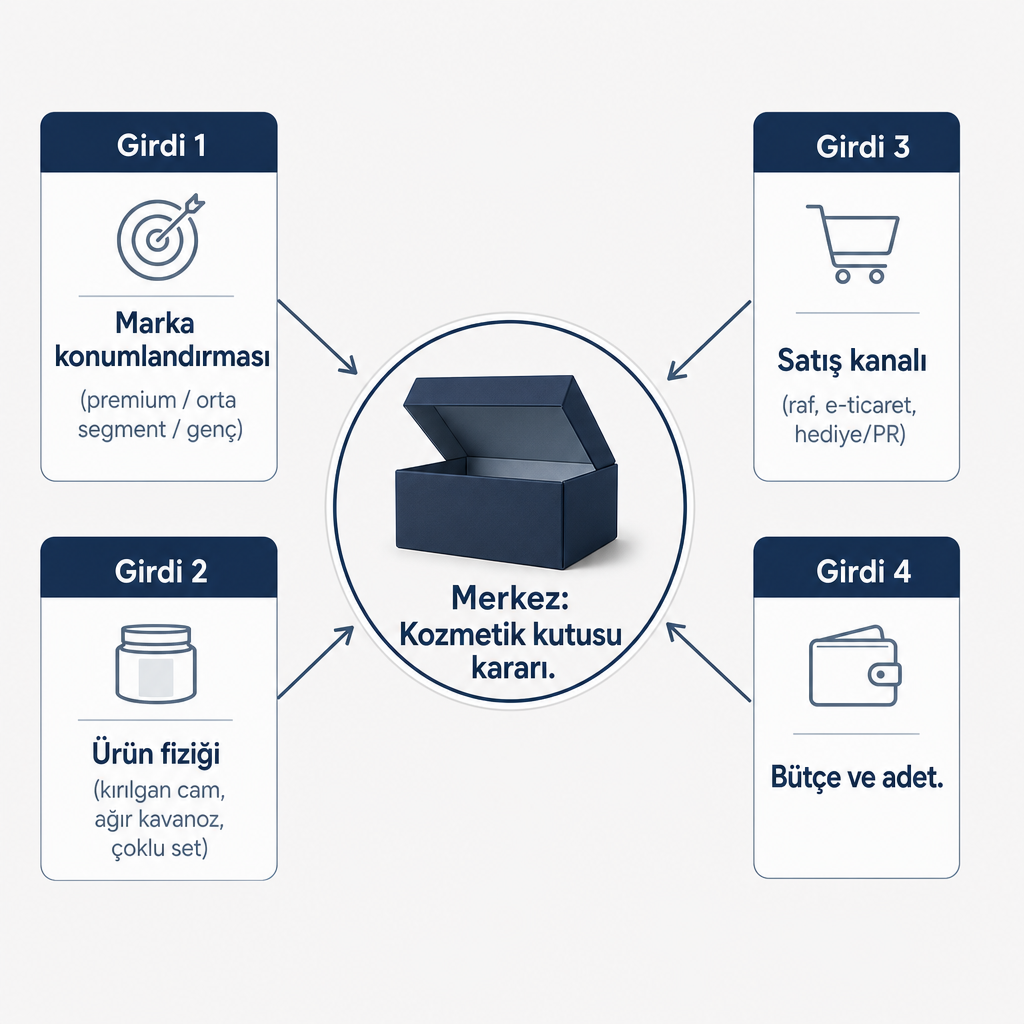
Which cosmetic box does your brand need?
When choosing the right box, you are actually answering three critical questions. First, where and how will your product be sold: on a perfume shelf, in a boutique, through online orders, or as a gift set? Second, what are the product's physical needs: a fragile glass bottle, a heavy cream jar, or a multi-piece set? Third, which segment does your brand address: premium and luxury, mid-segment, or young and dynamic?
We have a broad premium packaging portfolio ranging from cardboard boxes to rigid gift boxes, from paper bags to labels and thank-you cards; so you can plan both shelf products and sets and gift boxes under one roof. Luxury rigid boxes, cylindrical boxes, corrugated e-commerce boxes, and paper bags are part of our production range and can be adapted to cosmetic projects.
At this decision stage, considering your sales channels (retail and e-commerce) together with special use scenarios such as gift or PR sets within the same packaging ecosystem provides an advantage in the long run in terms of both cost and brand consistency. In our guide to premium box production in Istanbul, we also cover the details of this integrated approach.
Key components of brand-focused cosmetic box design
Structural design: Rigid box or cardboard box?
Structural design covers the box's form, opening concept, carrying strength, and internal layout engineering. Common forms in the cosmetics category include the lidded rigid box, the magnetic presentation box, the drawer box, two-piece lid-and-base boxes, and standard cardboard boxes. In a process that begins with consultancy, we analyze your product features and brand positioning to clarify the packaging type, size, material, and printing technique together.
In rigid boxes, a thick rigid body and wrapping paper offer high protection along with a luxury perception; cardboard boxes, on the other hand, provide lighter, more economical solutions suited to fast production. Typical signals that point toward a rigid box are: heavy and fragile products, high-priced sets, an expectation of a lasting gift box, and the need for packaging that becomes an object beyond the shelf.
Graphic design: Logo, color, typography, narrative
Graphic design carries your brand identity onto the box surface. The brand logo is the key to recognition; its placement and size should be structured to ensure clear visibility on the main panel of the box. The color palette, typography, and iconography are adapted to the brand's spirit: for premium brands, clean typography and controlled metallic tones stand out, while for young and playful brands, contrasting colors and dynamic typography come to the fore. Product name, content information, usage instructions, and legal warnings are placed in a legible and orderly hierarchy.
In the graphic design step, we transfer the color palette, logo position, surface textures, and finishes such as varnish, foil, and embossing onto the box in harmony with your brand identity. The goal here is to integrate the visual language into the box form; that is, to think not like a two-dimensional label, but like a three-dimensional brand object.
Material, surface treatments, and tactile experience
Paper type, varnish (glossy or matte), hot foil, embossing, and specially textured papers transform the packaging into an object that feels premium through the sensation in the hand. Our premium-packaging-focused production approach aims to make the box suit your brand both visually and tactilely through different paper types, color-accuracy-focused proofing processes, and quality control mechanisms. In rigid boxes, the choice of wrapping paper and the finishes are decisive in terms of luxury perception and resistance to soiling; in cardboard boxes, the right weight and surface treatment are defined according to the product category.
Sustainability and the unboxing experience
For modern cosmetic brands, recyclable papers, sustainable material selection, and carbon footprint awareness are now part of brand strategy. By considering consumer psychology and the unboxing experience together in the design, we aim to give the box opening a concept that is memorable yet avoids unnecessary use of material. By designing premium cardboard and rigid boxes within the same visual language as bags, labels, cards, and other printed materials, we provide the infrastructure for you to build the brand experience holistically.
Cardboard cosmetic box or rigid cosmetic box?
One of the most fundamental decision points in brand-focused cosmetic box design is the choice between a cardboard box and a rigid box. Both options have their own appropriate use cases.
A cardboard cosmetic box is light, economical, and suitable for mass production; it is ideal for single products, mid-segment brands, and high-volume shelf projects. You can strengthen the shelf impact with color printing, die-cut forms, and visual touches such as windows.
A rigid cosmetic box, on the other hand, brings a luxury and premium perception to the fore; wrapping paper is applied over a thick rigid body. It is suitable for sets, gift boxes, PR shipments, and high-priced products. With lidded, magnetic, or drawer opening mechanisms, it turns the unboxing experience into a story.
Since we can plan both cardboard and rigid cosmetic boxes within the same design and production chain, we can provide a one-time solution for multiple packaging combinations such as the shelf box, the gift box, and the e-commerce box according to your brand tone. To see the cost items in advance, you can take a look at our custom box production cost guide.
How do you choose the right cosmetic box design?
The criteria that clarify the decision for the brand team and the purchasing side are clear; considering each one together with its brief rationale makes the choice easier.
| Criterion | Situation pointing to a cardboard box | Situation pointing to a rigid box |
|---|---|---|
| Brand positioning | Young, dynamic, highly price-sensitive segment | Luxury/premium perception, integrated packaging ecosystem |
| Product characteristics | Light and compact products | Glass bottle, heavy jar, multi-piece set |
| Sales channel | High-volume shelf projects | Gift, PR set, strong unboxing expectation |
| Protection need | Standard protection is sufficient | Internal layout, dividers, corrugated inner support needed |
Brand positioning is the first filter: in the luxury segment, building an integrated ecosystem with a rigid box, a custom bag, and additional printed materials is powerful in terms of perception management; in young and price-sensitive segments, a cardboard box supported by a strong graphic language is usually sufficient. Product characteristics and protection need are the second determinant; for glass bottles, heavy jars, or multi-piece sets, carrying strength and internal layout (foam, cardboard dividers, corrugated inner support) come to the fore, while for light products, a cardboard box provides logistics and shelf efficiency.
The sales channel and the unboxing experience are the third axis: for e-commerce and DTC brands, box opening is an important touchpoint on social media, and here it is necessary to plan the rigid gift box together with the cardboard inner box and the outer shipping box; in physical shelf projects, the combination of logo, color, and form on the front face determines the appeal. The budget and cost structure are shaped by the box type, size, material, printing technique, surface treatments, and quantity; managing structural design, graphic design, digital proofing, physical samples, production, and logistics within the same service chain provides cost optimization. Finally, sustainability and brand commitments; recyclable materials and responsible paper sourcing, when planned in harmony with the material and box concept at the design stage, turn into a valuable message in corporate communication.
Brand-focused cosmetic box design with Kosapack
As a premium packaging partner based in Zeytinburnu, Istanbul, we meet all your printed packaging needs, from cardboard boxes to rigid gift boxes, from paper bags to labels, with a service model that can be managed end to end. For cosmetic brands, the process works with the following logic.
In consultancy and needs analysis, we clarify the packaging type, size, material, and printing techniques together through brand and product analysis; we discuss shelf and unboxing goals at this stage. In the structural and graphic design step, we engineer the box form (lidded, magnetic, drawer, or two-piece) and its carrying and protection functions; then we transfer the logo placement, color palette, and surface textures onto the box in harmony with your brand identity.
In the prototype and color-accurate sample stage, the digital proof and physical sample are a critical control point for color accuracy and structural performance; by managing the pre-press proofing and sampling processes, we reduce the risks before mass production. In the production, quality control, and consolidated logistics stage, after the approved design and sample, we carry out production through our verified factory partners, and coordinate quality control and logistics through a single point of contact. This way, along with your cosmetic boxes, bags, labels, cards, and other printed materials can go to the field in the same tone and timing. You can find the entire process in detail in our guide explaining step by step how brand-specific packaging is made.
For your cosmetic packaging projects, you can start the brand-focused box design process in a short time by requesting a quote together with your product dimensions, target quantities, sales channels, and brand visual guidelines.
Frequently Asked Questions
Where should I start with cosmetic box design?
The priority is to create a clear design brief: brand identity, target audience, sales channel (shelf or e-commerce), product information, and budget range should be included in this brief. This framework makes it easier for our design and consultancy team to recommend the right box type, material, and graphic language.
What is the main difference between a rigid cosmetic box and a cardboard cosmetic box?
A cardboard box is light and economical; it is suitable for single products and high-volume shelf projects. A rigid box, with its thick body and wrapping paper, offers a luxury perception, high protection, and a strong unboxing experience. For premium sets, gift, and PR projects, a rigid box is generally preferred.
Who should be involved in the cosmetic box design process?
Usually the brand and marketing team, product management, and purchasing teams participate together in packaging decisions. On our side, consultancy, structural design, graphic design, and production management work together; this way, brand perception, cost, and logistics are balanced in a single project.
What information should I prepare to start a cosmetic box project?
Product dimensions, target quantities, sales channels, brand visual guidelines (logo, color palette, fonts), and your sustainability goals if any, are the basic inputs of the quote and design process. With this information you can open a project, and then move on to the detailed design and prototype stage.
Can I create a sustainable cosmetic box design?
Yes. With recyclable papers, sustainable material options, and an optimized box concept, boxes can be designed that both support your sustainability commitments and are aesthetically strong. We have the production and design infrastructure to plan your premium cardboard and rigid boxes with this approach.