
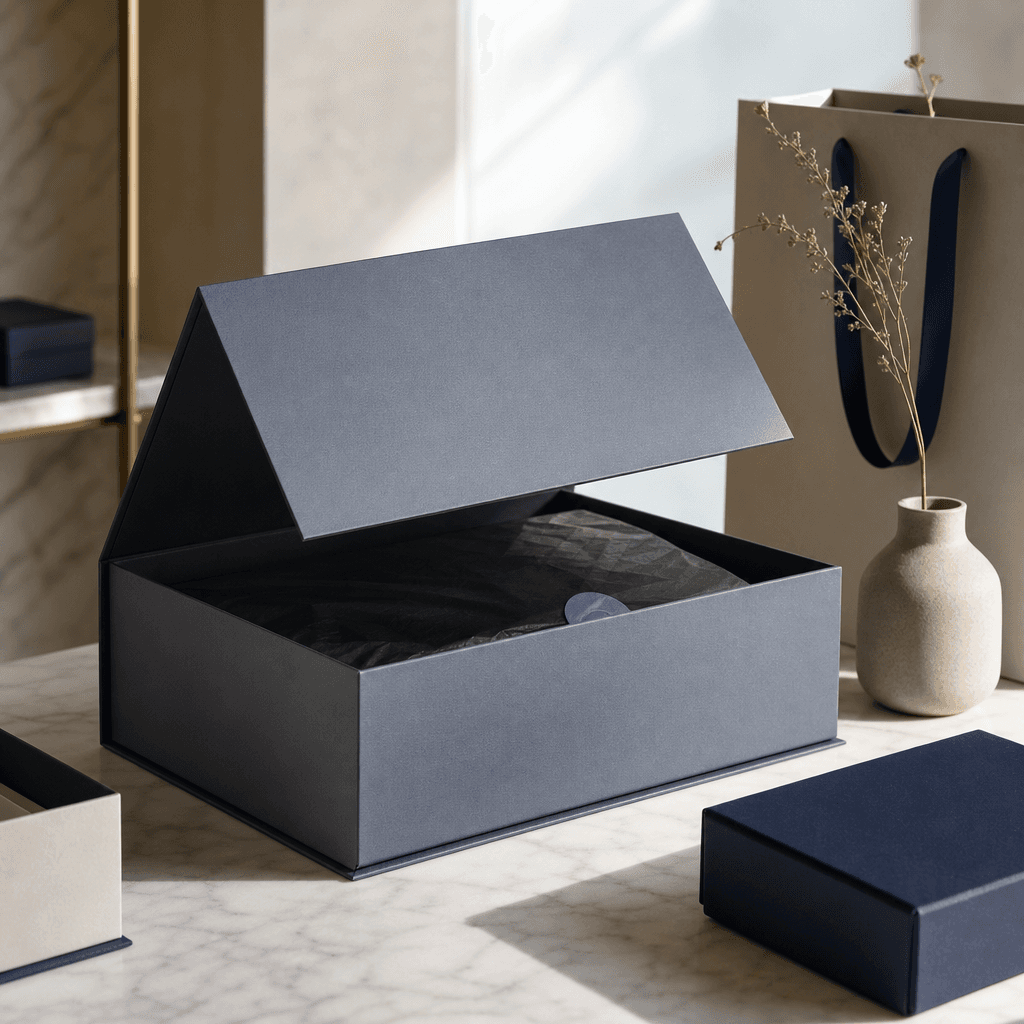
The moment a customer holds a purchased product in their hands for the first time, they make a silent but definitive decision about your brand. Its weight, the sensation of opening the lid, the texture of the cardboard, and the consistency of the color; all of these determine the perceived value at a moment when the product itself is not yet visible. For premium and luxury brands, packaging is now much more than a carrying case: it is the first point of contact that physically represents the brand's price positioning, story, and promise of quality. This is precisely where rigid box production becomes a strategic choice for brands that want to leave a lasting impression. Kosapack, as a premium packaging partner based in Zeytinburnu, Istanbul, manages rigid box projects through a single point of contact with an end-to-end service model that spans consultancy, design, prototyping, production management, and consolidated logistics.
In this article, we address why the rigid box is the default packaging form of the luxury segment, how Kosapack manages the process, which options are on the table in design and material decisions, and how the rigid box is positioned across different sectors.
Table of Contents
- What is a rigid box and why is it critical for luxury brands?
- Rigid box production with Kosapack: an end-to-end premium packaging experience
- The Kosapack approach to design and material selection
- Sector applications: cosmetics, jewelry, candles, chocolate
- Frequently asked questions
- Start your rigid box project with Kosapack
What is a rigid box and why is it critical for luxury brands?
A rigid box, also known in the industry as a "set-up box," is a packaging form produced by applying a decorative covering paper onto thick greyboard or chipboard. Unlike folding cartons, it is shipped fully formed; it requires no assembly when it reaches the customer or the store. The body material is usually pressed board 2–3 mm thick, and this thickness gives the box that solid, substantial weight felt in the hand. In the Turkish market, the same product is also called "taslama kutu" or "rigid cardboard box"; this structure, produced with a technique of wrapping covering onto rigid board, is preferred to strengthen premium product presentation and brand perception.
Compared to folding cartons and corrugated boxes, the rigid box is a higher-cost solution per unit. The return on this cost difference is a marked leap in perceived value. While a folding box is shipped flat and set up in the store, and a corrugated box is essentially focused on protection and transport; the rigid box presents the product within a durable, storable shell that often carries collectible value. Thanks to its thick material structure, it rarely loses its shape and therefore maintains the same prestigious appearance throughout the product's shelf life.
These features make the rigid box the natural choice for categories such as luxury jewelry, special gift sets, premium cosmetics, and gourmet food. It is emphasized that rigid boxes can create a rich and tactile experience with materials such as velvet, suede, and textured paper; and that they offer both protection and elegance for fragile or valuable products. For a brand, the strategic meaning of this is clear: the heavy, solid feel delivered at the moment of unboxing physically supports the product's pricing and positioning. The brand's contact with the customer is prolonged because they often keep the box rather than discarding it.
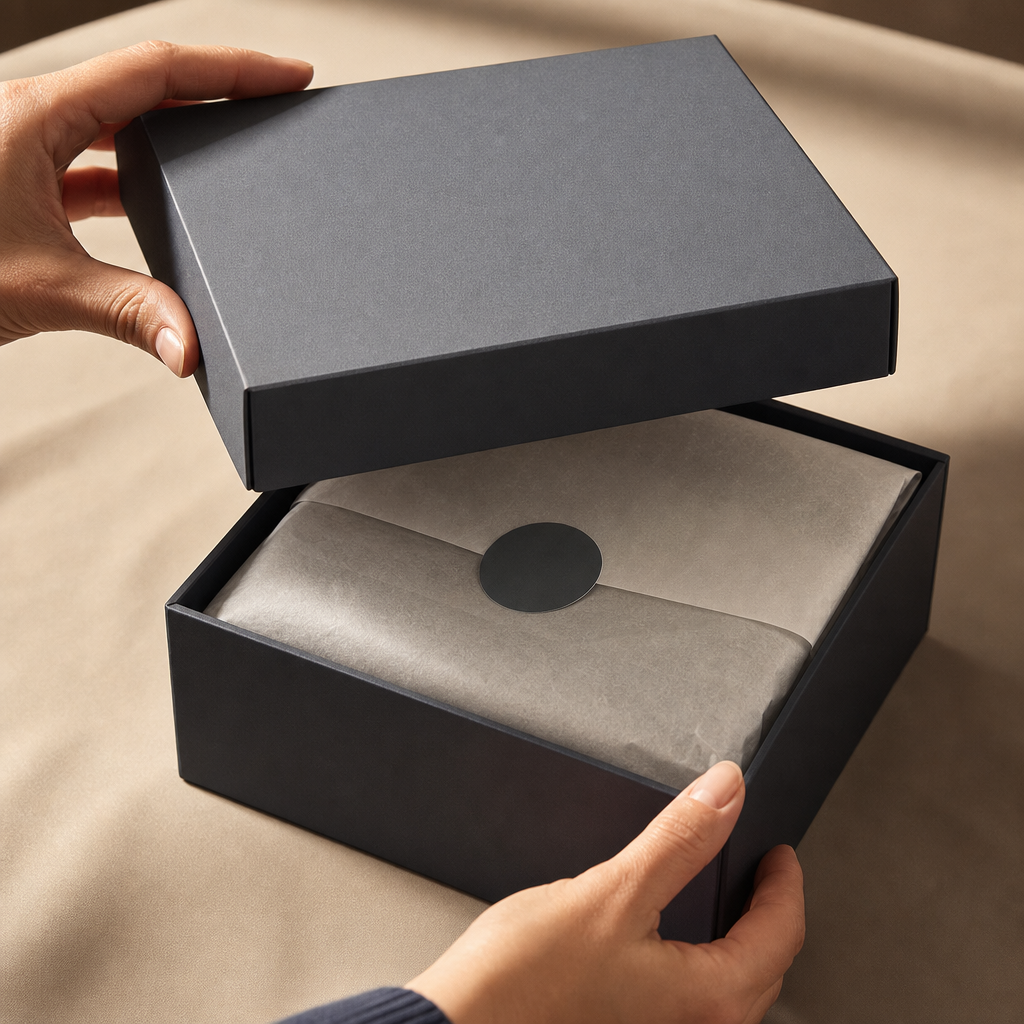
The position of the rigid box in the balance of cost and perceived value is clear: it is a packaging form that translates the brand's promise of prestige into a physical language, protects the product, and leaves a lasting impression on the customer. In the right sector and with the right product positioning, the extra cost paid returns as brand value.
Rigid box production with Kosapack: an end-to-end premium packaging experience
What challenges a brand the most in rigid box production is often not a single production step; it is the running of consultancy, design, sampling, mass production, and logistics through disconnected suppliers. This is where Kosapack differs from the classic "manufacturer-only" role and unites all these steps into a single project flow. For the brand, this means a single point of contact and one project manager instead of a scattered supply chain.
The process begins with consultancy. Based on a brand needs analysis, Kosapack clarifies the packaging type, size, material, and printing techniques together. Then structural design comes into play: whether the box form is lidded, magnetic, drawer-style, or two-piece; the engineering of the carrying and protection functions is determined at this stage. In the graphic design step, brand identity is carried onto the box with logo placement, color palette, textured surfaces, and premium finishes such as varnish, foiling, and embossing.
To ensure these design decisions do not remain on paper, the prototyping stage is of critical importance. Kosapack states that it delivers a physical sample within 7–15 business days; this gives the opportunity to see how the design stands up in the real world in terms of color, material, and structure before going into production. After approval, mass production is carried out under Kosapack's control and coordination through verified factory partners. In the final step, consolidated logistics comes into play: different packaging items are gathered under a single shipment, simplifying the brand's supply and storage operation.
The most concrete advantage of this model for premium brands is speed. Kosapack states that it can provide a price quote within 24 hours; this significantly shortens decision time in time-sensitive projects such as collection launches and campaign calendars. When the countdown begins for a new perfume series or a limited-edition gift set, the predictability of the quote and sample process eases the entire marketing calendar.
When the rigid box needs to be considered not on its own but as part of a packaging ecosystem, this holistic model becomes even more meaningful. Kosapack's portfolio, alongside rigid boxes, covers folding boxes, paper bags, labels, tissue paper, thank-you cards, and in-box dividers. When a brand decides which items to choose for which product, resources such as the packaging materials guide can serve as a starting point; however, the real value lies in the ability to design and produce all these items through a single supplier.
The Kosapack approach to design and material selection
The success of a rigid box project rests on the choices made in four decision areas that feed into each other: box form, material, printing and finishes, and sustainability. Kosapack's consultancy process evaluates these headings together with the brand story.
Box form and opening experience. The choice of form directly determines the moment of unboxing. A lidded rigid box provides a classic and strong presentation; a magnetic book-cover box gives a premium feel with the lid closing in a soft pull; drawer-style boxes, on the other hand, offer a sophisticated pull-out experience. The two-piece lid-and-base form strengthens the classic gift box perception. Kosapack recommends the appropriate form according to the product type, transport needs, and brand narrative.
Material selection. The common practice for the body is applying a covering onto rigid board or chipboard 2–3 mm thick. On the covering paper side, matte or glossy art paper, kraft paper, or textured specialty papers can be preferred; in the luxury segment, velvet and suede-type surfaces enrich the tactile experience. On the interior, cardboard, EVA, foam, or fabric-covered tray and separator solutions are designed to seat and protect the product. For brands wishing to work with natural and recyclable papers, the uses and advantages of kraft paper provides a good foundation for the material decision.
Printing and finishes. In the luxury packaging narrative, offset printing, hot foil (gold or silver), embossing, spot UV, and soft-touch lamination are considered standard premium finishes. The contribution of these finishes to brand perception, however, only fully emerges when combined with color consistency. One of Kosapack's distinguishing aspects is that it performs a proofing study for color accuracy before approval; it focuses on applying brand colors as close as possible to the Pantone or corporate palette. This is an important risk reducer, especially for brands that sell through multiple channels and expect the same brand color to be repeated in every batch.
Sustainability. Because rigid boxes use thick material, they can consume more resources compared to thinner packaging; this requires establishing the sustainability balance consciously. Kosapack states that it works with recyclable materials and offers carbon footprint reporting. For premium brands with ESG goals, this provides the ability to document environmental responsibility without compromising the prestigious appearance. Designs with a kraft look but premium craftsmanship are a good example for brands wishing to combine sustainable aesthetics with a luxury perception. Recyclable cardboard and paper combinations and ink choices are clarified together on a project-specific basis. When deciding between different material families, brands can prioritize by benefiting from the selection of the right packaging materials for your brand content.
These four decision areas are not independent; the choice of form affects the material, the material affects the printing, and the printing affects sustainability preferences. The value of Kosapack's consultancy-focused approach is precisely in managing these dependencies from a single hand, enabling the brand to reach a consistent and applicable outcome.
Sector applications: cosmetics, jewelry, candles, chocolate
The concrete benefit of the rigid box becomes clearer when broken down by sector. Across the more than 25 verticals Kosapack targets, the rigid box is designed in different forms according to each product group's own protection and presentation needs.
Cosmetics and personal care. For perfume boxes, skincare set boxes, and makeup palettes, rigid boxes provide both the protection of glass bottles and a luxury presentation on shelves and in online visuals. Interior separators secure the bottle; a magnetic lid gives a premium feel upon first opening the product. In limited-edition collections, the box itself turns into a gift package.
Jewelry and accessories. For ring, bracelet, watch, and jewelry collections, rigid boxes with interior trays offer a frame that preserves the product's position and makes its value visible. Velvet or suede interior lining delivers both protection and a tactile luxury feel together. In this segment, the rigid box is almost an inseparable part of the product experience.
Candles and home fragrance. For the safe transport and premium presentation of heavy glass jars, rigid boxes provide both structural durability and aesthetic value. The divider inside the box prevents the product from moving during transport, while the outer covering reflects the brand's aesthetic language.
Chocolate and gourmet food. Multi-compartment rigid boxes with interior separators ensure each piece sits in place and offer an orderly, appetizing presentation at the moment of opening. Some manufacturers state that they use food-compatible interior lining materials; for rigid boxes produced for food, the suitability of the interior surface material should be evaluated on a project basis. Since the rigid box is usually secondary packaging, although actual contact safety is critical in the inner primary packaging, in-brand quality requirements are clarified together with Kosapack.
Fashion, textile, and corporate gift sets. Premium shirt boxes, scarf, and accessory boxes elevate the retail and gift experience on the fashion side. In corporate gift sets, presentation boxes with separators that offer products such as planners, pens, USBs, or certificates together strengthen the corporate brand's quality perception.
In each of these applications, the details that enhance the premium unboxing experience are common: magnetic closure, soft-touch interior lining, personalized thank-you cards, label and tissue paper integration. Kosapack's ability to produce all these items under one roof allows the brand to design the rigid box not as an isolated piece but as the center of a holistic brand experience.
Frequently asked questions
What is the difference between a rigid box and a folding box?
A rigid box is produced fully formed by applying a covering onto thick greyboard or chipboard and requires no assembly; a folding box, on the other hand, is a form produced from thinner cardboard that is shipped flat and set up at the moment of use. While the rigid box is higher-cost, it is preferred for premium presentation with its solid weight, durability, and perceived value. The folding box, on the other hand, stands out for products that require lightness, low logistics volume, and more economical production.
What factors do MOQ, lead time, and price depend on?
Across the market, the minimum order quantity in luxury rigid box production mostly starts at levels of 500 and above; the main reason for this is the high cost of dies and setup. However, these values are typical examples in the market and do not directly represent Kosapack's own conditions. Price and lead time vary on a project basis according to the box form, material and finish choices, printing techniques, and quantity. For the most accurate information, it is necessary to obtain a project-specific quote from Kosapack.
Is sustainable rigid box production possible?
Yes. With recyclable cardboard and paper combinations, kraft-look premium designs, and conscious ink choices, rigid boxes can be designed to reduce the environmental burden. Kosapack states that it works with recyclable materials and offers carbon footprint reporting. Because rigid boxes use thick material, the sustainability balance must be established consciously at the design stage; specific certification needs are clarified on a project basis.
How does the ordering process work with Kosapack?
The process begins with consultancy: the packaging type, size, material, and printing techniques are determined based on a brand needs analysis. Then come the steps of structural and graphic design, physical sample, approved mass production, and consolidated logistics. Kosapack states that it can provide a quote within 24 hours and prepares the physical sample within 7–15 business days. Thus, the brand runs the entire process through a single point of contact.
How do the sample and design approval proceed?
After the design decisions are clarified, Kosapack produces a physical sample and presents it within 7–15 business days. This sample allows seeing how the color, material, and structure stand up in the real world before going into mass production. For color accuracy, a proofing study adjusts the brand colors as close as possible to the Pantone or corporate palette. Once approval is given, mass production is started.
Which sectors is the rigid box most suitable for?
The rigid box delivers the strongest results in categories where perceived value is high, such as premium cosmetics, jewelry, candles and home fragrance, chocolate and gourmet food, fashion, and corporate gift sets. As the product's price positioning rises and the importance of the unboxing experience for the brand increases, the balance of prestige and protection that the rigid box provides becomes more meaningful.
Start your rigid box project with Kosapack
The rigid box is a packaging form that, in the right sector and with the right product positioning, turns the extra cost paid into brand value. At the decision stage, you have a few clear questions before you: in what form will the box open, which material and finish will best tell your brand story, how will you balance your sustainability priorities, and on what timeline will you bring all of this to life. All of these questions are answered much faster and more consistently when handled through a single point of contact.
Kosapack manages your rigid box project from start to finish with its model spanning consultancy, design, prototyping, production management, and consolidated logistics; it shortens your decision process with a quote in 24 hours and a physical sample in 7–15 business days. By sharing your product, target sector, and brand story, you can obtain a project-specific quote and together design how the rigid box will turn into a lasting impression for your brand.