
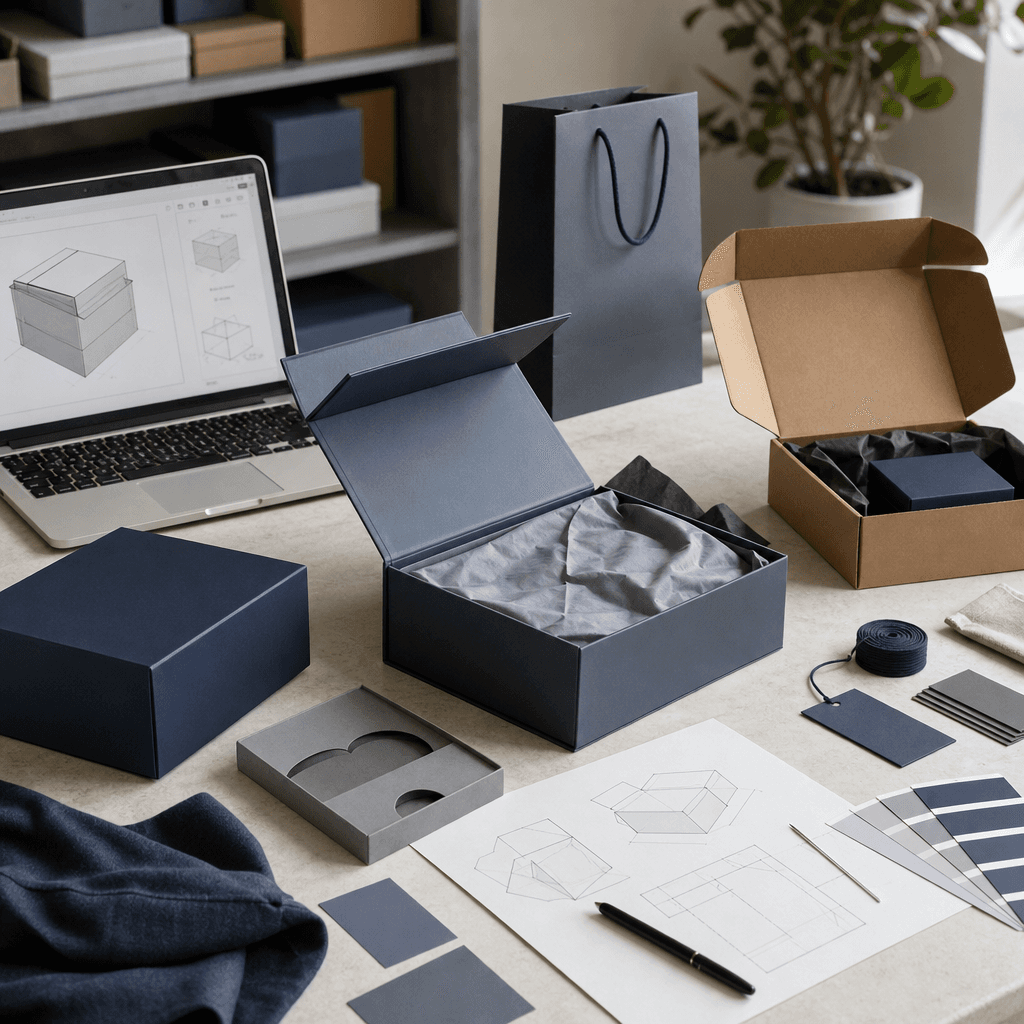
Your product may be positioned as premium; but does the box the customer sees when they hold it for the first time tell the same story? In many categories, from cosmetics to jewelry, from chocolate to e-commerce shipments, the box is no longer just protection but the silent representative of the brand. Custom box production comes into play precisely at this point: a packaging structure prepared with dimensions, materials, and printing tailored to your brand, consciously matched to the product and brand perception. Kosapack, as a premium packaging company based in Zeytinburnu (Istanbul), manages this process on behalf of brands with an end-to-end model that spans from consultancy to design, from prototyping to managed production and consolidated logistics.
In this article, you'll find why a custom box is a strategic investment for your brand, which box type is typically suitable for which use, how the process progresses step by step, and how the quotation, sample, and production stages work in practice when working with Kosapack.
Table of Contents
- What is custom box production and why is it critical for your brand?
- Which box type is right for your brand? Rigid, folding, and corrugated
- Custom box production process: step by step with Kosapack
- Choosing the right packaging material: durability, cost, sustainability
- Color-consistent printing and premium details
- Working with Kosapack: quotation, sample, and production time
- Frequently Asked Questions
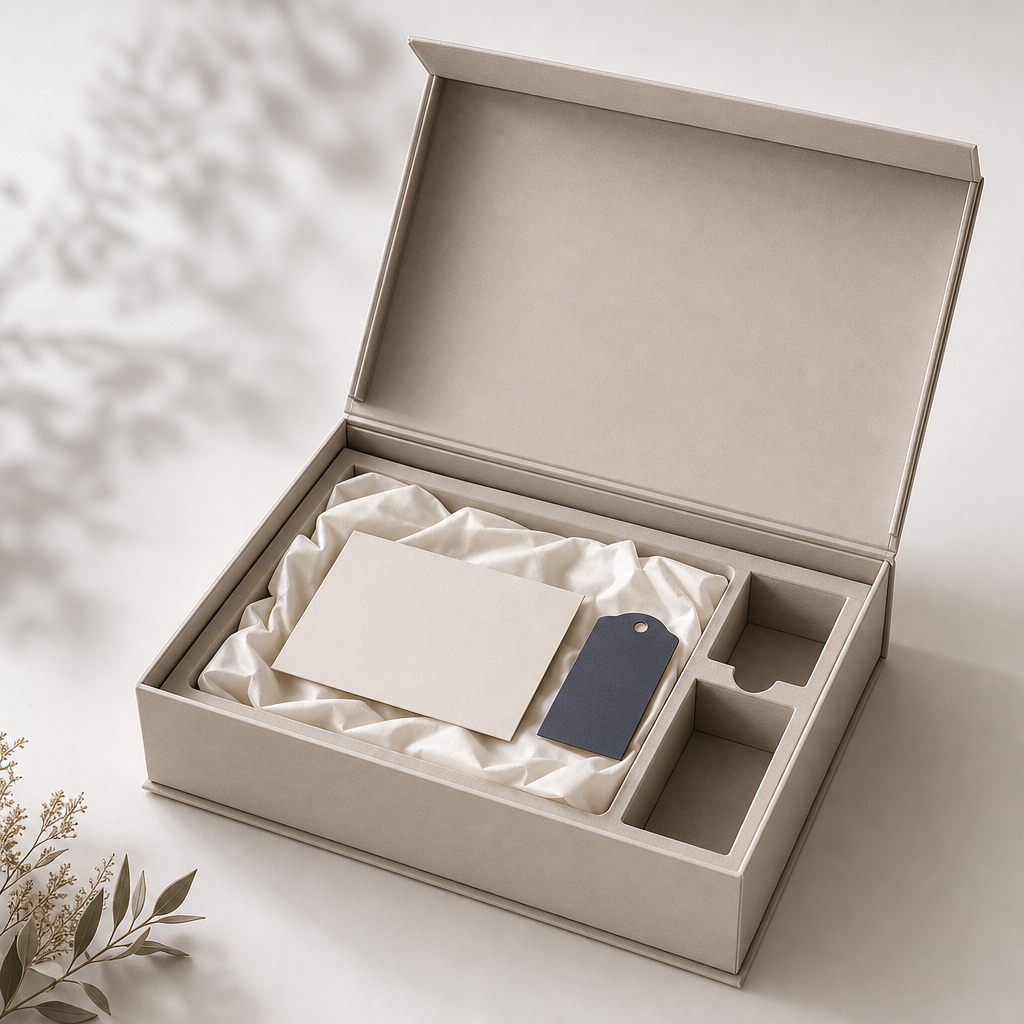
What is custom box production and why is it critical for your brand?
Custom box production means preparing a box from scratch, designed according to your product's dimensions, weight, and brand identity, instead of using ready-made standard sizes. Dimensions, construction, material, and printing are all brought together around a single brand objective. Instead of fitting the product into a standard box, you build the box around the product and the brand. This distinction is more decisive than it seems: in a standard box, the gap between the product and the box is a weak point in terms of both protection and visual integrity, whereas in a custom box, this gap becomes a deliberate design decision.
The value of this approach becomes especially apparent in premium and growth-stage brands. The box strengthens brand perception, supports the perceived value of the product and thus its pricing power, and when properly constructed, encourages repeat purchases. In e-commerce and DTC brands, a well-designed box turns into an opening moment that the customer wants to share; unboxing content creates organic visibility. The weight the customer feels the moment they open the box, the way the lid opens, and the integrity of the inner layout often form an impression about the brand even before the product itself.
Kosapack handles this side with the experience of a packaging partner that has worked with over 500 brands across 25+ verticals. In categories with different expectations such as cosmetics, jewelry, food and beverage, fashion, and electronics, it considers both the aesthetic and functional roles of the box together. The goal is not just for the box to look beautiful; it is for it to protect the product, be suitable for logistics, and reiterate the brand promise the moment it appears on the store shelf or comes out of the shipping box. Different sectors also have different priorities: while perceived value and sturdiness stand out in jewelry, shelf visibility and transport safety matter in food, and shipping durability and the unboxing experience gain weight in e-commerce.
Another reason custom boxes are critical is consistency. Ensuring that packaging produced for different products, different channels, and different gift sets speaks the same visual language allows the brand to be perceived as cohesive in the eyes of the customer. Achieving this consistency requires planning the entire packaging set with a single approach rather than individual products one by one. As the brand grows and the number of products and channel variety increases, without this cohesive planning, packaging can quickly slide into a disorganized appearance; for this reason, the custom box decision is made not for a single product, but for the brand's long-term packaging architecture.
Which box type is right for your brand? Rigid, folding, and corrugated
Box selection usually proceeds through three main structures. Each serves a different use scenario and a different brand perception. To choose the right form, the product's weight, fragility, sales channel, and the perception the brand aims for are evaluated together.
Rigid box: This is the high-grammage, fixed-structure form with the strongest luxury perception. The sturdiness felt when you open the lid raises the perceived value of premium products. It is typically preferred for jewelry, watches, high-segment cosmetics, special gift sets, and limited-edition products. Since it does not fold, it is planned differently from folding boxes in terms of storage and transport; this structural difference is something that should be discussed early on because it directly affects both the unit cost and logistics planning.
Folding carton: Made from thinner cardboard, transported flat and folded at the point of use, this is a common form for shelf products. It is frequently used in cosmetics, food, textile accessories, and retail products. It is flexible in terms of cost and storage efficiency; since it has a wide printing surface, it is also suitable for brand communication. Because it can be transported flat, it significantly reduces storage and shipping costs in high quantities, making it a practical choice especially in categories with high shelf density.
Corrugated box: This is the form designed for e-commerce and cargo shipments, where transport durability comes to the forefront. Its corrugated structure provides protection against impact; product weight and the shipping process directly affect the thickness and construction of the box here. For DTC brands, both protection and a brand experience on the outer surface can be built together. The stacking, moisture, and impact conditions the box is exposed to during shipping require the flute type and thickness to be selected according to the product's weight; this is one of the fundamental determinants of safe delivery.
Being able to manage these three forms under one roof for the same brand is a significant advantage. For example, a cosmetics brand can use a folding carton for the store, a rigid box for special sets, and a corrugated box for online orders; it is desired that the visual language of all of them be compatible with each other. Kosapack plans these three main box types and the complementary products together, so that packaging across different channels speaks the same brand language without becoming disconnected from one another.
Elements added alongside the box turn the experience into a whole: paper bags, silk tissue paper, labels, thank-you cards, fabric pouches, and in-box separators. Especially for gift, boutique, and cosmetics customers, the harmony between the box and the bag significantly influences brand perception. For context on how bag options can be tailored to the brand, the paper bag types and use cases guide is a helpful starting point for completing your box set.
Custom box production process: step by step with Kosapack
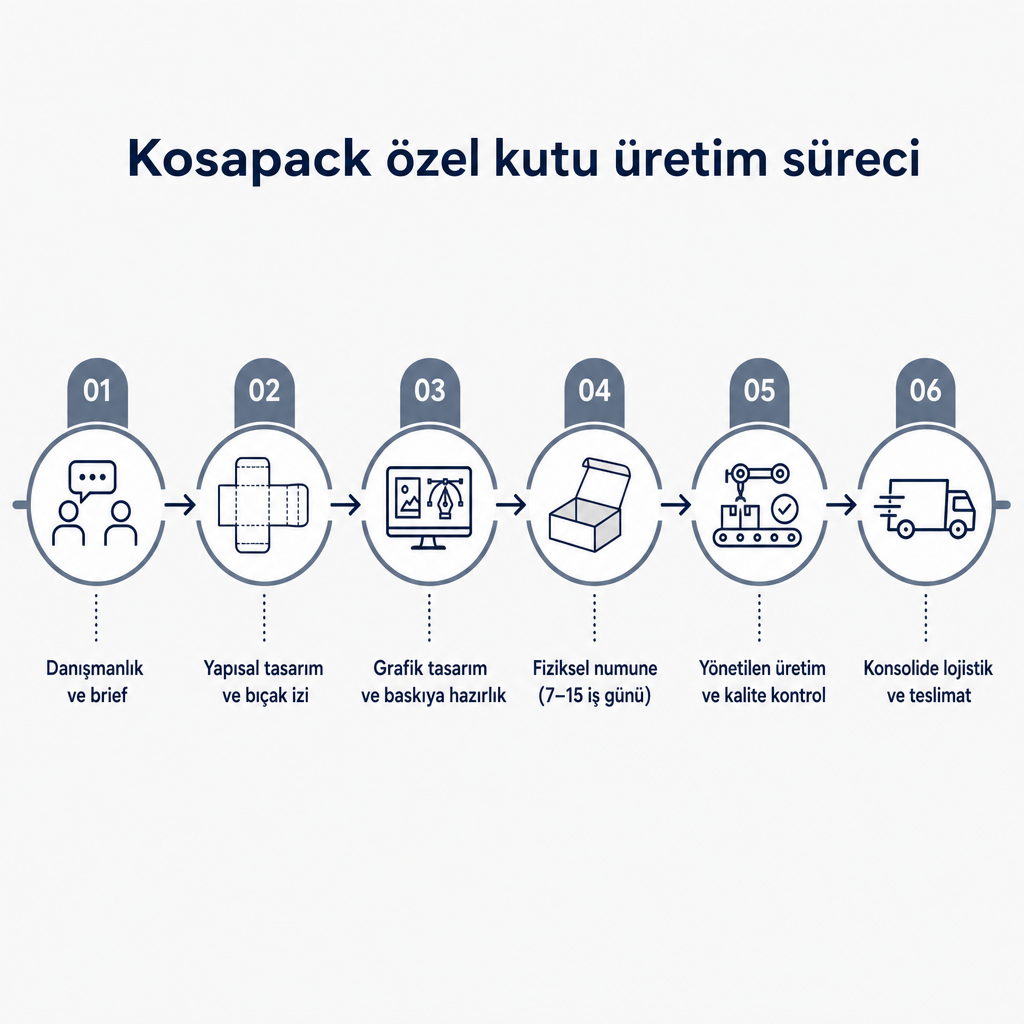
In the industry, box production typically consists of steps such as design, material selection, cutting, printing, folding-gluing, quality control, and shipment. While this general framework is accurate, the brand's job is not to manage these technical steps on its own. In the Kosapack model, you describe your brand goal and your product; the technical construction is managed on the company's side. The steps below show how this shared responsibility works in practice.
Brief gathering and consultancy. The process begins by discussing your product range, target customer base, sales channel (online or store), planned quantities, budget framework, and sustainability priorities together. At this stage, the right box type and material direction become clear. A good brief is one of the most efficient accelerators of the process, as it reduces the number of revisions in subsequent steps.
Structural design and die-cut. The construction, dimensioning, and durability of the box are determined here. The die-cut, which is the "open form" of a box, is the vector design of the lines along which the box will be cut and folded; for a producible box, dimensions, print machine sizes, and folding construction are planned together. It is generally accepted that template preparation and the folding stage are the most critical parts that give the box its final shape in cardboard box manufacturing. Solving these technical details is Kosapack's job; you see the result on the sample.
Graphic design and prepress. The logo, color palette, typography, and visual language are placed onto the die-cut. In prepress, file checks, size verification, and test prints are integral parts of professional production. The meticulous checking done at this stage prevents size or alignment errors that could arise in mass production from the outset.
Prototyping. Kosapack provides a physical sample within 7–15 business days according to the brief. On this sample, the die-cut, folding, print tone, and material can be evaluated in real use; decisions are made based on the physical example in your hands, not on a screen image. This creates the opportunity to make a clear decision on a tangible example before moving to expensive mass production.
Managed production and quality control. After approval, mass production is carried out through Kosapack's approved factory partners; printing, cutting, gluing, and strength controls are systematically tracked by the company. This way, the burden of supplier management is taken off your shoulders and quality is assured by a single responsible party.
Consolidated logistics. Different products such as the box, bag, label, and inner filling can be combined under a single shipment; storage and delivery are planned together. This means management from a single point instead of dealing with multiple suppliers, and it reduces the risk of coordination errors during the delivery process.
Choosing the right packaging material: durability, cost, sustainability
As much as the type of box, the material it is produced from also determines the result. In material selection, three criteria are evaluated together, and a conscious balance is often established among them. None of these three criteria makes the right decision on its own; the real skill is establishing the balance among them according to the brand's priorities.
Mechanical strength. The product's weight, fragility, and the shipping process it will go through determine the thickness and structure of the box. A heat-sensitive chocolate or an impact-prone glass cosmetic product requires a different construction in terms of transport and shelf durability. The thickness and dimensions of the box are directly related to both product safety and logistics costs. A weaker-than-necessary material leads to damaged deliveries, while a stronger-than-necessary material leads to unnecessary cost; therefore, durability is always scaled according to the product's real conditions.
Cost and quantity. The material is considered together with quantity planning. It may be possible to achieve the same visual effect with different material and construction options; the right balance is established while considering the brand's target profit margin. In some cases, a smarter construction can provide the same premium perception without switching to a more expensive material; evaluating such alternatives is an important output of the consultancy stage.
Sustainability. The preference for recyclable material is increasingly decisive in terms of both brand values and customer expectations. Kosapack offers recyclable materials and, when necessary, provides carbon footprint reporting. Since the scope of these commitments may vary depending on the product and project, working directly with Kosapack is the best approach to clarify which material is suitable for which goal. Defining sustainability goals at an early stage makes it easier to shape material and construction decisions in this direction from the outset.
The material decision is a topic that most brands struggle to solve on their own, because aesthetics, cost, and durability must be optimized simultaneously. To better understand the logic of establishing this balance, the packaging materials guide and choosing the right packaging materials for your brand content are reference points that ease your preparation before the decision. The final guidance, however, is made in the consultancy stage, tailored to your product.
Color-consistent printing and premium details
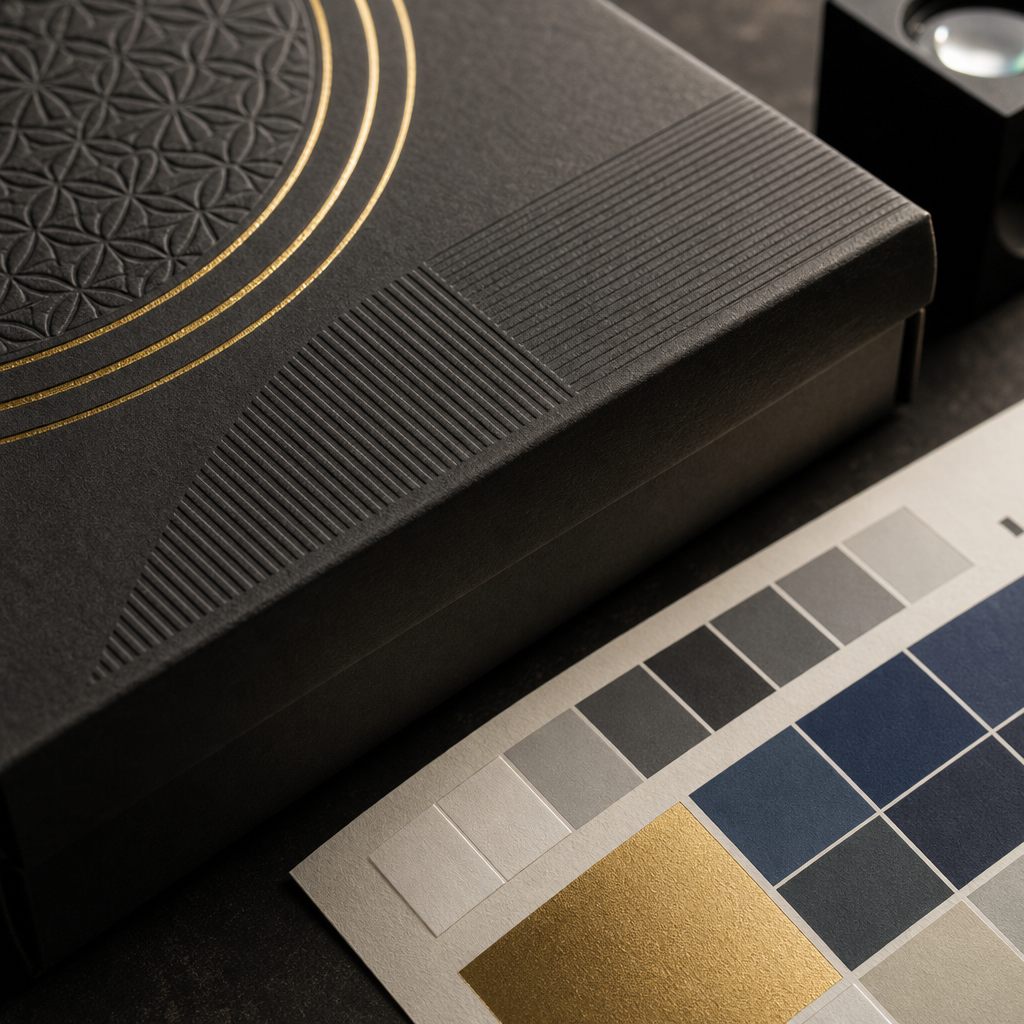
What truly makes a box "brand-specific" is often hidden in the details. Foremost among these is color consistency. The tone you see in the design coming out the same way in printing does not happen on its own; color verification and proof approval processes exist to minimize the difference between the color on the screen and the color on the produced box. Kosapack ensures this consistency with color-accurate proofing; keeping your brand color the same from batch to batch is important for a consistent brand perception. The brand color is often the fastest carrier of recognizability, so even small shifts in tone can weaken brand perception over time.
On the printing technique side, applications such as lamination, foiling, and embossing strengthen the premium perception. You do not need to delve into the technical depth of these techniques; which effect is suitable for your brand is recommended according to your goal and seen on the sample. For example, while a matte lamination gives a calm and elegant touch, a foil detail creates an eye-catching accent; which one is suitable for your brand is evaluated based on your product and positioning.
The real difference emerges in the integrity within the box. The in-box separator keeps the product in place and keeps the opening moment orderly; silk tissue paper gives a tactile sense of quality; labels, thank-you cards, and stickers carry the brand voice to a personal tone. Building these elements together creates an experience beyond a single box. Since Kosapack manages these parts under one roof, the visual language and quality of all of them proceed in harmony with each other; thus, there is no perception break between the box, the bag, and the inner details.
Working with Kosapack: quotation, sample, and production time
Having a few pieces of information ready before starting the process significantly speeds up your work. Before the first meeting, it is enough to gather your product types, estimated quantities, sales channel, target delivery date, and, if any, your brand visual documents. This clarity ensures that the consultancy stage proceeds more accurately and reduces unnecessary back-and-forth correspondence.
Kosapack provides a price quotation within 24 hours according to the brief. At this stage, the product and quantity framework, the production and sample process, and the delivery model typically become clear. Since topics such as concrete price ranges and minimum quantity vary according to your project, these are shared as part of the quotation tailored to you. This fast quotation cycle is an advantage that facilitates planning, especially for brands with tight launch schedules.
After the quotation comes the physical sample process; on the sample that reaches your hands within 7–15 business days, the die-cut, folding, print tone, and material are checked in real use. This stage is a critical checkpoint where you solidify your decisions before moving to mass production. Testing the sample together with your product allows you to see practical details such as fit, closure, and protection early on. Following your approval, mass production is planned, quality control is carried out by Kosapack, and delivery is organized with consolidated logistics.
The most concrete benefit of this model for brands is being able to manage the entire packaging set, from the box to the bag, from the label to the inner filling, with a single partner, instead of dealing separately with numerous suppliers. This reduces both time and coordination burden; proceeding with a single point of contact creates a process where responsibility is not fragmented and quality is assured from a single hand.
Frequently Asked Questions
What is the minimum order quantity for a custom box?
The minimum quantity is not expressed as a single fixed number; it is evaluated together with the box model, material, and production method. Different structures such as rigid box, folding carton, and corrugated box may have different quantity logics in terms of production setup. Small and medium-scale productions may be possible in many scenarios. The quantity framework suitable for your product and goals is clarified during the consultancy and quotation stage.
How do custom dimensions and forms affect box cost?
Since a custom size provides a box that fits the product perfectly and is optimized in terms of logistics, it often reduces waste and unnecessary empty space. A box that fits the product perfectly both reduces the need for unnecessary inner filling and helps keep volumetric shipping costs under control. However, the final cost is determined together with material, construction, printing technique, and quantity. Therefore, cost is concretized in a quotation tailored to your project rather than in a standard list.
Can I get not only the box but also additional products such as bags and inner filling from the same place?
Yes. In addition to rigid cardboard boxes, folding cartons, and corrugated boxes, Kosapack also offers complementary products such as paper bags, labels, silk tissue paper, thank-you cards, fabric pouches, and in-box separators under one roof. Planning these together makes it easier for the entire packaging set to speak the same visual language. With consolidated logistics, these products can be combined into a single shipment.
Does using sustainable material increase the price much?
The cost impact of sustainable choices varies according to the material and project; it does not mean a significant increase in every case. With the right construction and quantity planning, a sustainable choice can often be built together with budget goals. Kosapack offers recyclable materials and, when necessary, provides carbon footprint reporting. Which option is suitable for both your goals and your budget is evaluated together during the consultancy stage.
Does Kosapack provide support if my design file is not ready?
Yes. Kosapack's service model covers structural and graphic design. Even if you do not have a ready print file at hand, the box construction and print design can be built together starting from your brand visual language; technical steps such as die-cut and prepress are managed by the company. This way, you can start the process even if your design infrastructure has not yet matured.
How do I place legal labeling information on the box for regulated products?
In categories such as food and cosmetics, mandatory information such as content, warnings, and recycling marks are specific to the product category and may vary according to regulations. For the scope of these requirements, it is recommended that you work with your own regulatory consultant; Kosapack, on the other hand, helps place this mandatory information in the correct areas of the design and in a readable manner. This way, both legal information and brand aesthetics stand together in a balanced manner on the box.
The clear step to take within the next week or two to improve your packaging is simple: gather your products, target customer base, sales channel, and brand story in brief notes. Then start the process by requesting a price quotation from Kosapack within 24 hours; during the consultancy and sample stages, you'll clarify the right box type, material, and printing together, tailored specifically to your brand.