
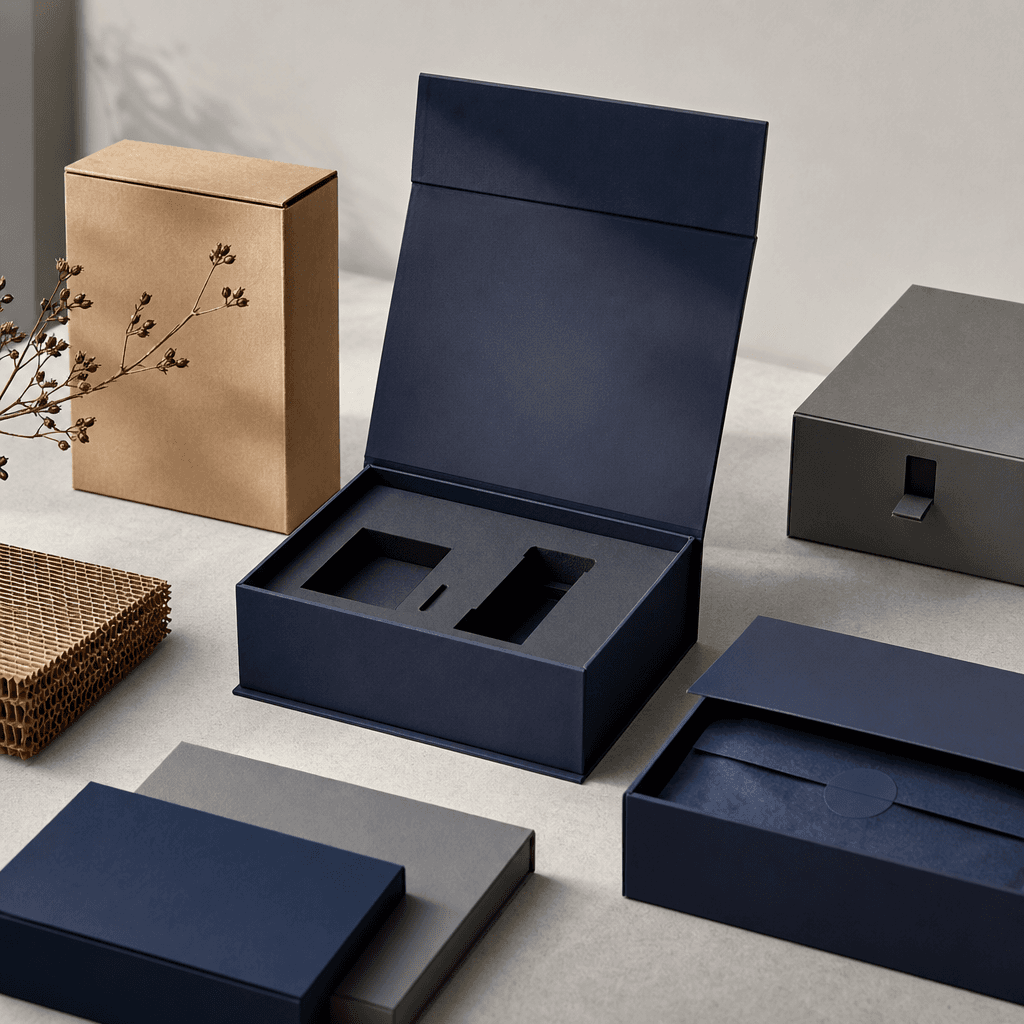
The shortest answer to the question of what custom packaging is: not an ordinary box that protects the product, but a holistic packaging solution designed specifically for you in terms of dimensions, material, and print, carrying the brand's identity, story, and customer experience. While standard packaging consists of ready-made sizes intended for general use, in custom packaging every detail is designed according to the brand's segment, product, and sales channel. For premium and growing brands, this distinction is not a minor aesthetic preference; it is a strategic investment that directly affects perceived brand value and the purchasing decision.
In this guide, we address the definition of custom packaging, why it is critical for brands, how it works behind the scenes, which products can be customized, and which criteria you should consider when making a decision, all within a clear framework. As Kosapack, our goal is to help you view the packaging decision not as a one-time box order, but as a physical extension of your brand strategy.
Table of Contents
- The difference between custom packaging and standard packaging
- Why custom packaging is critical for brands
- How custom packaging works behind the scenes
- Which types of packaging can be customized
- Which criteria to consider when making a decision
- Common risks in the custom packaging decision
- Viewing custom packaging as a strategic partnership
- Frequently asked questions
The difference between custom packaging and standard packaging
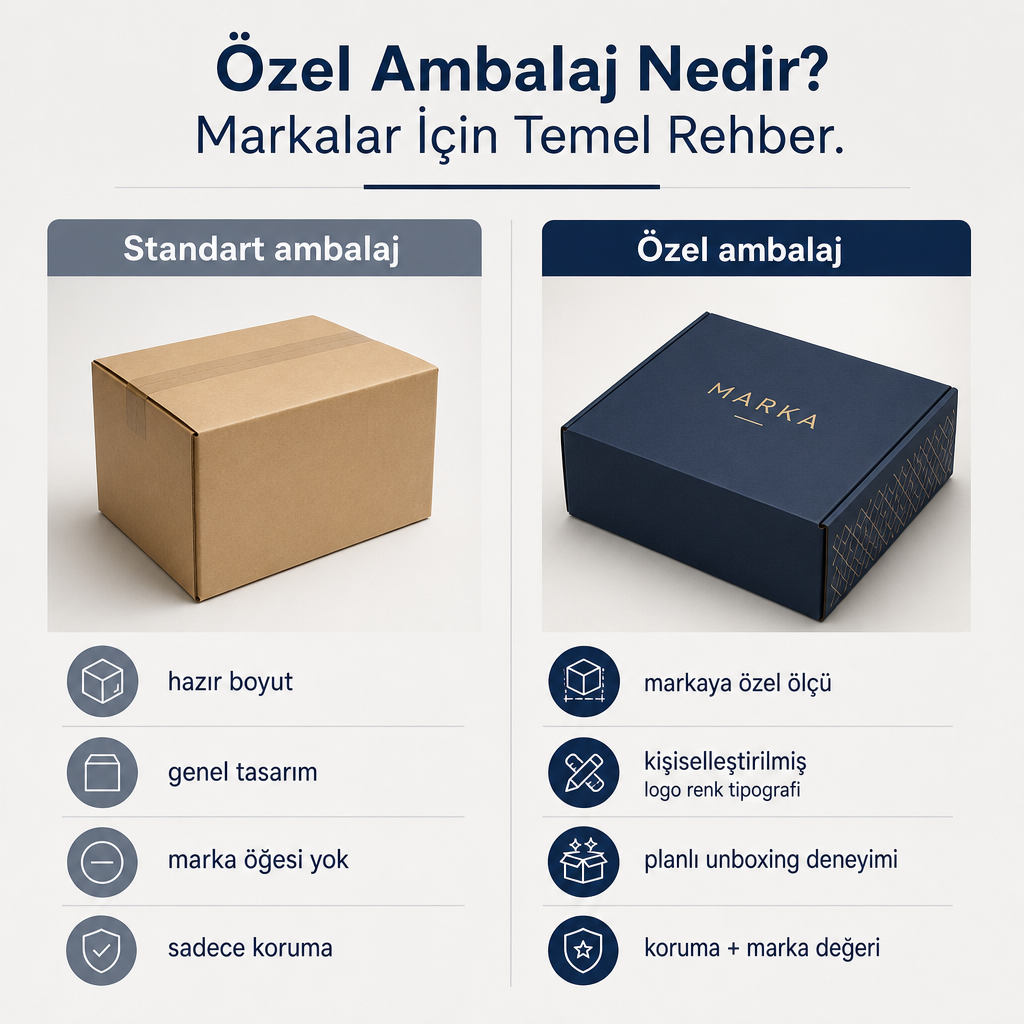
Packaging, in its most basic sense, is a material that protects the product inside, facilitates shipping and storage, and delivers the product to the consumer under safe conditions. Custom packaging, on the other hand, refers to a solution designed specifically for the brand, on top of these functions, in order to reflect the brand's identity, values, and aesthetic line. The difference can be summed up in a single sentence: standard packaging packs the product, custom packaging tells the brand's story.
There are several defining characteristics that make this distinction concrete. Custom packaging is not a ready-made box or pouch; its dimensions, material, and print are determined according to the brand. Visual elements such as the logo, color palette, typography, texture, and special messages are personalized one by one. Perhaps most importantly, it transforms the unboxing—that is, the moment of opening the product—from a random act into a planned experience; the customer connects with the brand before even touching the product.
In short, custom packaging is the brand's physical showcase on the shelf, in shipping, and at the moment of gifting. It does not leave the first point of contact established with your product to chance, but turns it into a conscious design decision.
Why custom packaging is critical for brands
Today, packaging is not just a means of protection; it is an inseparable part of marketing, sales, and brand awareness. For premium and e-commerce brands, this impact is concentrated in a few concrete areas.
First is product protection and logistics safety. The most fundamental role of packaging is to protect the product from external factors during shipping and storage. The right structure, material, and internal arrangement reduce risks such as breakage, crushing, and leakage, thereby lowering return rates. As the shipping process becomes tougher in e-commerce, this protective layer translates directly into a cost item.
Second is brand identity and storytelling. Packaging is the brand's visual language. Colors, logo, typography, and form create the first impression about the brand's quality approach, segment, and target audience. A luxury, sustainable, young, or minimal positioning is often read through the packaging before the customer even picks up the product.
Third is the impact on the purchasing decision. The appearance of packaging plays an important role at the moment of the consumer's choice. Whether on a store shelf or an e-commerce screen, packaging attracts attention, encourages product examination, and makes the product stand out among competitors.
Fourth is customer experience and loyalty. Packaging is part of the customer's first physical contact with the product. A positive unboxing experience raises the perceived value of the product; it increases repeat purchases and social media sharing rates. This is a lever that turns into free visibility.
Fifth is sustainability and corporate responsibility. In the current approach, packaging is treated as the intersection point of brand identity, consumer experience, and environmental responsibility. Recyclable materials, the right weight selection, and carbon footprint awareness are a strong reason for choice among conscious consumers.
How custom packaging works behind the scenes
The fundamental mechanism of a custom packaging project is to bring together the realities of the product, brand, and logistics in a single holistic design. Understanding the components that make this up individually makes the decision far more accurate.
Structural design. Packaging is the product's clothing; a creative process that encompasses both its outward appearance and its protective structure. Different forms such as rigid boxes, cardboard boxes, corrugated shipping boxes, doypacks, or paper bags are chosen according to the product's sensitivity and sales channel. Choosing the right form lays the foundation for all subsequent decisions.
Material and weight. The choice of cardboard type, substrate such as pasteboard or kraft, and weight is evaluated on the basis of print quality, durability, and the cost balance. In the premium segment, textured cardboards, high weight, and quality lamination raise perceived value; in e-commerce shipments, impact resistance and lightness come to the fore. Choosing the right packaging materials is the point where this balance is established.
Graphic design and printing. Logo placement, color palette, typography, and visual hierarchy convey the brand's message clearly and consistently. Quality printing, color consistency, and special effects such as varnish, foil, and embossing both strengthen the shelf appearance and create a tactile experience.
Internal arrangement and additional elements. Internal dividers, product beds, labels, thank-you cards, and tissue paper support the product's safe positioning and the premium opening feel. These elements also carry the brand's story forward through small touches; such as short messages, QR-coded content, or care instructions.
Logistics compatibility. Functional design reduces damage during transport and can lower storage costs. A correctly dimensioned box optimizes both shipping cost and the amount of material used, thereby also supporting sustainability goals. You can examine this balance on the shipping side in more detail through the custom-printed e-commerce shipping box approach.
Which types of packaging can be customized
Custom packaging is not limited to a single type of box. There is a customizable solution at nearly every physical point where the brand comes into contact with the customer:
- Store and gift boxes (rigid boxes, luxury cardboard boxes): for premium products such as cosmetics, jewelry, chocolate, and candles.
- E-commerce shipping boxes (corrugated boxes, mailer boxes): for both product protection and the unboxing experience in online orders.
- Paper bags and pouches: for store checkouts, events, and corporate gift packages.
- Labels, stickers, and sleeves: for adding a second brand layer to the product packaging and differentiating on a campaign or series basis.
- Tissue paper, thank-you cards, and instruction cards: for enriching the in-box experience and conveying the brand's tone of voice.
The truly critical point here is not to think of these elements independently of one another. The strongest result emerges where all of them are designed as a consistent packaging ecosystem. For those who want to choose the right box type, our cardboard box guide and our content comparing cardboard box types provide a good starting foundation.
Which criteria to consider when making a decision
To define a custom packaging investment correctly, a few main axes need to be clarified. These criteria feed into one another; skipping one weakens the effect of the others.
Product type and protection need. Fragile glass bottles, heavy jars, or sensitive electronics require higher impact resistance and internal support. In sectors such as food and cosmetics, packaging directly affects product quality, the perception of hygiene, and the usage experience.
Target audience and positioning. Packaging is the physical extension of the brand image. The material and design language used should support the brand's segment. In luxury-focused brands, simple but refined details; in young and dynamic brands, bold color and typography may come to the fore.
Sales channel. On the store shelf, packaging takes on the role of attracting attention among dozens of alternatives and encouraging product examination. On the e-commerce side, staying intact during shipping, the feel at opening, and practicality in return processes become critical. For the same product, two channels may require two different design decisions.
Quantity and budget balance. Custom packaging is directly related to quantity due to printing technique, die, and setup costs. Growing brands can balance the total cost by separating short-term campaign packaging from long-term core packaging.
Sustainability and regulatory approach. The use of recyclable paper and cardboard, correct labeling, and lightened designs are important in terms of both environmental awareness and compliance. A sustainability claim must align with the actual material decision.
Quality and color consistency. The consumer forms an opinion about product quality by looking at the packaging; printing errors and color fluctuations lower perception. Consistency in corporate colors preserves a professional appearance across the entire packaging series.
Common risks in the custom packaging decision
Packaging projects that are not thought through strategically are open to a few typical mistakes. Knowing these in advance allows you to eliminate most of them at the design stage.
- Mismatch between the brand and the packaging language: weak-material or simply designed packaging for a brand that claims to be luxury undermines the promised quality.
- Excessive decoration and loss of function: too many visual elements disrupt readability, weaken the clear message on the shelf, and make the packaging tiring.
- Ignoring logistics reality: when aesthetics are prioritized, box dimensions that do not suit shipping processes increase cost and damage risk.
- The gap between the sustainability discourse and the application: giving an eco-friendly message while using non-recyclable material creates a loss of trust in the conscious consumer.
The common denominator of these risks is the same: viewing packaging as separately handled parts. That is why the custom packaging process should be designed as an end-to-end managed project in which the design, production, and logistics teams work together.
Viewing custom packaging as a strategic partnership
For premium and growth-stage brands, custom packaging is more than a one-time box order; it is a long-term investment area where brand strategy, product portfolio, and operations intersect. This perspective allows you to ask the right questions before the procurement stage.
As Kosapack, our end-to-end service approach brings together consultancy, structural and graphic design, prototyping, production managed through verified production partners, and consolidated logistics under one roof. Our goal is to offer brands not a single supplier but a strategic packaging partner.
With a wide product range such as rigid boxes, cardboard boxes, corrugated shipments, paper bags, labels, tissue papers, thank-you cards, fabric bags, and in-box dividers, we focus on solving the needs of different sectors and channels within a single ecosystem. Color consistency, physical approval through samples, and sustainable material options align with the quality assurance and responsible production vision that are the most critical expectations of the premium segment.
If you are ready to bring your packaging decision to life, the most efficient starting point is to clarify your product type, quantity range, and sales channel; these three pieces of information allow us to shape the material and structure recommendation that suits you together.
Frequently asked questions
What is the fundamental difference between custom packaging and standard packaging?
Standard packaging consists of ready-made sizes and designs intended for general use; custom packaging, on the other hand, is a solution in which dimensions, material, and design are personalized according to the brand. This difference directly changes both the level of protection and the brand experience.
Does custom packaging make sense even in small quantities?
In small quantities, the unit cost may be higher than standard packaging; however, its impact on premium perception, brand awareness, and repeat purchases can compensate for this difference. Especially for high-margin products and corporate gifts, it is a meaningful investment even at low quantities.
Is custom packaging a must for e-commerce brands?
In online sales, the customer's physical point of contact is often only the shipping box and the inner packaging. Custom packaging offers the opportunity to protect the product during shipping while telling the brand story and creating loyalty through the unboxing experience; in categories where competition is intense, it is a powerful differentiation tool.
Can custom packaging be sustainable?
Thanks to recyclable paper and cardboard, optimized weight, and smart structural design, custom packaging can be made compatible with sustainability goals. Transparent communication and the alignment of the actual material decision with the discourse strengthen brand perception.
Can I have custom packaging made if I don't have a design?
Yes. Packaging design is a strategic communication tool that conveys the brand's identity to the consumer. Even if you do not have a ready design, a professional packaging design can be created based on your brand values, target audience, and product information.