
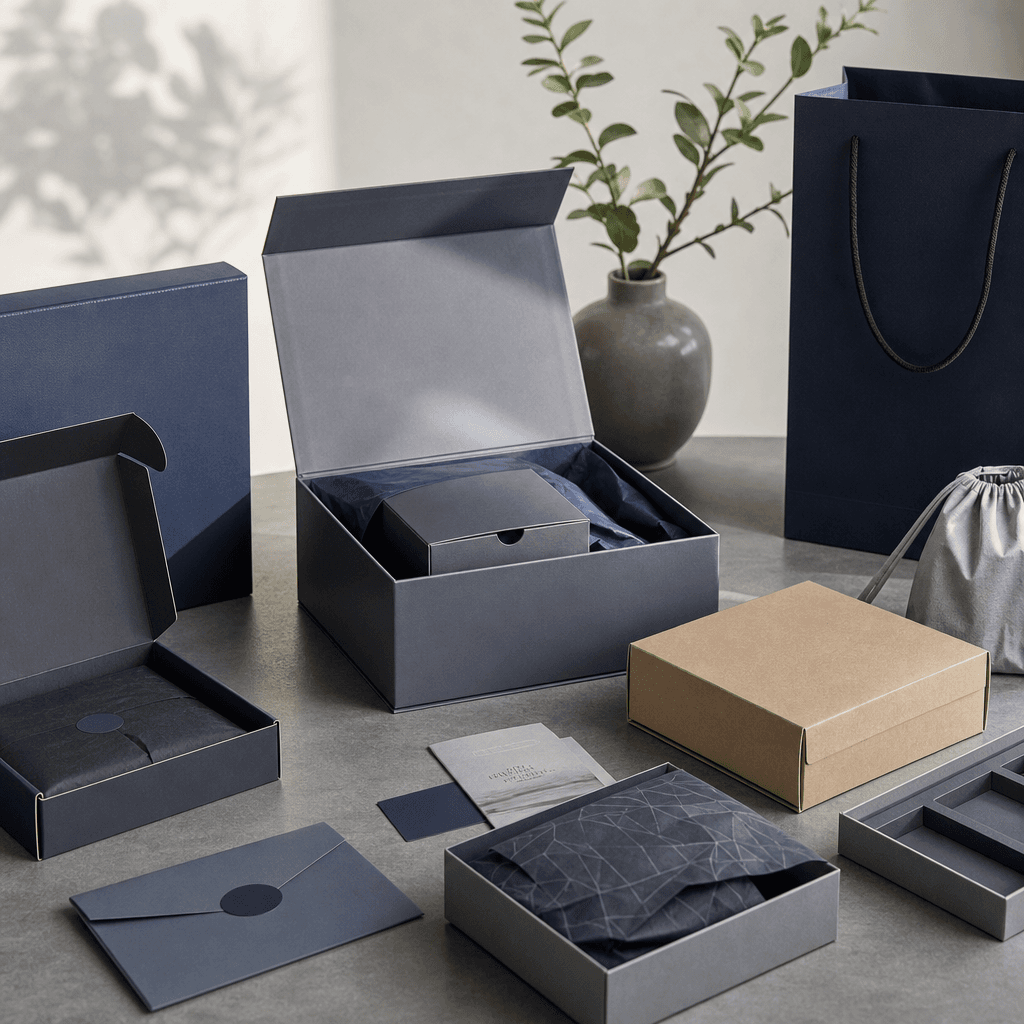
Custom brand box production is packaging manufacturing where a product moves beyond an ordinary container that protects it, transforming into a design object that carries the brand's story and influences purchasing decisions on the shelf and at the moment of delivery. Decisions about the size, material, printing, and surface finishes of the enclosed product are made according to the brand's identity; the box is no longer a logistical necessity but the first point of physical contact established with the consumer.
As Kosapack, we offer brands a structure that manages this transformation end to end: consulting, structural and graphic design, prototyping, production managed through verified manufacturing partners, and consolidated logistics. In this article, we clarify together what custom brand box production is, what distinguishes different box types from one another, why packaging is considered a marketing tool, and which criteria you should consider when making the right decision.
Contents
- What is custom brand box production and how does it work?
- Box types and what sets them apart
- Why is packaging a marketing tool?
- Criteria to consider when deciding on the right box
- Your next step
- Frequently Asked Questions
What is custom brand box production and how does it work?
The fundamental function of packaging, according to the definition by the Packaging Manufacturers Association, is to protect the product inside, deliver it to the consumer under the cleanest and most reliable conditions, and facilitate transport and storage. Custom brand box production adds the brand's visual identity on top of these functions: a structure designed according to the product's actual dimensions, that brand's color palette, logo placement, typography, and surface finishes.
This work does not end with printing a single box; it operates by managing interconnected decisions. Structural design determines the box's die and opening method; material selection defines durability and texture; printing and surface finishes establish visual impact; while complementary elements such as labels, tissue paper, thank-you cards, and dividers create a layer of experience inside the box. As Kosapack, we bring these components together under one roof; so the box, bag, label, and inner filling progress as a coherent packaging ecosystem with one another.
In our end-to-end model, the product's and brand's needs are defined during the consulting stage, structure and graphics are designed together during the design stage, the decision is made through high color-accuracy proofs and physical samples during the prototype stage, production is managed with verified partners, and logistics is consolidated. For our sample and quotation processes, we work within the framework of a price quote within 24 hours and a physical sample within 7–15 business days; the exact timeline is clarified by our sales team according to the product type and sector.
Box types and what sets them apart
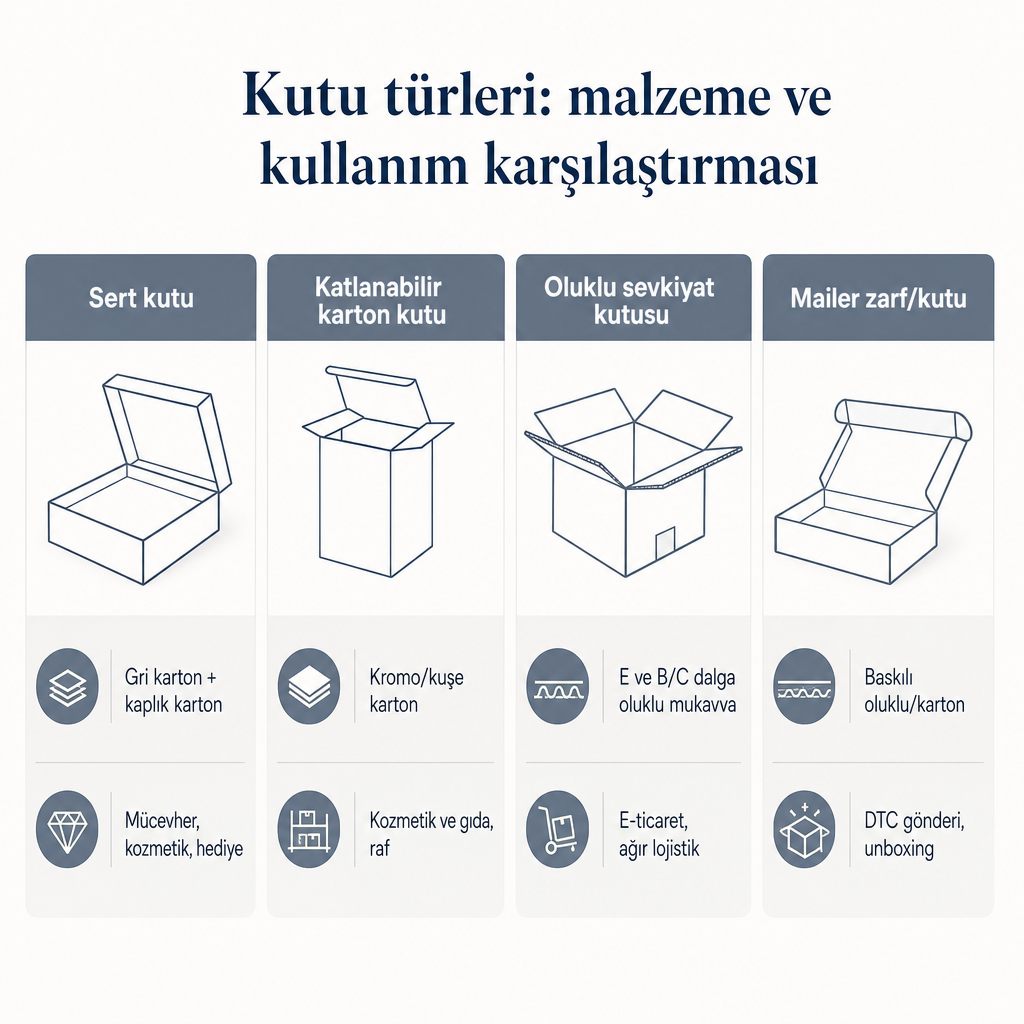
When we say custom brand box, there is no single structure; the product's weight, fragility, perceived value, and delivery method determine which type is right. Distinguishing the main types in our portfolio along the axis of material and typical use clarifies the selection logic.
| Box type | Typical material structure | Prominent use |
|---|---|---|
| Rigid box | Gray board inner layer + wrapping paper outer coating | Jewelry, cosmetics, premium chocolate, gifts |
| Folding carton box | Chromo/coated board | Cosmetic and food products, shelf presentation |
| Corrugated shipping box | E and B/C flute corrugated board | E-commerce shipments, heavy and logistics products |
| Mailer envelope/box | Printed corrugated or cardboard | DTC shipments, compact unboxing |
The rigid box is a structure obtained by combining gray board in the inner layer and wrapping paper in the outer coating, giving a sense of weight in hand and leaving a lasting impression; this is why it is preferred for jewelry and premium gifts. The folding carton box offers a thin and efficient structure with chromo or coated board and calls for bright printing on the shelf. Corrugated board, on the other hand, stands out in e-commerce and logistics shipments requiring impact and stacking resistance thanks to its flute structure. As Kosapack, we interpret this material–structure–use relationship according to each brand's use scenario and clarify the right flute and board selection together.
Type selection is often not sufficient on its own. It is common for the same brand to use folding carton for its shelf product, rigid box for gift sets, and printed mailer for online orders; the real issue is binding these types into a single visual language.
Why is packaging a marketing tool?
The function of packaging begins with protecting the product but does not end there. Consumer research repeatedly shows that packaging is an element that directly affects the purchasing decision. A study on the role of packaging in product marketing found that packaging is influential at the purchasing stage for the vast majority of participants. In another study conducted specifically on food products, the proportion of participants who found packaging "very important" when purchasing was reported as 39.9%, and a positive, statistically significant relationship was found between packaging–brand perception and developments in packaging.
Where this effect comes from is also clear. There are studies emphasizing that color and typography in packaging design shape brand perception and are strategic elements that make the brand recognizable in a competitive market. A 2025 study reveals that packaging and logo color significantly affect first impressions, the perceived level of professionalism, and the emotional closeness felt toward the brand. In other words, the color and typeface of the box shape how professional and reliable the consumer finds the brand even before touching the product.
These findings become concrete at the moment of unboxing. The inner coating encountered when the lid of a jewelry rigid box opens, the layer of tissue paper in a cosmetic shipment, the touch of a thank-you card, or the printed inner surface in an e-commerce package tells the brand's story layer by layer. For cosmetics, jewelry, chocolate, and DTC brands, this experience often turns into content shared on social media; the box becomes a marketing surface that works silently but continuously.
Sustainability is also part of this perception. Consumer research conducted in Turkey shows that the emphasis on being environmentally conscious plays a key role in decision-making as much as graphics and color do. The choice of recyclable board and environmental messages on the box can be associated with brand reliability. This is why, as Kosapack, we embed sustainability commitments such as recyclable materials and carbon footprint reporting into design decisions.
Criteria to consider when deciding on the right box
In custom brand box production, the decision is balanced across four axes. It is more accurate to think of these not as a sequence but as criteria weighed together.
- Structure and material fit: The product's weight, fragility, and perceived value determine the box type. While the sense of weight of a rigid box is meaningful for jewelry, the impact and stacking resistance of corrugated board takes priority for a heavy e-commerce product. In material selection, as Kosapack we interpret the technical criteria referenced by the Packaging Manufacturers Association and FEFCO according to the brand's use scenario.
- Visual identity consistency: The color palette, logo placement, and typography must speak the same language as the brand's other touchpoints. High color-accuracy proofs and physical samples allow you to see how the on-screen design will look in print before the decision.
- Sustainability parameters: The preference for recyclable materials and environmental messages on the box affect both consumer perception and brand positioning. Designing this preference from the outset yields a more consistent result than adding it later.
- Logistics and warehouse realities: The box's stacking resistance, protective performance during transport, and the volume it occupies in the warehouse directly affect cost and damage rates, especially at e-commerce volumes.
These criteria carry different weight depending on the brand's scale. While a brand in its growth phase needs modular and flexible solutions, a lasting impression and experience take priority for an established premium brand. Regulatory, labeling, and material compliance requirements that vary by sector also enter the decision; since these conditions differ across food, cosmetics, and electronics, we recommend clarifying your sector-specific compliance needs together with our consultant team.
If you would like to see the logic of selecting the right box type in more detail, our cardboard box guide explaining how to choose the right box for your brand unpacks these criteria with examples. For brands seeking a lasting impression in the premium segment, you can also look at our content explaining the contribution of rigid box production to brand value.
Your next step
If you have clarified what the box is and by which criteria it is selected, the next decision is concrete: in which type, with which material, and in which visual language you will have your custom brand box produced. The most efficient way is to define this decision together based on your product, volume, and sector. To see step by step how the order process proceeds, you can move on to our guide on how to have custom packaging made for your brand; by sharing your dimension, quantity, format, and sector information, you can request a tailored recommendation and quote from the Kosapack team.
Frequently Asked Questions
What is the difference between custom brand box production and a ready-made box?
A ready-made box comes in standard dimensions and printing; a custom brand box, on the other hand, is designed according to the product's actual dimensions, the brand's color, logo, and surface finishes. This way, the box both protects better and carries the brand's visual identity.
Which box type is suitable for which product?
The rigid box generally stands out for jewelry, cosmetics, and premium gifts; the folding carton box for shelf products; the corrugated shipping box for e-commerce and heavy shipments. The right type is determined according to the product's weight, fragility, and delivery method.
Does packaging really affect sales?
Consumer research shows that packaging is an element that is influential in the purchasing decision and that its color and typography shape brand perception, perceived professionalism, and emotional closeness. In this respect, packaging functions as a marketing tool.
How long does it take for the sample and quote to be ready?
As Kosapack, we work within the framework of a price quote within 24 hours and a physical sample within 7–15 business days. Since the exact timeline varies according to the product type and sector, our sales team shares a clear timeline based on your request.
Can I use sustainable materials?
Yes. We embed sustainability commitments such as the preference for recyclable materials and carbon footprint reporting into design decisions; we design the material selection together with your brand's environmental goals.