
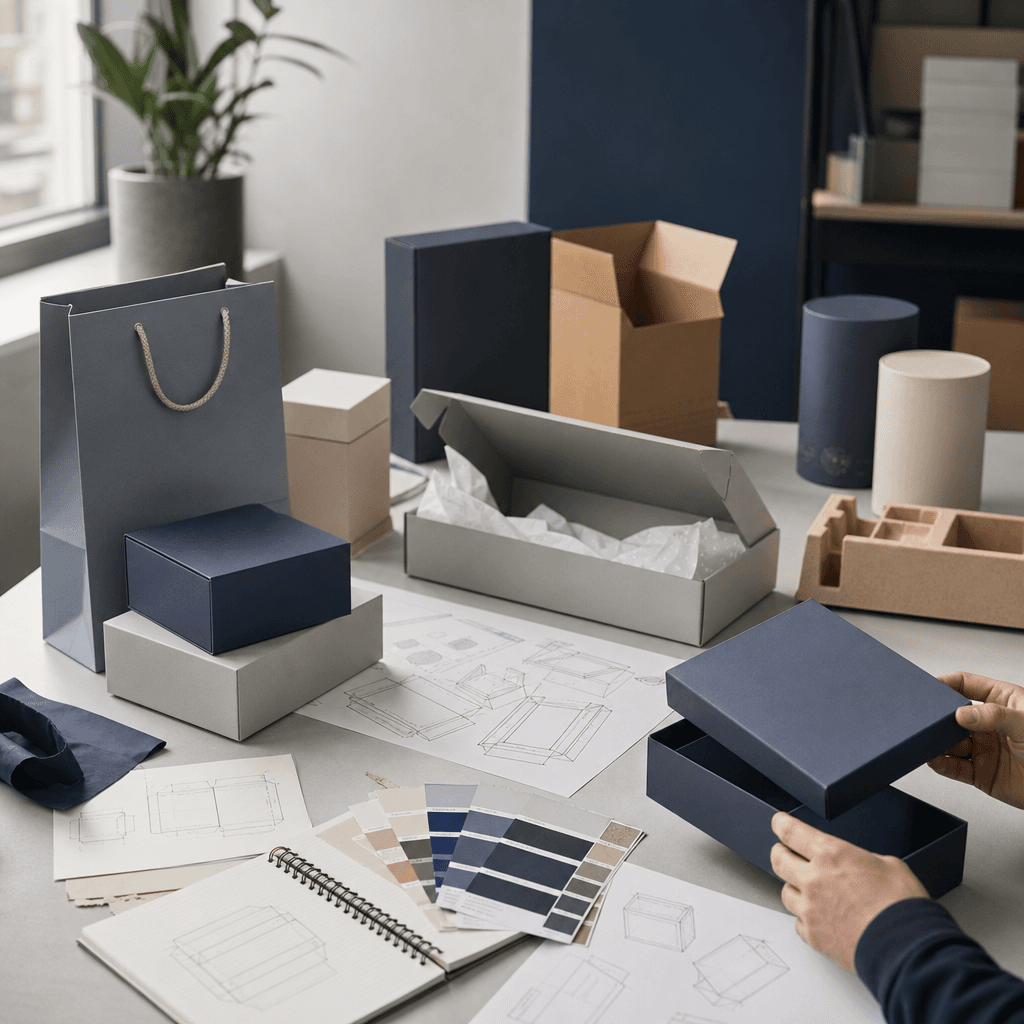
When you develop a strong product, the box that carries it should speak at the same level. The answer to the question of how to create packaging tailored to your brand actually encompasses a much broader chain of decisions than a single printing job: analyzing the product correctly, translating brand identity into form and color, choosing the right material, testing with samples, and managing production safely. For premium consumer brands, e-commerce and DTC ventures, and corporate gift buyers, packaging is the most visible tool for standing out on the shelf, raising perceived value, and etching the unboxing moment into memory. As Kosapack, since we manage every stage of this process from consultancy to logistics under one roof, in this guide we share a concrete roadmap that will clarify your decisions.
Table of Contents
- Why Is Brand-Specific Packaging So Decisive?
- Before Ordering Packaging: Product and Brand Analysis
- Step-by-Step Process: How to Create Packaging Tailored to Your Brand?
- Choosing the Right Packaging Type and Material
- Sustainable and Premium: Material, Printing, and Proofing
- Information You Should Prepare Before a Quote
- Frequently Asked Questions
Why Is Brand-Specific Packaging So Decisive?
Branded packaging is the first physical point of contact the consumer establishes with the product, and it often comes before the purchase decision. The difference between a standard, generic box and packaging that carries your brand's color, texture, and message directly affects perceived value. Independent sources writing on packaging planning also emphasize that custom packaging contributes to a store standing out, strengthening the customer experience, and raising the perceived value of the product.
This effect is strategic especially for premium and growth-stage brands. No matter how well a cosmetics brand's serum is formulated, what often makes it stand out from the dozens of alternatives next to it on the shelf is the form of the box, the texture of the paper, and the clarity of the print. In e-commerce, the situation is even more critical: there is no store window between you and the customer, only the parcel that arrives at the door. The experience when that parcel is opened determines whether the brand will be remembered a second time. That is why packaging is not a one-off design job; it is a silently speaking communication channel where the brand encounters the customer again and again.
There are three fundamental mechanisms behind why packaging is decisive. The first is visibility: being noticed in the first half-second on the shelf or in an e-commerce image is directly related to color contrast and form. The second is trust: sturdy, cleanly printed packaging that protects the product conveys the impression that the product inside was also produced with care. The third is memorability: a consistent visual language makes it easier for the customer to recognize the brand on their second and third purchases. When these three mechanisms work together, packaging becomes the most frequently repeated touchpoint of the marketing budget.
While working with over 500 brands across more than 25 verticals — from cosmetics to jewelry, from food to fashion — we see this again and again: packaging is not a cost item but the brand's most frequently repeated visual touch. When set up correctly, it both protects the product and tells the story. That is why the process must be started not with printing, but with product and brand analysis.
Before Ordering Packaging: Product and Brand Analysis
Before moving on to custom packaging design, the first question that needs to be answered is not technical but strategic: What job will this packaging do? Is the priority being noticed on the shelf, protecting during shipping, creating a gift perception, or making your sustainability claim visible? The ranking of these goals determines all subsequent decisions. For example, when protection is prioritized, internal padding and material durability come to the fore, whereas when gift perception is prioritized, the opening experience and premium finishes gain weight.
Sources writing on packaging planning emphasize that evaluating the product's size, fragility, and storage conditions before starting the design is a fundamental step. A glass perfume bottle and a solid chocolate bar do not require the same internal structure; in one, separators and padding are decisive, while in the other, moisture and light protection come to the fore. The physical realities of the product largely frame the form and material of the box.
The second layer is brand identity. Color palette, logo usage, typography, and the brand's tone form the core of custom packaging design. At this stage, it is helpful to ask yourself the following questions:
- What is your brand's story and character; should the packaging tell it quietly or boldly?
- Which aesthetic codes does your target audience find meaningful?
- What are the concrete points where you want to differentiate yourself from your competitors?
- Which corporate identity elements do you currently use, and how will they be carried over to the packaging?
These two layers must be evaluated together, not separately. The physical requirements of the product can sometimes limit the brand's wishes; for example, a thin paper bag would not be suitable for a very heavy product. Clarifying from the outset which criterion will determine the priority when making a decision prevents design changes that are costly to reverse later. A practical approach is to put the goals in an order and test each design decision against that ranking.
During the consultancy stage, we clarify these two layers together. Because most packaging mistakes arise not at the design table, but from the goal not being defined from the outset. In categories such as cosmetics where there is intense competition on the shelf, addressing aesthetics and function together is especially important; we explain in more detail how we establish this balance in our article on solutions that combine aesthetics and function in cosmetic packaging production.
Step-by-Step Process: How to Create Packaging Tailored to Your Brand?
When we break the process down into concrete steps, having packaging made specifically for your brand becomes a predictable and manageable project. The flow below summarizes the path we follow from consultancy to shipment.
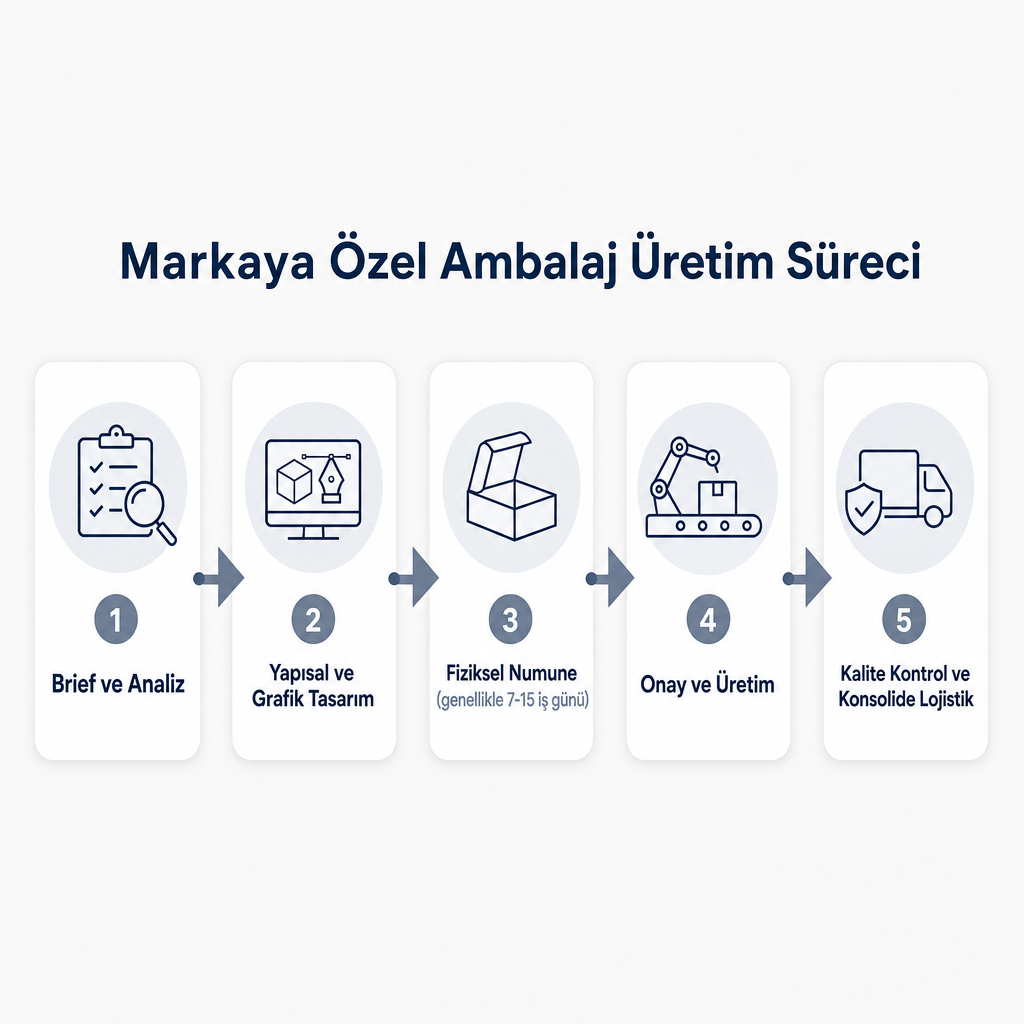
Clarifying the brief and goals
The first step is to gather the findings from the product analysis and the brand goals into a single brief. The type of product, its dimensions, sensitivity, usage scenario (store shelf, e-commerce shipping, corporate gift), and approximate production quantity are defined here. The clearer the brief you provide, the more accurate the quote and design will be. A good brief includes the priority ranking, the non-negotiable constraints, and reference examples if any. We keep this stage fast; once we have the necessary information, we can share the first price quote within 24 hours.
Structural and graphic design
Design proceeds along two parallel tracks. Structural design determines the form of the box: opening direction, ease of carrying, shelf placement, and the internal separators that will secure the product. Graphic design, on the other hand, carries the brand's visual language to the surface: logo position, color blocks, images, and the messages the brand wants to convey. The principle that packaging must both clearly convey product information and be consistent with the brand's visual identity is also highlighted in independent sources on packaging design. Since the two tracks feed each other, form and graphic decisions must be advanced in sync rather than separately; otherwise, a beautiful graphic may sit on a form that cannot protect the product. At this stage, our design team makes decisions visible by presenting mockups and digital proofs.
Physical sample and testing
No matter how good the design looks on the screen, the real decision is made with a physical sample. On a small-quantity sample, you test print quality, material durability, color harmony, and the functionality of the box form. The importance of the step of taking samples and testing in small quantities for long-term success is also recommended in packaging planning sources. When evaluating the sample, it is helpful to look not only at the appearance, but also at whether the box opens easily, whether it protects the product during transport, and how the colors appear under different lighting. Since we can generally prepare a physical sample within 7–15 business days, you can place this stage in your project timeline as a concrete time frame.
Production, quality control, and logistics
Once the design and sample are approved, mass production begins. At this stage, the production quantity, delivery time, and shipping addresses are finalized. We manage production through our verified partner factories and apply quality control in terms of print quality, sturdiness, and function. Our consolidated logistics approach, which combines different packaging types in a single shipment, allows you to receive a packaging set consisting of multiple products from a single source; this eliminates the burden of coordinating separately with different suppliers. For a more comprehensive look at how these steps are set up end to end, you can check out our article explaining how brand-specific packaging is prepared in custom box production.
Choosing the Right Packaging Type and Material
The choice of packaging type takes shape where the nature of the product intersects with the brand's goal. The same brand may need different forms for different products; what matters is unifying these choices under a consistent visual language. Our portfolio is broad enough to allow you to make this decision under one roof.
| Packaging type | Prominent use | Benefit provided |
|---|---|---|
| Rigid box | Jewelry, premium cosmetics, gift sets | High perceived value, sturdy feel |
| Folding carton | Cosmetics, food, personal care | Economical, shelf-compatible, flexible printing |
| Corrugated cardboard box | E-commerce shipping | Shipping protection, unboxing surface |
| Paper bag | Store and gift packaging | Portability, visibility outside the store |
| Label and tissue paper | In-package detail, wrapping | Brand touch, experience layer |
This table is a starting point; the real choice becomes clear together with the product's size, fragility, and your budget. An e-commerce brand often combines a corrugated cardboard box with in-package tissue paper and a thank-you card to provide both protection and experience. A jewelry brand, on the other hand, strengthens the gift perception by using a rigid box, internal separator, and fabric pouch together. For a candle or chocolate brand, a combination of a folding carton with tissue paper can create a premium opening feel at an economical cost.
When making a choice, it helps to weigh three practical criteria together: protection need, perceived value goal, and budget flexibility. If it is a fragile product, protection is the priority; if there is a gift or luxury positioning, perceived value comes to the fore; if it is a high-volume and price-sensitive category, budget is decisive. The weight of these three criteria largely indicates which type in the table is suitable for you.
Material selection is as decisive as form. The weight of the paper, surface coating, and printing technique must be compatible with many factors, from the product's weight to its shelf life. Premium finishes such as embossing, special printing, and internal detail are also shown with examples in packaging sources to raise brand perception. The advantage of our wide product range is that we can combine all these components from a single point with consistent quality control. We address the color, typography, and form decisions that especially make cosmetics stand out on the shelf, with examples, in our article on design solutions that create shelf impact.
Sustainable and Premium: Material, Printing, and Proofing
Premium perception and sustainability were long seen as alternatives to each other; today, however, the two together raise brand value. We work with recyclable materials and offer carbon footprint reporting so that you can transparently track the environmental impact of production. This allows you to make your sustainability claim consistent with the packaging itself; because a box carrying an eco-friendly message should also have a material that supports this message.
On the printing side, the most critical issue is color accuracy. Your brand's corporate colors may not come out exactly on the printed surface as you see them on the screen; that is why we apply a proofing process focused on color accuracy before printing. The goal is to achieve a result that is as close as possible to the corporate colors and consistent from batch to batch. Proofing is the final control point for both graphic design and material selection. Making the color decision not on a digital screen but on the actual material you have chosen also allows you to take into account the fact that different surfaces reflect the same color differently.
Sustainable choices somewhat frame your selections; certain materials may not give the same result with every form or every printing technique. For this reason, discussing the sustainability goal at the brief stage as well is important to avoid surprises later. During the consultancy process, we establish the balance between the request for recyclable material, low-carbon-focused solutions, and premium finish together. For example, a paper with a recycled surface may not give the same result with certain glossy coatings; in this case, it is possible to achieve a premium feel through a different route with a textured finish.
If you work in a regulated field such as food or cosmetics in a product category, the content, warnings, and ingredient information that must appear on the packaging vary according to the product category and are the manufacturer's responsibility. Our role is to set up the design in a way that makes room for these information areas; the confirmation of the content's compliance with legislation must be provided by the brand, through official legislation and legal advisors if necessary. We recommend that you verify category-specific requirements from the current official source.
Information You Should Prepare Before a Quote
The fast and accurate progress of the process depends on the clarity of the information you share at the first contact. The list below both allows you to mature your own decisions before getting a quote and gives us an accurate starting point:
- Product features and dimensions: Size, weight, fragility, and special storage conditions if any.
- Target production quantity: Even if there is no exact figure, an approximate range is decisive for material and cost planning.
- Usage scenario: Context such as store shelf, e-commerce shipping, or corporate gift.
- Brand assets: Color codes, logo files, and the existing corporate identity guide if any.
- Projected budget range: A rough framework accelerates our recommendation of the most suitable material and printing combination for you.
- Timeline: Ideal delivery date for the sample and production.
- Sustainability preferences: Your expectation for recyclable material or a low-carbon-focused solution.
When you keep this information ready, the transition from brief to quote takes much less time. Since matters such as exact figures or minimum quantity vary from project to project, we create a roadmap tailored to you by evaluating the factors affecting cost (quantity, material, printing technique, and logistics) together. If you share the dimensions of your product, your target quantity, your usage scenario, and your sustainability expectation if any with us, we will prepare a concrete recommendation and quote that includes the most suitable form, material, and printing combination for your brand.
Frequently Asked Questions
How long does the brand-specific packaging process take?
The duration varies depending on the packaging type and the scope of the project. We can generally prepare a physical sample within 7–15 business days; the design and mass production time, on the other hand, is added on top of the sample stage depending on the product, quantity, and the chosen material. For a clear timeline, it is enough to share your product dimensions and target delivery date; with this information, we can draw up a project-specific timeline for you.
Can I have small-quantity production done?
Since production quantity is directly related to material, printing technique, and packaging type, we evaluate the suitable range according to your project. If you share your approximate target quantity at the brief stage, we can recommend the most suitable material and production combination for you and produce the first quote within 24 hours. You can also plan by keeping in mind that the unit cost tends to decrease as the quantity increases.
Can I get design support if I don't have my own design?
Yes. We start the process with consultancy, and then carry out both structural and graphic design with our team. Even if you only have a logo and brand colors, we can develop together the design that will carry them into the packaging form and printing. At this stage, we make decisions visible by presenting mockups and digital proofs, and we clarify them together with you before moving on to production.
Will my brand's colors come out correctly in printing?
To reduce the risk of color deviation, we apply a proofing process focused on color accuracy before printing. The goal is to achieve a result that is as close as possible to your corporate colors and consistent between production batches. The physical sample is the final control point of this color decision; making the color decision on the actual material minimizes the difference between screen and print.
Can I combine different packaging types in a single order?
Yes. We produce products such as rigid boxes, folding cartons, paper bags, labels, tissue paper, and in-box dividers under one roof. Thanks to our consolidated logistics approach, you can receive a set consisting of multiple packaging types in a single shipment; this offers a consistent visual language together with operational convenience.
Is there a sustainable material option?
We work with recyclable materials and offer carbon footprint reporting so that you can track the environmental impact of production. If you specify your sustainability expectation at the brief stage, we plan together how we will balance this preference with premium finish and printing options. This way, your eco-friendly message also becomes consistent with the material of the packaging.