
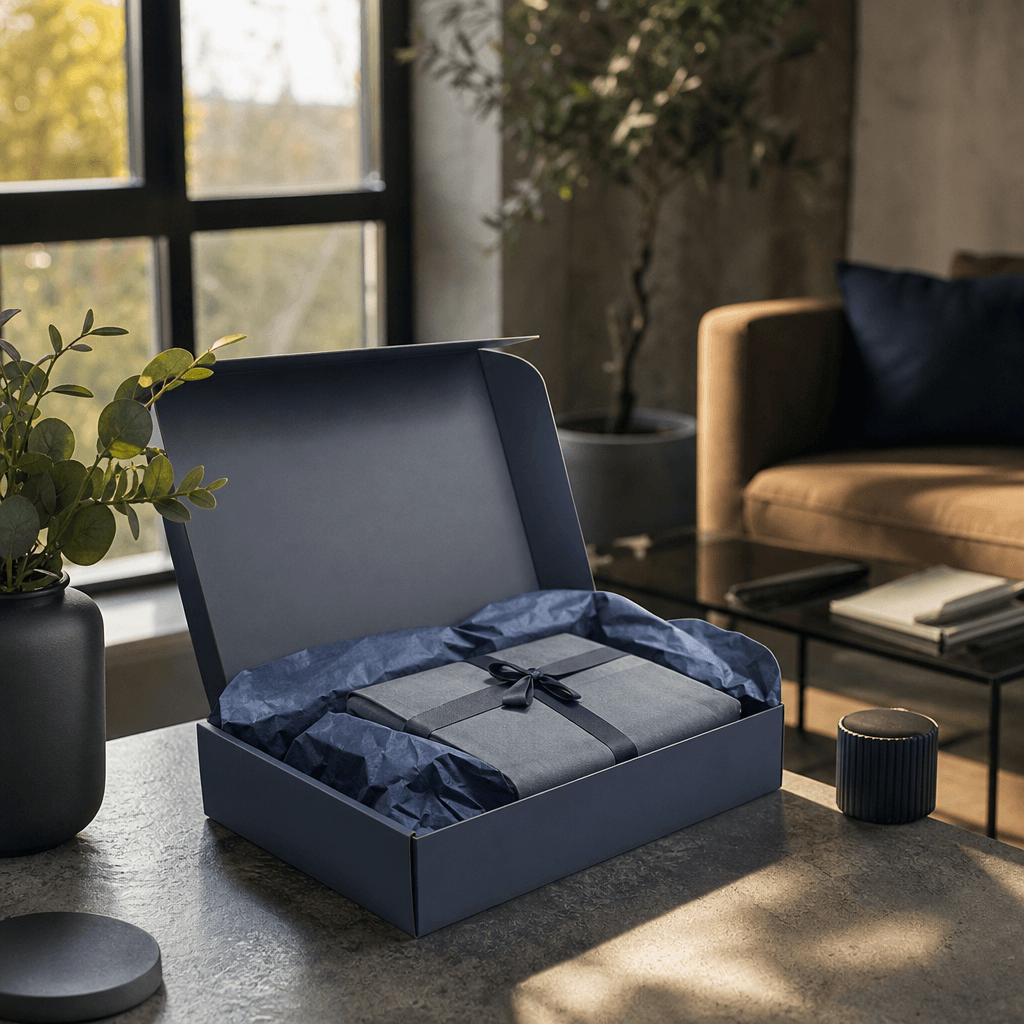
The moment a customer picks up the box, they actually establish their first physical dialogue with your brand; this is precisely where branded unboxing packaging solutions come in, to transform this very moment—from the outer surface to the inner textures—into a planned brand stage. In this list, we bring together solutions that are not merely aesthetically pleasing but also protect the product, withstand the shipping journey, and measurably elevate brand perception. As Kosapack, we base each entry on our end-to-end experience spanning from the concept phase to mass production; we evaluate each solution together with its distinctive feature, most suitable use, and natural limitations.
Table of Contents
What does this list select? Transparent selection criteria
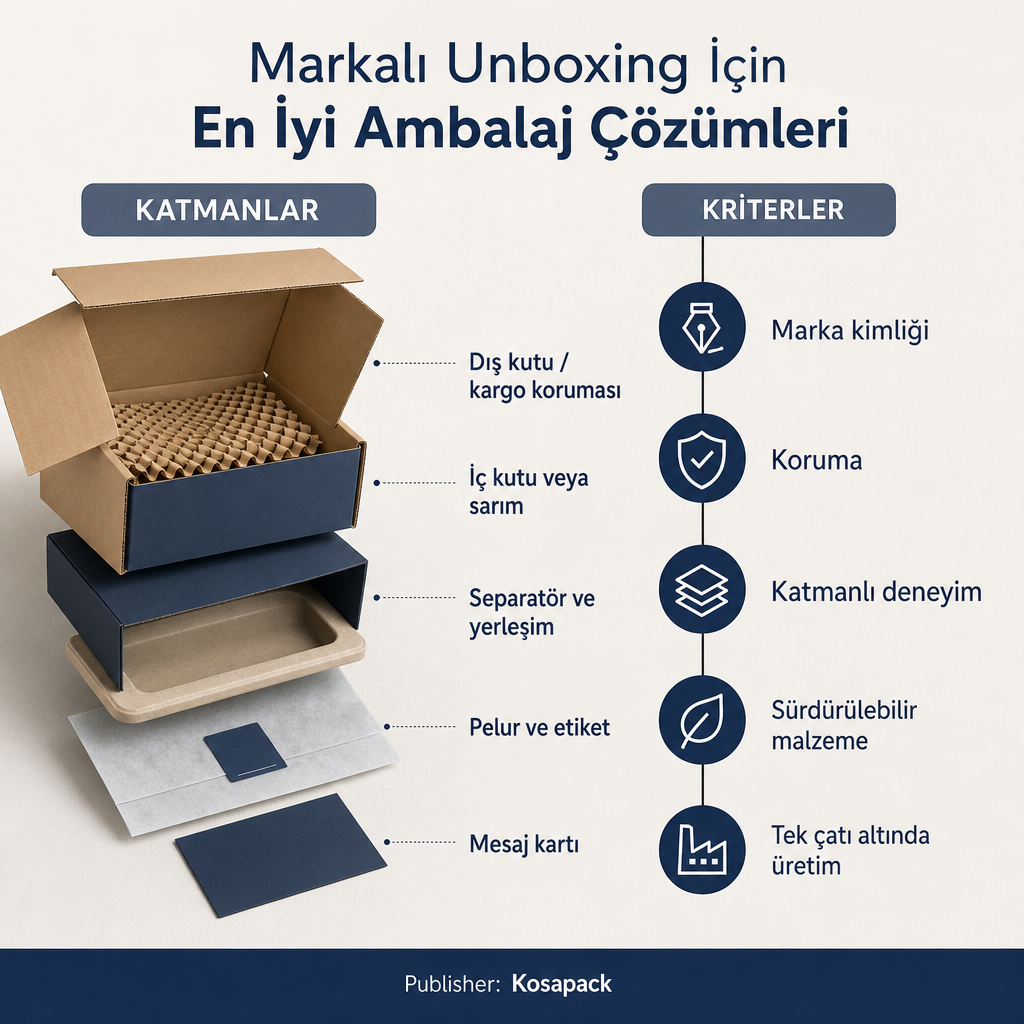
In this "best-of" compilation, visual appeal is not our only criterion. For a solution to make the list, it must genuinely transform branded unboxing—that is, it must work on both the experience and the brand growth side. We conduct our evaluation according to five concrete criteria:
- The ability to strongly convey brand identity through surface, form, and color
- Product protection; reducing physical risks during the shipping and shelf journey
- The ability to create a multi-layered opening moment with the outer box, inner textures, and message cards
- Offering sustainable and high-quality options in materials, weights, and surface finishes
- The ability to manage design, sampling, and production under one roof with consistent quality
Each solution below passed these criteria. In each entry, we address the distinctive feature, suitable use case, and natural limitations separately; this way, we recommend a box type not as a "one-size-fits-all" but within its own correct context. If you would like to see in more depth why custom packaging is more than a single printing job, you can review the essential guide to custom packaging for brands.
Rigid gift boxes: the backbone of luxury unboxing
In the luxury segment, the weight of the box is a silent indicator of perceived value. Rigid boxes dramatically elevate this value with their heavy, sturdy feel in jewelry, premium cosmetics, and gift sets. With high-quality printing, lamination, embossing, and special finishes on the surface, brand identity becomes three-dimensional; thus, the unboxing moment becomes part of the gift itself.
The scenarios it best fits:
- Gift boxes and collection sets for jewelry and watch brands
- Launch and PR kits for premium cosmetics, perfume, and skincare sets
- The need for lasting, keepable packaging in corporate gifts and promotional products
In rigid boxes, we combine structural engineering, printing, and surface finishes under one roof; this offers brand teams a structure managed from a single point on both the design and production sides. The practical benefit of this is that the experience remains consistent from the sampling phase to mass production.
Limitations: Rigid boxes bring a higher unit cost, more storage space, and relatively heavy shipping weight compared to folding carton boxes. For low-priced, high-volume products, using a rigid box for each SKU is often not rational; here, positioning the rigid box as a "special set" or campaign box is a more sustainable strategy.
Folding carton boxes: the bridge between shelf and unboxing
If a product both competes on the shelf and travels home by shipping, the folding carton box connects these two worlds. In categories such as cosmetics, food, and personal care, it is the most preferred packaging type thanks to both shelf compatibility and economical production advantages. Thanks to thin cardboard, flexible printing options, and easy folding, brand identity appears strong in front of the shelf; at the same time, it manages the first physical contact with the product at the unboxing moment.
The scenarios it best fits:
- Shelf-compatible single packaging for cosmetics and personal care products
- Gift and shelf packages for chocolate, gourmet food, and beverage accessories
- On the e-commerce side, combinations of an outer corrugated box and an inner folding carton box
When the right decisions are made on weight, closure, and finish, the folding carton box turns into a premium surface both on the shelf and at the unboxing moment. What is critical here is to evaluate the substrate, weight, finish, and closure type together, not one by one. To see how we design the right material combination, you can check out our cosmetic packaging production brand guide.
Limitations: A folding carton box alone usually does not provide sufficient protection for shipping. For sensitive products, it must be combined with a second protective packaging, such as a corrugated box, separator, or tissue paper. For very heavy or sharp-edged products, the structural limits of the cardboard must be taken into account.
Corrugated e-commerce boxes and mailer envelopes
In e-commerce, the shipping box is often the first tangible contact established with the brand; taking it beyond an ordinary shipment container is a great opportunity. Corrugated cardboard boxes offer both shipping protection and a wide printing surface for branded unboxing during dispatch. Logo and campaign prints on the outer surface, slogans and storytelling on the inner surface; they turn the box from a mere "shipper" into an opening scene. Mailer envelopes, on the other hand, provide the same function with less volume for lighter, more compact products.
The scenarios it best fits:
- Solving shipping and unboxing in a single structure for DTC and e-commerce brands
- Branded mailer envelopes for narrow-volume products such as textiles, accessories, books, and stationery
- Emphasizing collection launches with custom-printed shippers during campaign periods
In our product portfolio, corrugated boxes and shipping envelopes are among the categories offered with custom sizes and printing for premium brands. In kraft-based or white corrugated solutions, we prioritize recyclable materials and durability. To plan e-commerce-specific printing decisions end-to-end, our e-commerce shipping box custom printing guide is the natural continuation of this section.
Limitations: Corrugated boxes can create volumetric inefficiency, especially in small products; excess empty space increases both shipping cost and the need for internal filling. In addition, very high-weight corrugated boxes may move away from the elegant aesthetic desired in the luxury segment; here, a balance must be struck with the right thickness and printing type.
Paper bags for store and gift
Unboxing does not always begin inside a closed box; sometimes it starts at the store exit, on the street. Paper bags provide both portability and out-of-store visibility in store and gift packaging. After the customer leaves the store, they carry your brand on the street, in the office, and at home; together with the box or product inside, they create a double-layered opening experience.
The scenarios it best fits:
- Premium shopping bags in fashion and apparel stores
- Gift bags for jewelry, cosmetics, and gift items
- Welcome bag applications at corporate events, launches, and conferences
Kraft paper is a versatile material family that covers the entire package, from the outer bag to the inner separator. This makes it possible to establish a consistent material language between the outer paper bag and the inner box and separators, and to convey the sustainability message consistently.
Limitations: Paper bags do not provide sufficient protection on their own in shipping transportation; they are more suitable for in-store and hand-delivery scenarios. For very heavy or sharp-cornered products, extra reinforcement may be needed in the handle and bottom areas.
Labels, tissue paper, and thank-you cards
The most memorable moment of unboxing is often not the box itself, but the fine details encountered immediately after opening. Labels, tissue paper, and thank-you cards are the layers that create the "second touch" of the experience. The tissue wrap seen before touching the product, the package sealed with a branded label, and the thank-you card that gives a handwritten feel leave a personalized impression on the customer.
The scenarios it best fits:
- Inner wrap and message layer in premium cosmetics and skincare sets
- Strengthening the gift feeling in emotional categories such as chocolate, gourmet food, candles, and room fragrances
- Use of personalized name-printed cards and labels in corporate gifts
The biggest advantage of these components is that they noticeably elevate the unboxing perception at low cost. Tissue paper cushions fragile products while structuring the opening; together with kraft separators, it both protects and dramatizes the experience.
Limitations: These layers do not provide product protection on their own; they must be used together with the right box and internal placement system. Furthermore, excessive use of layers—that is, too much tissue, labels, and cards—may conflict with the sustainability perception; a balance consistent with the brand's environmental commitments must be established.
Separators and inserts: the mechanics of protection and staging
When a box is opened, what determines whether the products appear scattered or within an orderly composition is mostly the invisible internal structure. Separators and insert elements cushion fragile products, protecting them during the shipping process; at the same time, they are structural components that determine how the products will take the stage. Combinations of kraft separators and tissue paper secure sensitive products such as jewelry, glass, and electronics both physically and visually.
The scenarios it best fits:
- Inner compartments and cushioning systems in jewelry and watch boxes
- Impact protection in glass-bottled cosmetic and beverage products
- Orderly and staged placement in multi-product sets
The right weight and design decision ensures that products remain fixed within the package and appear in a neat composition when opened. Separator design combines protection and staging in a single decision.
Limitations: Poorly designed inserts can increase production time and cost; overly complex internal structures make the filling operation more difficult and error-prone. For this reason, an approach based on structural design experience, where product form and logistics flow are analyzed together, is healthier.
Custom-sized boxes and sets
When a product that does not fit a standard mold is forced into a standard box, both empty space and an unbalanced appearance result. Custom-sized boxes have dimensions designed according to the product and brand story rather than ready-made molds. In our 360° approach, the process proceeds step by step as a chain that starts with the analysis of the product and continues with translating brand identity into form and color, selecting the right material, and testing with a sample. This minimizes issues such as empty space, tightness, or unbalanced appearance at the opening moment.
The scenarios it best fits:
- Fully custom-shaped boxes for collections, limited editions, and campaign sets
- Products with original forms that do not fit standard shelf dimensions
- Brands that want to stage more than one product type in the same package
Having custom packaging made for your brand is a much broader chain of decisions than a single printing job: product analysis, brand identity, material selection, sampling, and safe production management. This chain reduces design risks in custom-sized boxes and increases quality consistency. If you would like to see the mechanics of this process step by step, our guide explaining how custom-sized box production works is a good starting point.
Limitations: Fully custom size and form increase design and mold costs compared to standard boxes and can extend the project timeline. For this reason, it is ideal for campaigns that do not recur frequently or high value-added products; for very low-quantity and frequently revised projects, the budget-schedule balance must be established carefully.
How should you choose your branded unboxing solution?
The right solution is built not with a single box type, but with a component set suited to your scenario. The map below summarizes which need better fits which combination:
| Scenario / need | Recommended solutions | Rationale |
|---|---|---|
| Luxury jewelry, premium cosmetics set | Rigid box + separator + tissue + thank-you card | High perceived value, protection, and multi-layered experience |
| DTC cosmetics / skincare subscription box | Corrugated shipper + inner folding carton box + tissue + label | Shipping protection with a shelf feel and experience layer inside |
| Fashion and apparel store | Folding carton box or kraft box + paper bag | In-store premium appearance and out-of-store visibility |
| Gourmet food / chocolate gift | Folding carton box + tissue wrap + thank-you card | Economical production, gift feeling, and brand story layer |
| Corporate gift set | Rigid box or custom-sized box + insert + card | Lasting, keepable packaging and staged content |
When making a choice, structuring the order as follows simplifies the work: first, the product's physical needs—that is, weight, fragility, and shelf and shipping requirements; then brand positioning—that is, luxury, accessible premium, or sustainable; and finally the customer touchpoint—that is, store, shipping, or event. These three layers are interconnected; when you skip one, it comes back as a cost or experience loss in another. When you provide a specific product, quantity, and delivery date, we translate this map into a concrete recommendation tailored to your scenario.
Frequently Asked Questions
Why do branded unboxing packaging solutions require custom design?
Packaging is a coordinated system covering product analysis, brand identity, material selection, sampling, and production management. Following this chain is necessary to establish the right balance between protection, brand perception, and sustainability. A ready-made mold often falls short of meeting these three needs simultaneously.
Which is the most critical packaging component for e-commerce brands?
On the e-commerce side, corrugated shippers and shipping envelopes play the most critical role in terms of both shipping protection and unboxing surface. The components inside them, such as the folding carton box, tissue paper, and label, layer the experience, turning the shipping package into a branded scene.
How should sustainability be positioned in branded unboxing?
We prioritize recyclable and durable materials in production and put every package through quality control. Materials such as kraft paper, used from the outer bag to the inner separator, make it possible to establish a consistent and sustainable material language throughout the entire packaging system.
Why is the sampling and quality control process important?
Testing with a sample and conducting production in a controlled manner are integral parts of the process. Our 360° approach is managed from a single source, from design to production and logistics; this allows us to target consistency and on-time delivery in color, form, and surface finishes from the sample to mass production.
Does it make sense to use a rigid box for every product?
No. A rigid box elevates perceived value, but its unit cost, storage need, and shipping weight are also high. For low-priced, high-volume products, positioning it as a limited set or campaign box rather than using a rigid box for each SKU is a more sustainable choice.