
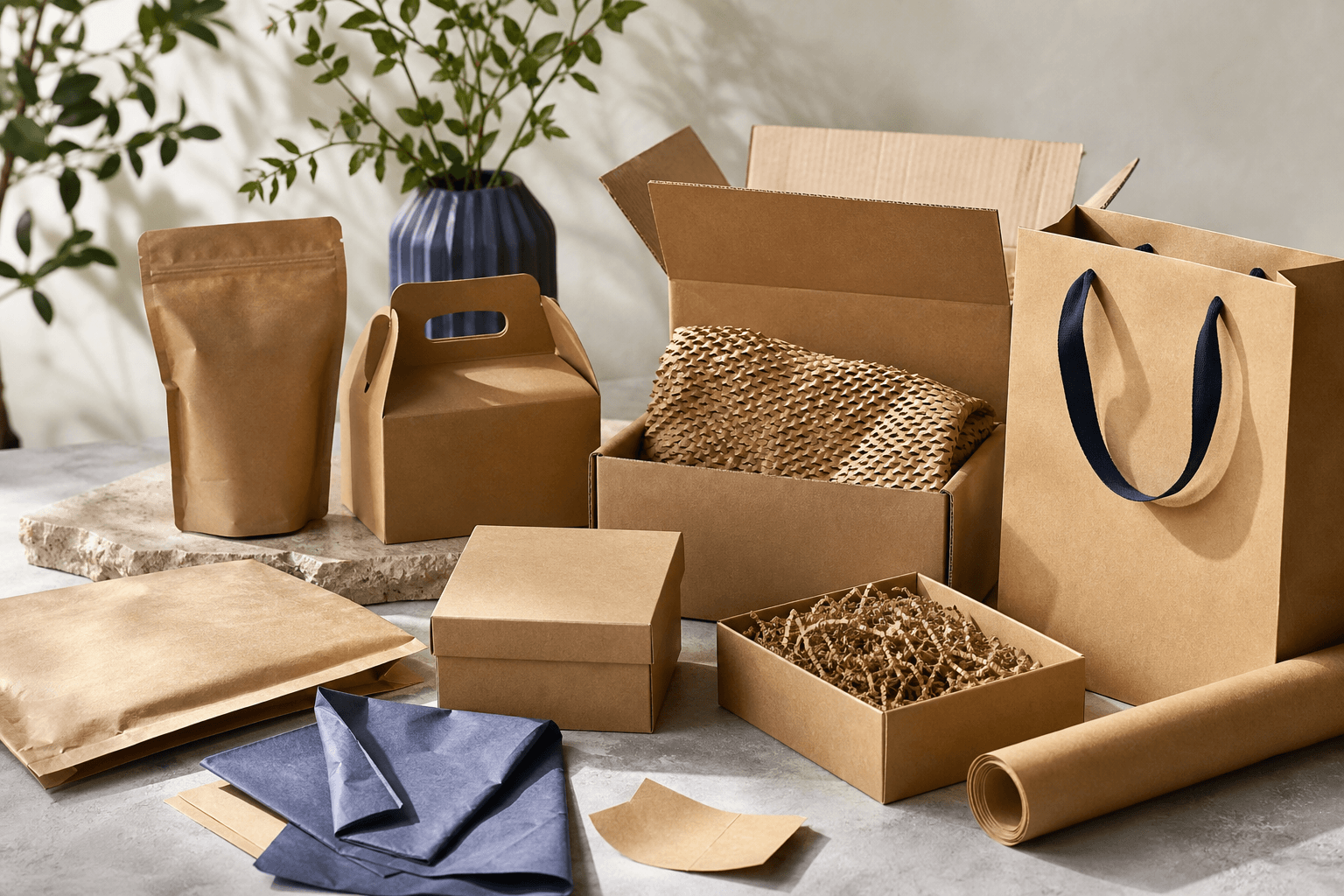
Two sample boxes in your hands. One is high-gloss laminated, white, flawless. The other is uncoated, warm brown kraft paper . You hold them side by side in the light from the window, and you're actually choosing not a material but who your brand is. Kraft reads as "natural and sustainable" — but you have three questions inside you: does it feel premium enough, can it print your brand colors correctly, does it truly protect your product? The advice online contradicts itself. It's unclear which kraft weight suits which product. And you're not sure whether kraft can really carry a luxury unboxing. By the end of this article, you'll be able to define the exact kraft type, weight (gsm), and finish your product needs — and you'll also clearly see the cases where kraft is the wrong choice.
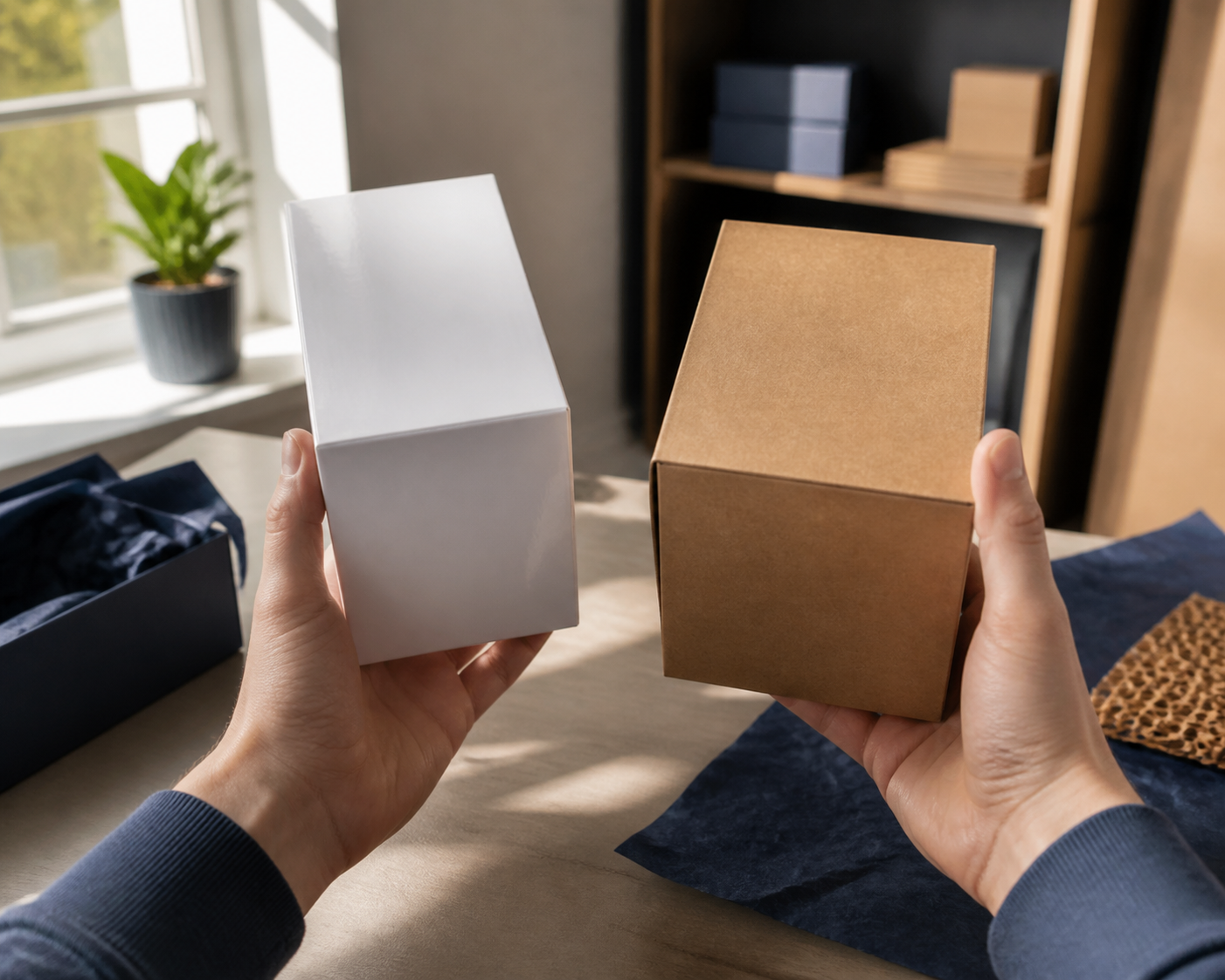
Table of Contents
-
Kraft Paper Types: Which Weight and Color for Which Product?
-
The Advantages and Limits of Kraft Paper: An Honest Assessment
-
Making Kraft Packaging Look Premium: Printing, Finish, and Sustainability
-
The 7 Decisions You Need to Clarify Before Ordering Kraft Packaging
What Exactly Is Kraft Paper and Why Is It So Durable?
Kraft paper takes its name from its production method: the sulfate (kraft) pulp production process . Here's how it works in plain terms. Wood chips are cooked in an alkaline solution containing sodium hydroxide and sodium sulfide. This chemistry accelerates the breakdown of lignin (delignification) and shortens the time the fibers are exposed to the harsh, hot alkali. The result: the cellulose degrades less, and the fibers stay long and strong. Long and undamaged fibers mean higher tear and tensile strength. According to the papermaking literature, kraft pulp produces stronger pulp than the older soda or acidic sulfite processes, because sodium sulfide accelerates delignification and reduces fiber damage.
This strength comes at a cost. While chemical pulping yield is roughly around 40–50% , the yield of pure mechanical pulping reaches ~95% . In other words, kraft produces less paper from the same wood — but the paper it produces is markedly stronger. This trade-off is the basis of kraft's entire position in packaging.
Let's unpack a technical term once so we don't have to repeat it: sulfidity (sulfur ratio). As the effective sulfur ratio in the kraft pulping solution rises, cooking time shortens and fiber degradation decreases — and this is directly the engineering fact underlying kraft's superior tear/tensile performance.
Let's provide a concrete strength anchor. A strip made of fairly porous 85 gsm sack kraft, 1 meter wide, can lift about 700 kg according to the European Parliament STOA study — roughly the weight of a pallet holding 14 sacks of cement. This single example sums up kraft's "weight-to-strength ratio."
Kraft's strength comes not from a chemical coating, but from the fibers staying long and undamaged.
Let's also clear up the terminology confusion once and for all:
-
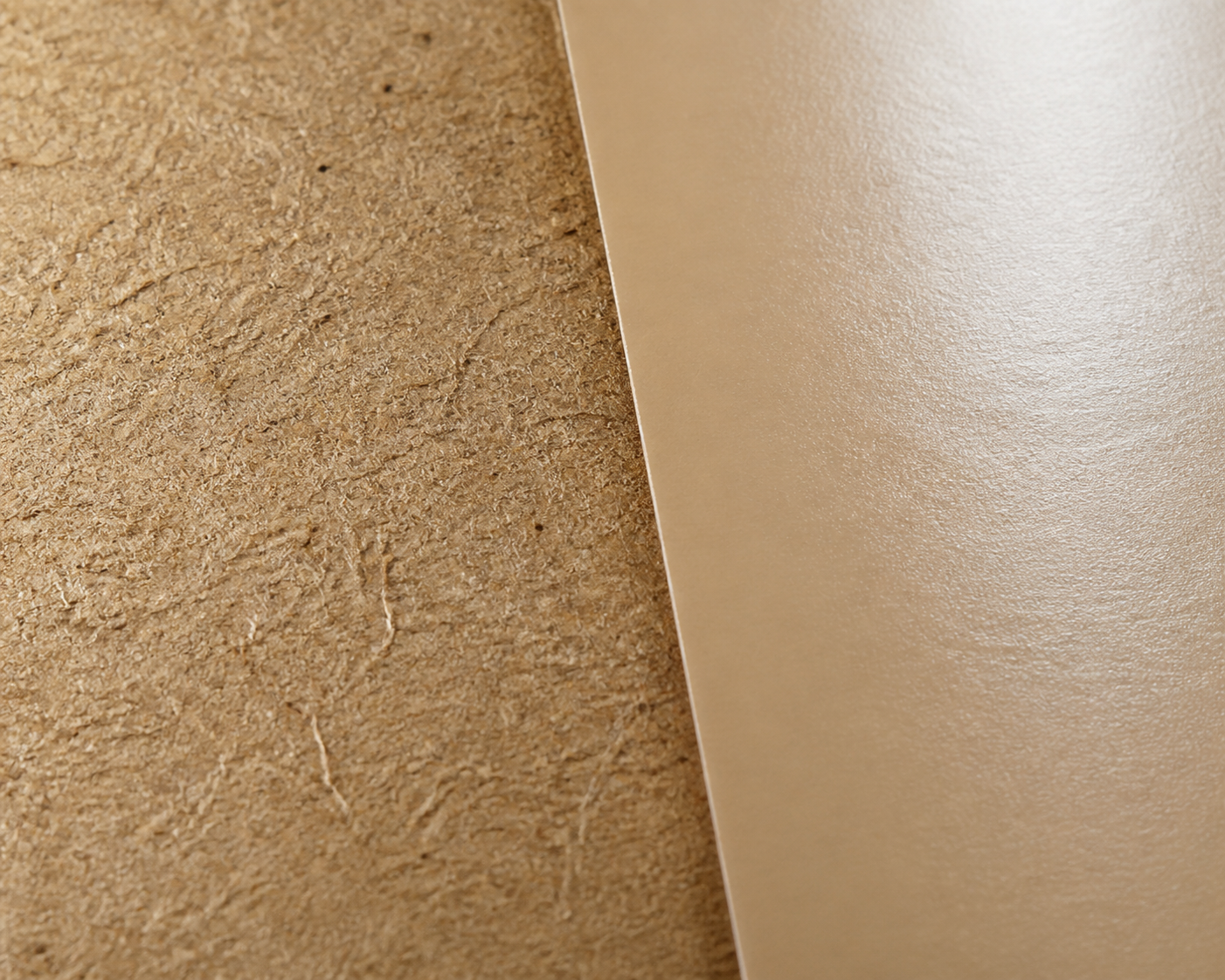
Natural brown (unbleached) kraft and white (bleached) kraft are not the same thing. The brown one is unbleached; the white one is bleached, smoother, glossier, and more expensive.
-
Kraft ≠ recycled paper. Kraft describes the pulping process , not the source of the fiber. Kraft can be made from either virgin (primary) fiber or recycled fiber.
-
Kraft ≠ cardboard/paperboard. Kraft is a paper/liner; corrugated cardboard, on the other hand, is generally a structure built from kraft liners.
For a deeper look at kraft's properties, you can check out the content titled What Is Kraft Paper? Its Properties, Types, and Uses . Let's tie the mechanism back to the buyer: this is exactly why thin kraft liners can safely carry heavy loads when properly specified. Now let's move on to which type and weight suits which product.
Kraft Paper Types: Which Weight and Color for Which Product?
Material choice comes down to two axes: color/fiber (brown or white, virgin or recycled) and weight (gsm). This section owns the type and weight selection.
|
Kraft Type |
Typical Weight (gsm) |
Durability |
Print Suitability |
Best-Fit Product Examples |
|---|---|---|---|---|
|
Natural Brown Kraft |
50–170 |
High (virgin fiber) |
Medium (matte, absorbs color) |
Bakery/coffee bags, food wrap, mailers |
|
White (Bleached) Kraft |
60–200 |
High |
High (smooth, vivid color) |
Cosmetic boxes, premium bags |
|
Recycled Kraft |
80–200 |
Medium (lower tear at the same weight) |
Medium |
Inner lining, economy bags, separators |
|
Corrugated/Fluted Kraft (E-flute liner) |
Liner 90–170+ |
Very high (structural) |
Outer liner good |
E-commerce boxes, shipping of fragile products |
Let's tie weight to real use, with concrete numbers. 50–90 gsm for food wraps and inner linings; 100–120 gsm for standard retail bags; 150–200 gsm for premium/heavy-duty shopping bags and small box wraps; 300+ gsm is the rigid box outer wrap territory. Technical reviews on industrial packaging kraft define unbleached kraft for heavy-duty sacks and liners in the 65–170 gsm range, with ~80% softwood fiber, a specific tensile strength of at least 0.09 kN/m and a specific tear resistance of 10.0 mN·m²/g and above.
The practical threshold example matters. Bumping a medium-sized shopping bag from 100 gsm to 120 gsm visibly reduces public bag tears and raises perceived quality, according to retail packaging suppliers' data — it's a very common upgrade step in the real world.
The nuance that keeps us honest is this: fiber quality alone can outweigh weight. Virgin or high-virgin blends at the same weight give higher tear/burst resistance than recycled kraft — especially in categories where failure is costly or visible (glass, cosmetics, groceries). The Packaging Materials Guide can deepen this comparison when determining the right material among the options.
Where Is Kraft Paper Used in Packaging?
Kraft covers the entire package, from the outer bag to the inner separator — which is also why a brand can unify its whole packaging system with a single material family. The What Is Packaging? A Comprehensive Guide and Types for Brands content offers a broad framework for how a packaging system is designed as a whole. Here are kraft's five core application areas:
Kraft paper bags (retail & gift)
In 100–200 gsm kraft, retail and gift bags are the brand's most frequently touched tactile point. Directly suitable for fashion/apparel and corporate gift purchases. Keep 120 gsm in mind as the reliable retail threshold — this weight satisfies both carrying confidence and shelf feel of the bag.
Folding cartons / kraft folding cartons
For cosmetics and food-beverage, kraft folding cartons combine a natural outer surface with printable panels. If your product is a serum or a box of chocolates, a kraft folding carton carries both shelf presence and a sustainable brand story at the same time.
Kraft mailer envelopes (e-commerce shipping)
Lightweight yet tear-resistant shipping envelopes and mailers for DTC/e-commerce. Kraft's weight-to-strength ratio — the fact that 85 gsm lifts 700 kg — works directly here: low shipping cost, low damage rate.
Kraft labels & thank-you cards
The detail layer of unboxing. Brown kraft labels and thank-you cards signal craftsmanship and authenticity at the moment of box opening. For DTC brands, this small layer disproportionately raises perceived value.
Tissue paper, in-mailer & box separators
Protective inner layers and dividers. Kraft separators and tissue paper cushion fragile products (jewelry, glass, electronics) and structure the unboxing. How a product is "presented" inside the box is often talked about as much as the product itself.
The Advantages and Limits of Kraft Paper: An Honest Assessment
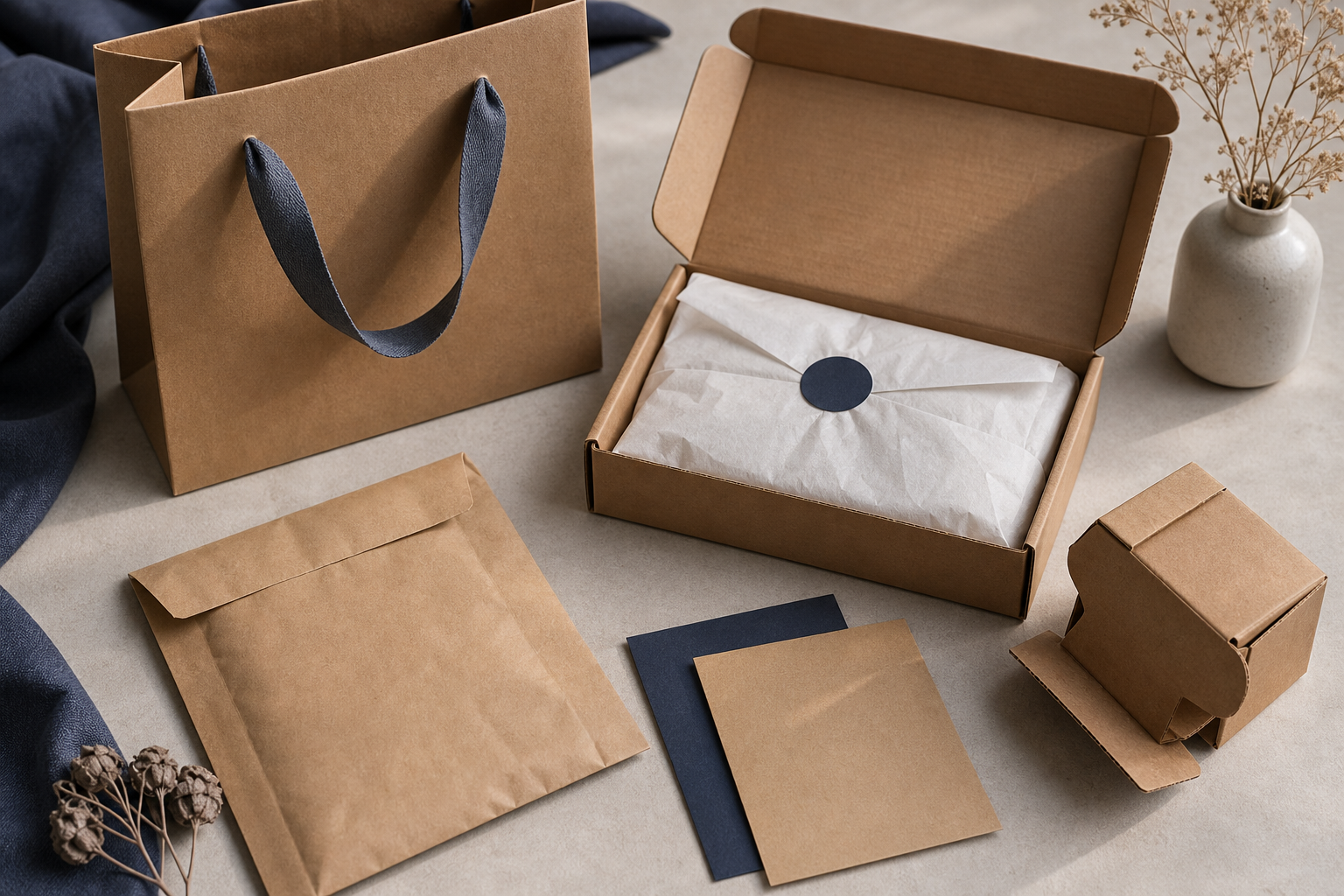
The way to differentiate yourself from suppliers who oversell kraft is to give a two-sided honest picture. Kraft is not the right answer everywhere; knowing where it shines and where it stumbles is the most valuable decision you'll make before requesting a quote.
|
Assessment Area |
Kraft's Strength |
Kraft's Limit / Point of Caution |
|---|---|---|
|
Durability |
High tear & tensile resistance |
At humidity >60%, edge crush/burst drops ~5–15% |
|
Sustainability |
Recyclable; ~74% recycling in the EU |
Becomes harder when coating/lamination is added |
|
Brand feel |
Warm, natural, tactile "handmade" perception |
Brown surface absorbs colors |
|
Cost |
Natural brown kraft low–medium |
White/coated kraft more expensive |
|
Print fidelity |
White kraft gives vivid color |
Narrow color gamut on brown stock |
When should you choose kraft? If your brand story is built on craftsmanship/natural/eco, if the weight-to-strength ratio (shipping) matters to you, or if a tactile matte opening strengthens your positioning, kraft is the right answer. According to industry data, paper and cardboard packaging in the EU reaches roughly a 74% recycling rate — this is the ground for a defensible sustainability claim for kraft-based packaging.
Let's be honest: in some cases a coated stock serves better. In supply chains that require full-bleed photographic imagery, vivid gradient brand colors, or high humidity/cold chain, uncoated kraft weakens. Above 60% relative humidity, kraft fibers absorb moisture and edge crush/burst resistance drops roughly 5–15% — a real constraint for long sea shipments or humid warehouses.
The nuance that establishes authority comes into play here: paper isn't automatically greener. The climate advantage of fiber-based packaging largely depends on recycling rates and system boundaries. A comparative life cycle assessment (DIVA LCA) found that a fiber-based tub has a 29% lower climate impact in the base scenario, but the advantage drops to 17% in the 100% recycling scenario; per-unit emissions varied roughly in the 0.13–0.21 kg CO₂-eq range. Let's also note the counterargument: heavy paper can, in some cases, carry a larger transport footprint than thin plastic. We'll unpack these nuances with their sources in the next section.
Kraft is not the right choice for every brand — but for the right brand, no coating can imitate its warmth.
Making Kraft Packaging Look Premium: Printing, Finish, and Sustainability
Kraft looking "cheap" is not a material problem but an application problem. With the right printing method, the right finish, and the right sustainability positioning, kraft carries a fully premium opening.
Printing methods on kraft. Kraft supports offset, flexography, and digital printing. For high-volume kraft bags, envelopes, and corrugated liners, flexo is generally preferred — because it handles the rough, porous surface efficiently and keeps VOC emissions low with water- or soy-based inks. When it comes to complex, multi-color imagery, digital and offset come into play.
The color reality. Brown kraft absorbs colors. Treat this not as an obstacle but as a design decision. Choose one of three moves: (a) print on white kraft for photographic fidelity, (b) deliberately design the brown as a "paper color" in your palette, don't fight it, (c) use an opaque/white underprint for critical brand colors.
Finish techniques — the upgrade toolkit:
-
Matte lamination → moisture protection + sophisticated surface (may complicate recyclability; account for this honestly).
-
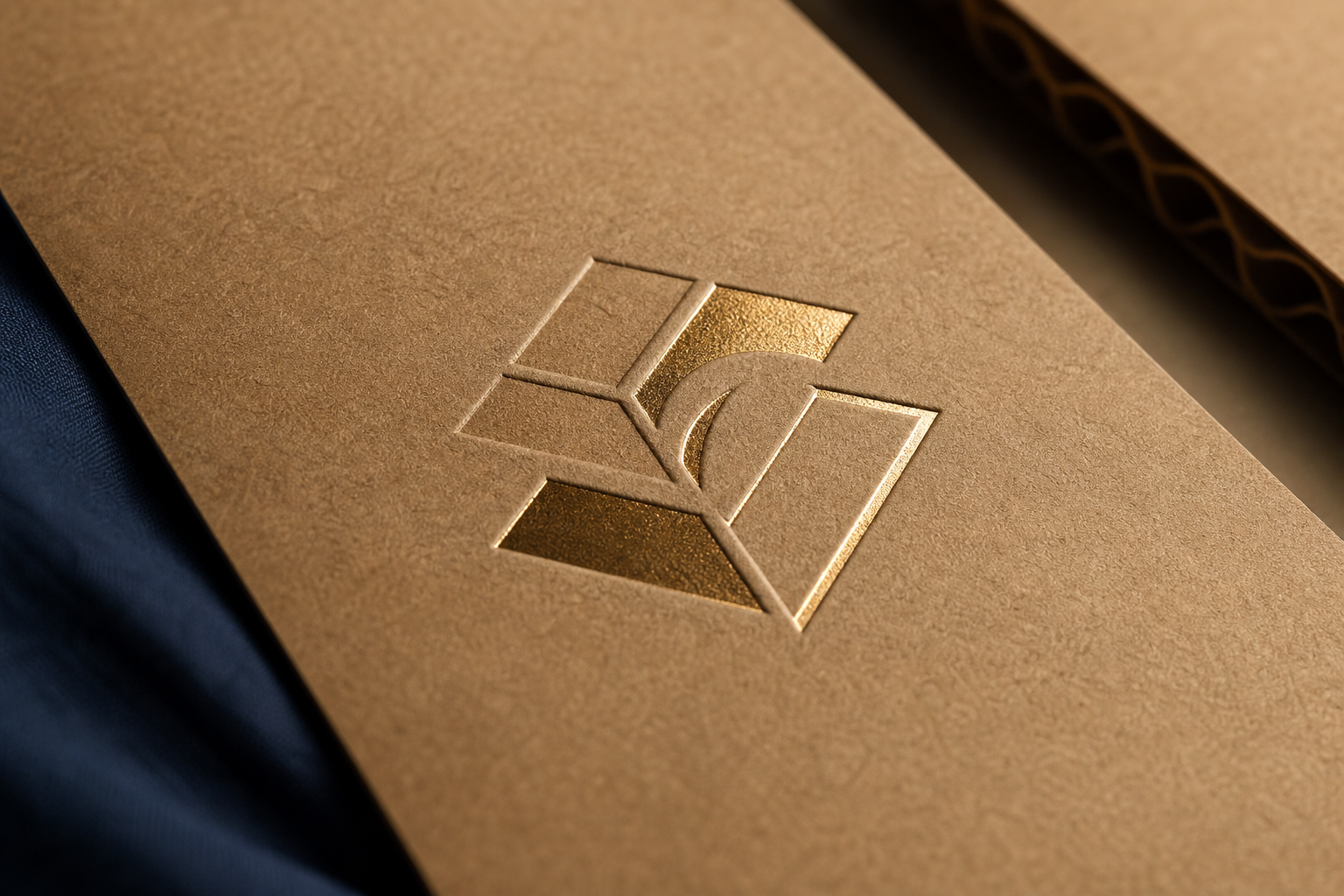
Foil stamping → metallic logo on brown stock, a strong luxury signal.
-
Embossing & debossing → tactile brand detail, requires no coating.
-
Spot UV → selective gloss contrast on matte kraft.
-
Soy-based inks → low VOC, a concrete contribution to the sustainability story.

Positioning sustainability as a brand asset. Recovery performance is a defensible claim. According to NCASI's recyclability review , the paper and paperboard recovery rate in the US rose from ~65% in 2012 to 68.1% in 2021; corrugated cardboard systems can approach ~80% in recovery when imports are taken into account.
The trust-building counterweight must also be given. According to Columbia Climate School , paper isn't automatically greener — paper production is energy and water intensive, transporting heavy paper is more costly, so a paper bag can in some cases carry a larger footprint than a lightweight plastic bag. The fact that ~66% of paper/paperboard is recycled in the US is what makes fiber circular in practice.
The practical takeaway is clear: the recyclability claim only holds when the package remains mono-material. Heavy laminates and foils can weaken this claim. That's why your sustainability positioning must match the finish you actually specify. Recyclable materials and carbon footprint reporting turn this from a cliché into a proven brand asset.
The 7 Decisions You Need to Clarify Before Ordering Kraft Packaging
Think of this as a pre-quote briefing. If you clarify these seven decisions before requesting a quote, the price and sample you receive will truly turn into a production-ready specification.
-
Product weight & protection need → weight selection. Lightweight product/inner lining 50–90 gsm, standard retail bag 100–120 gsm, premium/heavy 150–200 gsm, rigid box wrap 300+ gsm. If you have a humid supply chain, consider coating.
-
How should the brand color look on kraft — brown or white? If photographic and vivid color is needed, white kraft; if you want a natural/craft perception, brown kraft. This decision must be made before the design stage.
-
Printing method & number of colors. Flexo for high volume; digital/offset for complex imagery. Clarify the number of colors upfront — this determines both cost and production method.
-
Finish (moisture protection, foil, emboss, spot UV). Each finish changes the balance between cost and recyclability. If you have a sustainability claim, prioritize staying mono-material.
-
Size / custom dimension need. A custom size that fits the product exactly, or standard? Custom sizing often gives a better result in terms of both protection and reducing material waste.
-
Quantity & budget range. MOQ and unit cost vary along with weight and finish. Share your expected quantity upfront so the pricing is accurate.
-
Sustainability goal (recycling, carbon report). Staying mono-material protects your recycling claim; if you want a carbon footprint report, state this request at the quote stage.
When you have these seven answers in hand, a packaging partner can turn a 24-hour quote and a physical sample (7–15 business days) into an accurate, production-ready specification — turning the "kraft or coated?" hesitation into a firm decision. An end-to-end model spanning from consulting to design, from prototyping to production and logistics is the mechanism by which Kosapack runs this process under one roof.
Frequently Asked Questions
Can kraft paper come into contact with food?
Yes — with food-grade kraft and appropriate barriers. In the EU, food-contact materials fall under Regulation (EC) No 1935/2004; no material that touches food may transfer substances in amounts that would harm health or alter taste/odor. Paper and cardboard, in addition to the general framework, rely on national rules, so food-contact kraft must meet both EU and member state requirements. Greasy/moist foods generally require a coating or liner.
Is kraft paper waterproof, and how is it protected?
Uncoated kraft absorbs moisture and loses strength — above ~60% relative humidity, edge crush and burst resistance can drop 5–15%. Matte lamination or barrier coatings solve this (see the finish section). If you have humid or cold chain supply chains, plan the coating from the start.
Are kraft paper and recycled paper the same thing?
No. Kraft describes the
pulping process
, not the
source
of the fiber. Kraft can be made from either virgin or recycled fiber; at the same weight, virgin kraft has higher tear/burst resistance.
What is the minimum order quantity (MOQ)?
MOQ varies by product format, weight, and finish. For accurate pricing, clearly state your expected quantity in your
quote request
— so that weight and finish preferences can be evaluated together with your budget.