
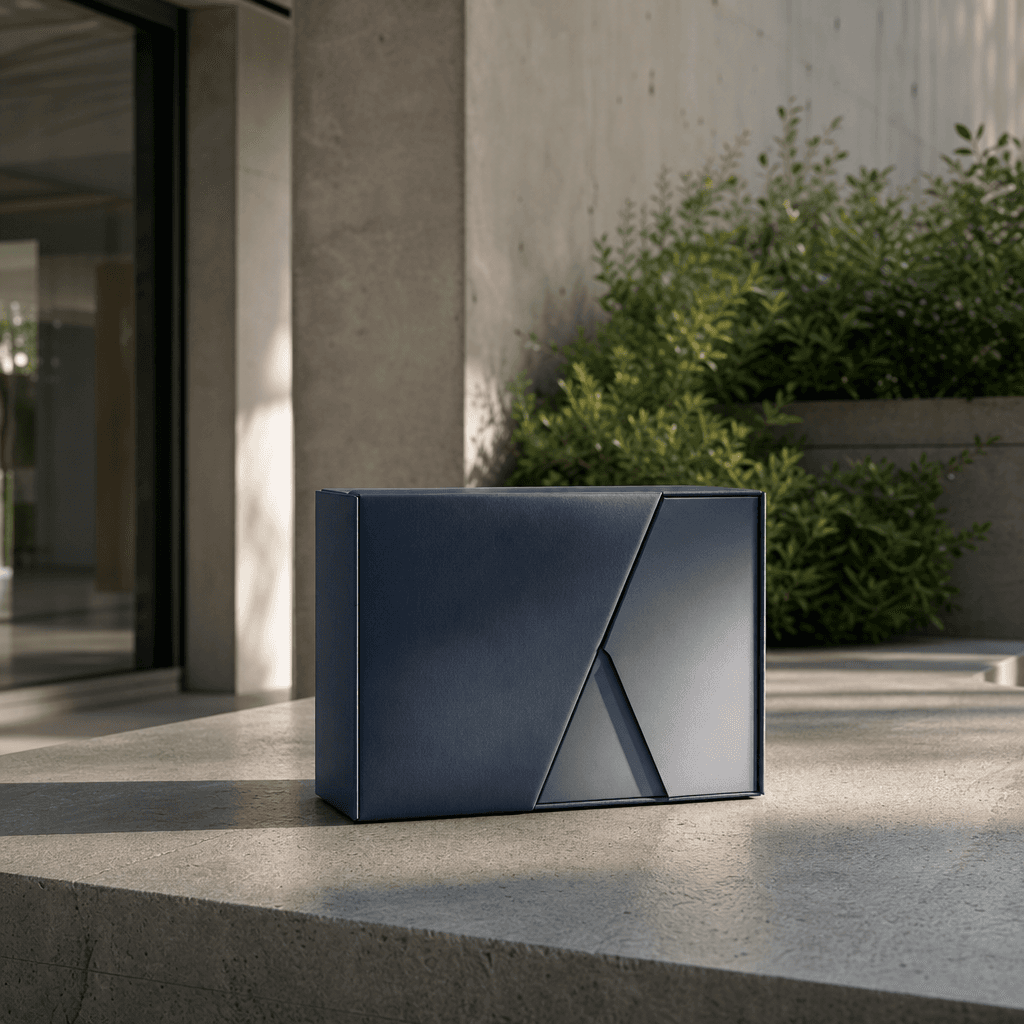
The short answer to the question of what a packaging design service is: it is an end-to-end design and planning process that safely protects your product while also professionally shaping how your brand will be perceived on the shelf, on the e-commerce page, and at the moment of gifting. We are not just talking about drawing a visually pleasing box; we are talking about a system that manages the entirety of product, brand, material, printing, sampling, and production-logistics under a single coordination. At Kosapack, we approach this service not as a cost item, but as a strategic touchpoint that carries sales and brand perception.
Contents
Academic definitions describe packaging design as a professional field of expertise in which decisions regarding the material, printing technique, and form required to protect and present the product are systematically managed by the designer. In other words, graphics are only the visible surface; structural design and technical requirements are also inseparable parts of the process. At this point, professional teams take the brand's goals, target audience, communication language, color palette, and typography as inputs to the design. An end-to-end packaging partner like Kosapack goes beyond this and plans sizing, material selection, prototyping, quality control, and logistics under the same roof.
The six components that make up a packaging design service
What distinguishes a project between a "nice box" and a "managed packaging system" is the progression of six interconnected efforts under a single coordination. The table below shows which decision each of these components produces and where it carries risk.
| Component | Decision it produces | Risk if skipped |
|---|---|---|
| Strategic analysis and brief | Positioning, usage channel, quantity | Design for the wrong segment |
| Structural design | Box form, custom size, divider | Breakage, shipping damage |
| Graphics and brand identity | Color, typography, iconography | Failure to stand out on the shelf |
| Material and printing | Cardboard, weight, finishing | Lack of durability, color error |
| Sample | Physical validation | Surprise in mass production |
| Production and logistics | Quantity, delivery, shipment | Delay, quality fluctuation |
The strategic analysis and brief phase establishes a clear framework based on product and brand analysis. The type, dimensions, sensitivity of the product, whether it will be used on the shelf or in e-commerce, the estimated production quantity, and positioning are defined at this stage. The marketing role of the packaging—namely the unboxing experience, gift value, and shelf distinctiveness—is also clarified here.
Structural design covers physical decisions such as box type, form, custom size, divider, and die-cut. Especially in gift sets and launch boxes, this component is structured according to the brand. In Kosapack's model, size, weight, distribution channel, and compliance requirements are documented from the very beginning; thus, both shelf presentation and e-commerce shipping performance can be balanced in a single design. You can find the practical workings of this logic in more detail in our guide explaining how custom-sized box production works.
Graphic design and brand identity is the transformation of logo positioning, color palette, typography, visual iconography, product information, and legal texts into an integrated system. Here, the goal is to build the perception that makes the consumer reach for the product on the shelf, to comply with readability rules, and to ensure that colors come out correctly in CMYK/Pantone systems in printing.
The selection of material and printing technology goes beyond the visual: card type, weight, lamination, embossing, and finishings such as hot foil stamping are determined at this stage. Durability, eco-friendly solutions, print quality, and cost balance are evaluated together. Kosapack carefully selects eco-friendly and high-quality materials, integrating design decisions with production realities.
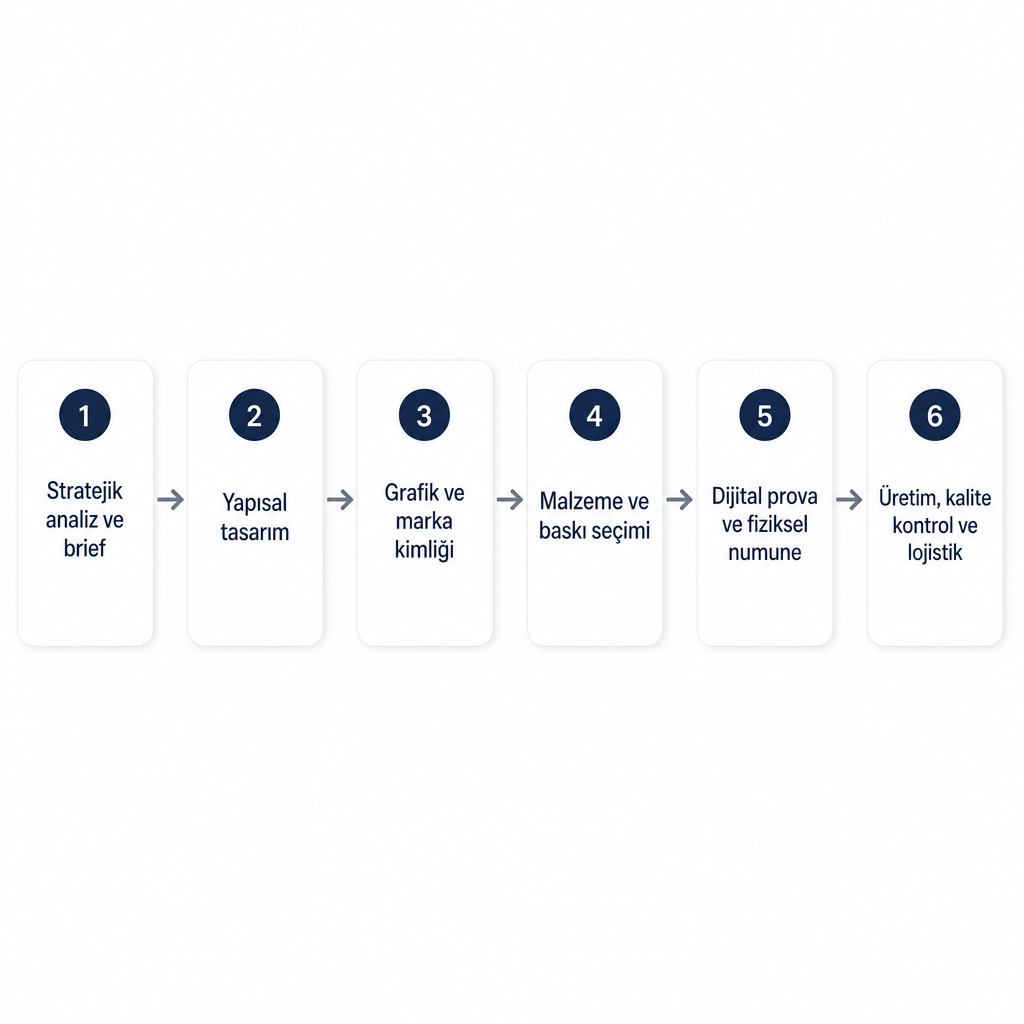
The prototyping and sampling phase is a critical checkpoint that should not be skipped. In Kosapack's practice, the design team first presents a mockup and digital proof to make decisions visible; then print quality, material durability, color harmony, and the functionality of the box form are tested on a small-quantity physical sample. This step, especially in the premium and luxury segment, allows details such as color accuracy, texture feel, and the lid-opening experience to be evaluated under real conditions.
Production, quality control, and logistics planning come into play once the design and sample are approved. The production quantity, delivery time, and shipment addresses are clarified; each package goes through quality checks. Thanks to this end-to-end structure, there is no disconnect between design decisions and production and logistics, and brands work with a single partner.
When is a packaging design service really needed?
Design from scratch is not necessary for every product; however, at certain moments this service turns into a strategic investment. A new product launch or collection release is at the top of these; a cosmetics line, a capsule fashion collection, or a limited chocolate series is told through the packaging at launch.
Repositioning the brand, updating the logo and identity, is also a trigger. When the identity changes, old packaging on the shelf drags the brand backward. For e-commerce and DTC brands, strengthening the unboxing experience and creating shareable packages on social media is a justification in itself. In corporate gift and promotional projects, premium boxes and set designs that reflect brand prestige come to the fore. In all of these scenarios, packaging does not only protect the product; it becomes a touchpoint with a direct impact on marketing, brand perception, and repeat purchase behavior.
Which type of service should you choose?
There are three main approaches to providing packaging design in the market, and the limit of each begins in a different place.
Purely graphics-focused packaging agencies are strong at strengthening the brand's visual identity, increasing shelf visibility, and producing readable, impactful designs. Their creative capacity is high; however, on the structural design, material, and production side, separate suppliers are usually needed. This leaves the coordination burden with the brand.
Automated or AI-based design tools allow you to produce quick concepts by uploading your logo and selecting the package type. They are practical for developing ideas and trying out concepts. However, even these tools recommend improving the output for print-quality presentations and reworking it with a professional production partner; they are not sufficient on their own for structural details, legal texts, and real printing processes.
An end-to-end packaging partner, i.e., the Kosapack model, combines analysis, design and planning, material selection, production, quality control, and logistics into a single service model. Offering a broad portfolio ranging from rigid boxes to labels, from cards to bags and dividers under one roof makes it easier to turn different packaging needs into a consistent, single brand experience. We address the branding side of this holistic approach in detail in our article explaining how custom-branded packaging turns into a marketing tool.
Decision criteria for choosing the right service
Which approach suits you depends on the concrete parameters of your project. The following criteria simplify the decision.
- Brand segment and positioning: Whether you are in the luxury, premium, or accessible segment and the price point you target determine the material and finishing level of the design.
- Usage scenario: Store shelf, e-commerce shipping, boutique delivery, or corporate gift. Clarifying the primary function of the packaging directly determines the design direction.
- Structural needs: If you need custom size, dividers, multi-product sets, or protection for delicate products, structural design expertise becomes mandatory instead of an ordinary box.
- Sustainability goals: If you have expectations such as recyclable material and carbon footprint reporting, you need a partner with these competencies on the material and production side.
- Time and quantity: The launch calendar, campaign duration, and expected order quantity are critical data in terms of prototyping and production planning.
- Quality and risk tolerance: If your tolerance for risks such as color inconsistency, print errors, broken boxes, or torn bags is low, working with a partner with a high quality control standard becomes a priority.
Kosapack takes on the role of a strategic packaging partner that closes the gaps between design and production by managing these criteria end-to-end for premium and growth-stage brands.
How does the process work at Kosapack?
Our service model structures packaging design for premium and luxury consumer brands in Turkey across four connected links. The first link is product and brand analysis, clarifying goals, and creating a detailed brief. In the second link, we address structural and graphic design together; we establish a single, consistent design language for custom-branded boxes, cardboard, bags, labels, and other printed materials.
In the third link, we make decisions visible with digital proofs and mockups, then test the material, printing, and form on a physical sample. In the fourth link, after approval, we activate production through verified factory partners, our own quality control processes, and consolidated logistics management. This structure supports cosmetics, fashion, jewelry, chocolate, electronics, and e-commerce brands in producing packaging that is suitable for both store and online channels and that carries the brand story. You can see step by step how the process is initiated by the brand in our guide explaining how custom-branded packaging is made.
If you have the product dimensions, usage channel, target quantity, and launch date at hand, this information is a sufficient starting point for us to prepare a custom design and sample plan for you.
Frequently Asked Questions (FAQ)
With a packaging design service, do I only get a box, or the entire packaging set?
A professional service can cover the entire packaging ecosystem, including the box, label, card, bag, and additional documents. Thus, the unboxing and gifting experience is designed end-to-end from a single source.
What is the difference between investing in professional design instead of a ready-made template?
Ready-made templates are fast, but they meet brand positioning, structural needs, and print quality standards to a limited extent. Professional design offers brand- and product-specific solutions that are tested on a sample.
How long does the packaging design process take?
For simple adaptations, the time is short; in bespoke projects where the structure, graphics, material, and finishing are entirely custom, design and prototyping can take several weeks. At Kosapack, we aim to speed up the process with fast quotes and short sample lead times.
How is sustainable material selection managed?
During the material selection phase, recyclable cardboard and eco-friendly printing options are evaluated. As a production-focused partner, we place importance on carefully selecting eco-friendly and durable materials.
Why is packaging design so critical for e-commerce brands?
The e-commerce package is the first physical contact established with the brand at the moment of unboxing. The right design strengthens brand perception, increases social media shares, and can positively affect repeat purchase behavior.